Sericocarpus oregonensis subsp. oregonensis
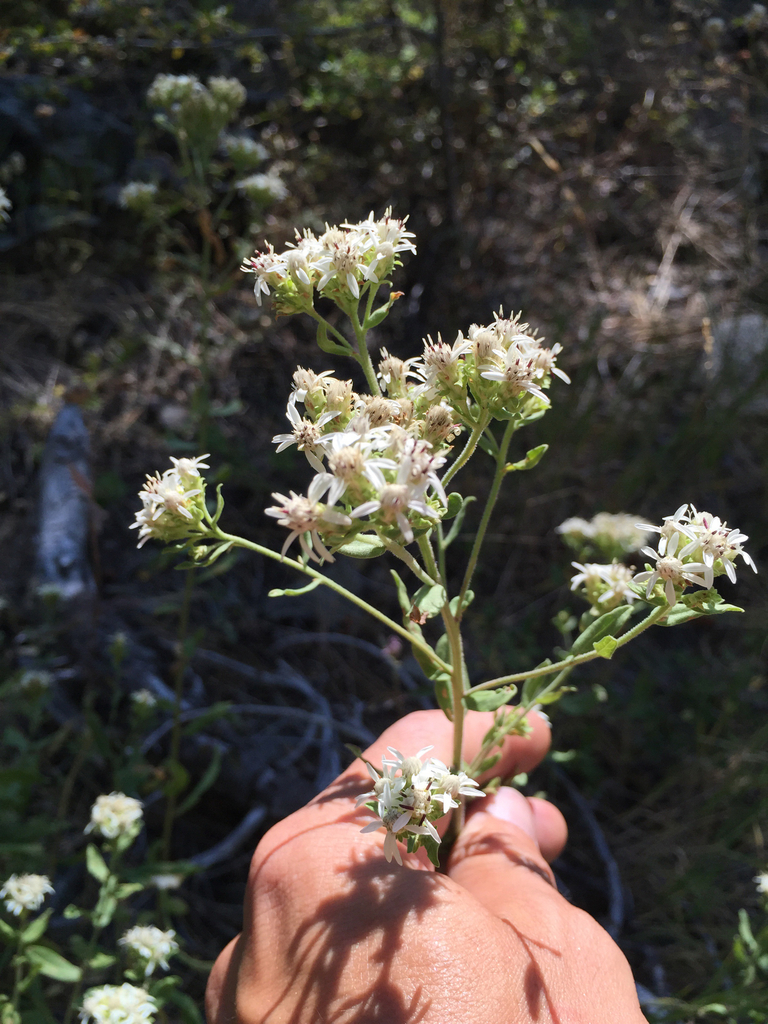
Photo: parent species Sericocarpus oregonensis · no rights reserved · CC0
Family: Asteraceae · Type: Subshrub · Native
Sericocarpus oregonensis subsp. oregonensis is a native California subshrub in the Asteraceae family, recognized by differentiated primarily by geographic distribution and elevation range.
Oregon white-headed aster is a California native perennial found in the Klamath Ranges, northern Coast Ranges, northern Sierra Nevada, and northern California Cascade Range in open woodland at elevations of 100 to 2,200 meters. Flowering from July to September, this plant produces white flower heads with rays and disk flowers clustered in open, delicate arrangements. Growing with slender, somewhat branching stems 30 to 60 centimeters tall, it forms an upright and somewhat delicate habit. Its leaves are narrowly lance-shaped, alternating along the stem, with smooth margins and a thin, somewhat succulent texture. The small white flower heads, typical of the white-headed aster group, have a distinctive arrangement that stands out against the plant's open, airy woodland habitat.
Identification and appearance
Key characters: 2 sympatric species; differentiated primarily by geographic distribution and elevation range
Habitat and range
Habitat: Open woodland
Elevation: 100-2200 m
California counties: Del Norte, Humboldt, Siskiyou, Trinity, Plumas, Placer
Outside California: to Washington
Bloom period
Sericocarpus oregonensis subsp. oregonensis blooms Jul-Sep.
How to tell it apart
vs Chaetopappa: Sericocarpus has clustered heads with white disks; Chaetopappa typically yellow disks.; vs Symphyotrichum: Sericocarpus has white disk flowers in tight clusters; Symphyotrichum has yellow disk flowers.; vs Eurybia: Sericocarpus heads tightly clustered; Eurybia heads more loosely arranged.; vs Almutaster: Sericocarpus heads clustered at tips; Almutaster heads solitary on long branches.; vs Machaeranthera: Sericocarpus has simple leaves and white disks; Machaeranthera has fern-like leaves and yellow disks.
Frequently asked questions
Is Sericocarpus oregonensis subsp. oregonensis native to California?
Yes. Sericocarpus oregonensis subsp. oregonensis is native to California (recorded as native).
When does Sericocarpus oregonensis subsp. oregonensis bloom?
Sericocarpus oregonensis subsp. oregonensis blooms Jul-Sep.
Where in California does Sericocarpus oregonensis subsp. oregonensis grow?
Sericocarpus oregonensis subsp. oregonensis occurs in Del Norte, Humboldt, Siskiyou, Trinity, Plumas, Placer, at elevations of 100-2200 m.
What plant family does Sericocarpus oregonensis subsp. oregonensis belong to?
Sericocarpus oregonensis subsp. oregonensis is in the Asteraceae family, genus Sericocarpus.
What habitat does Sericocarpus oregonensis subsp. oregonensis grow in?
Sericocarpus oregonensis subsp. oregonensis grows in Open woodland.
Related species
Other California species in the same genus, family, or bioregion.
Sources: Jepson eFlora · Index of California Plant Names · CalPhotos
Last updated 2026-10-07
Data from The California Species Project — 14,000+ California species with verified data from CNPS, CDFW, USFWS, Cal-IPC, and more.