Sherardia arvensis
Field madder, Field Madder
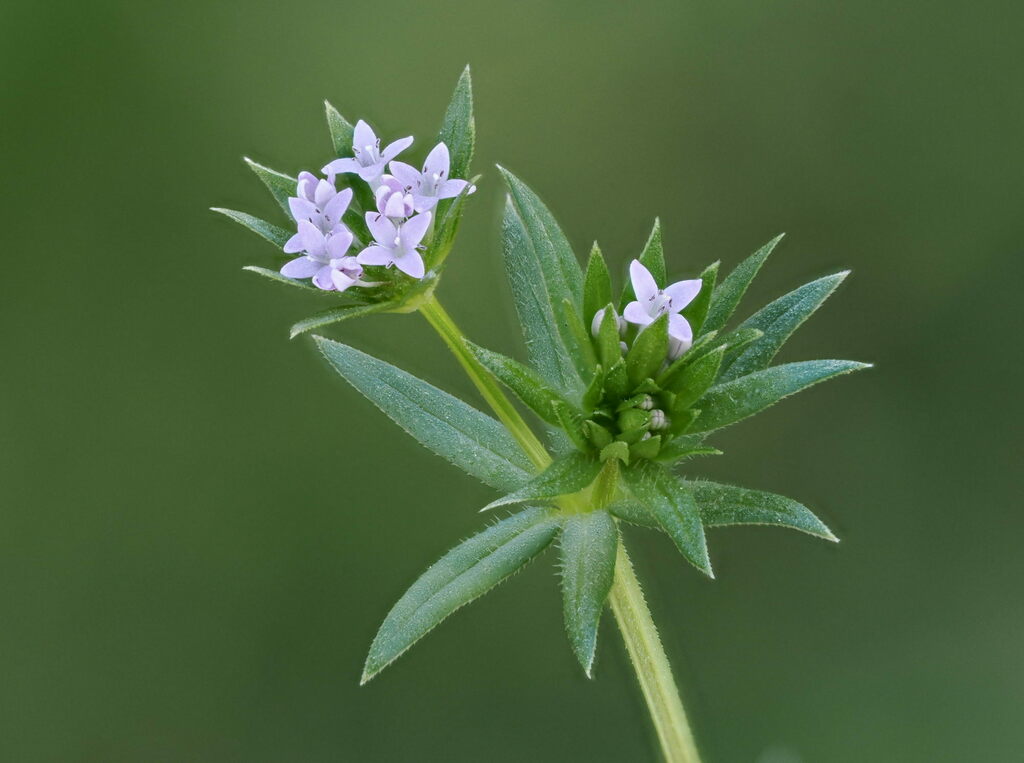
(c) Gilles San Martin, some rights reserved (CC BY-SA), uploaded by Gilles San Martin · licence
Family: Rubiaceae · Type: Herb · Not Native
Sherardia arvensis (Field madder) is a non-native California herb in the Rubiaceae family, recognized by Sherardia is a small Mediterranean genus representing an ancient lineage within the coffee family.
Field madder is a naturalized annual herb found in northern and central California coastal regions, interior valleys, foothills, and San Francisco Bay Area in pastures, disturbed areas, grasslands, and oak woodlands at elevations of 10 to 1,160 meters. Flowering from March to July, this plant produces delicate pink or lavender flowers in small axillary heads with 2 to 3 blooms. Growing as a low, matted plant with decumbent stems 7 to 16 centimeters tall and four-angled branching structure, it spreads horizontally across the ground. Its leaves grow in whorls of 5 to 6, measuring 4 to 13 millimeters long, with lanceolate or oblanceolate shapes and acute or weak-spined tips. The fruit develops as two small nutlets with soft hairs, completing the plant's distinctive low-growing and delicate life cycle.
Identification and appearance
Key characters: Sherardia is a small Mediterranean genus representing an ancient lineage within the coffee family
Habitat and range
Habitat: Pastures, disturbed areas, grassland, dry meadows, oak woodland
Elevation: 10-1160 m
California counties: Contra Costa, Placer, Humboldt, Mendocino, Yuba, Los Angeles, Marin, Ventura, Butte, Riverside, Sonoma, Santa Clara, Sacramento, San Bernardino, San Francisco, San Mateo, Alameda, Solano, Orange, Santa Cruz, El Dorado, Merced, Fresno, Amador, San Luis Obispo, Tehama, Napa, Del Norte, Nevada, Siskiyou, Santa Barbara, San Diego, Yolo, Colusa, Shasta, Monterey
Outside California: to Idaho, Arizona, eastern United States, native to Mediterranean
Bloom period
Sherardia arvensis blooms Mar-Jul.
How to tell it apart
vs Galium: Sherardia flowers lack stalks and have six prominent sepals; Galium flowers have delicate stalks and no sepals at all.; vs Myoporum: Sherardia is a low annual herb with whorled leaves; Myoporum is a woody shrub with alternate leaves.; vs Coleonema: Sherardia has whorled leaves and flower clusters surrounded by leafy bracts; Coleonema has needle-like leaves and individual flowers.; vs Veronica: Sherardia has whorled leaves at each stem joint; Veronica has opposite or alternate leaves.; vs Stellaria: Sherardia has whorled leaves and flowers in dense heads; Stellaria has opposite leaves and spreading flowers.
Frequently asked questions
Is Sherardia arvensis native to California?
No. Sherardia arvensis is not native to California (recorded as not native).
When does Sherardia arvensis bloom?
Sherardia arvensis blooms Mar-Jul.
Where in California does Sherardia arvensis grow?
Sherardia arvensis occurs in Contra Costa, Placer, Humboldt, Mendocino, Yuba, Los Angeles, Marin, Ventura and other counties, at elevations of 10-1160 m.
What plant family does Sherardia arvensis belong to?
Sherardia arvensis is in the Rubiaceae family, genus Sherardia.
What habitat does Sherardia arvensis grow in?
Sherardia arvensis grows in Pastures, disturbed areas, grassland, dry meadows, oak woodland.
Related species
Other California species in the same genus, family, or bioregion.
Sources: Jepson eFlora · Index of California Plant Names · CalPhotos
Last updated 2026-10-07
Data from The California Species Project — 14,000+ California species with verified data from CNPS, CDFW, USFWS, Cal-IPC, and more.