Sida spinosa
Prickly sida, Prickly Sida
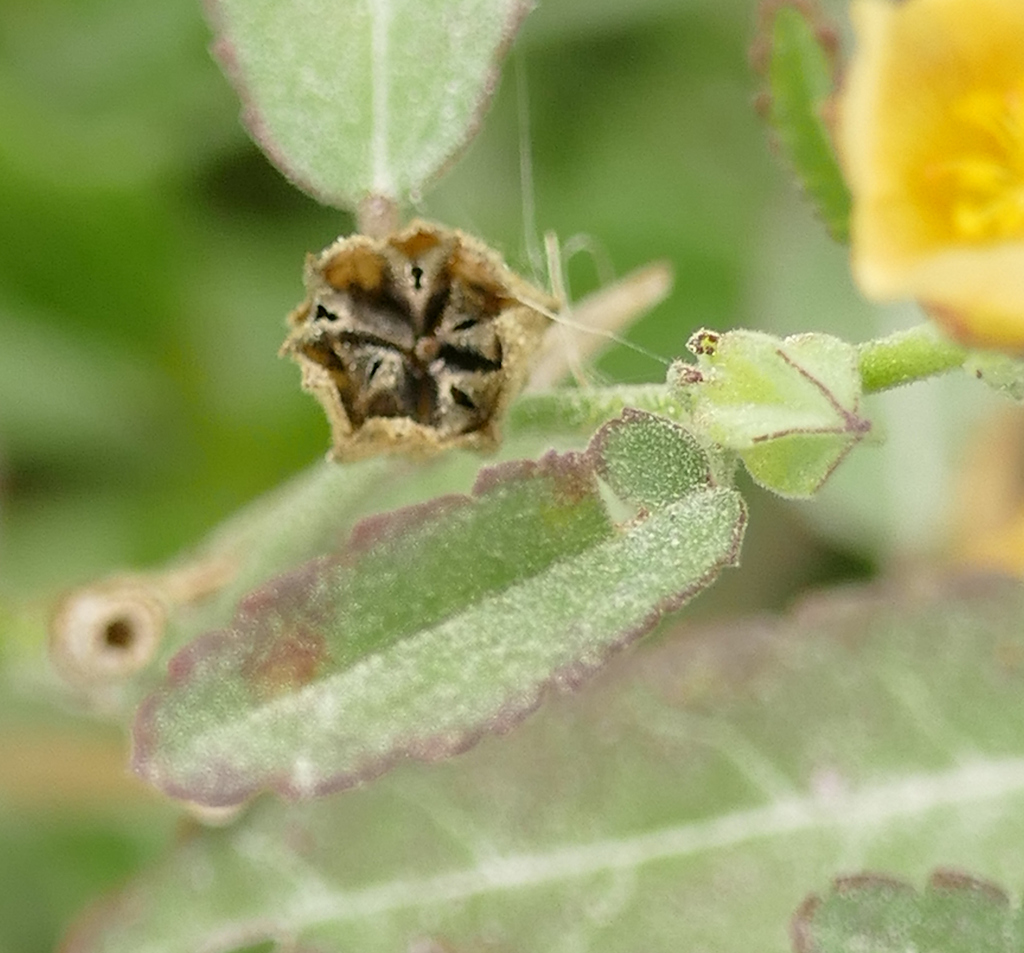
(c) Wendy McCrady, some rights reserved (CC BY), uploaded by Wendy McCrady · licence
Family: Malvaceae · Type: Subshrub · Not Native
Sida spinosa (Prickly sida) is a non-native California subshrub in the Malvaceae family, recognized by key differences are life cycle (annual vs perennial), leaf size, and style number.
Prickly sida is a naturalized annual found in the San Joaquin Valley in disturbed places and agricultural fields at elevations generally below 300 meters. Flowering from June to October, this plant produces small yellow-white flowers approximately 5 millimeters long, with petals slightly longer than the calyx. Growing with stiff, straight stems 30 to 100 centimeters tall that have ascending branches, it forms an upright agricultural weed with a stellate-puberulent texture. Its leaves are 2 to 4 centimeters long, serrate with a minutely hairy surface, appearing lighter on the undersides and darker green on top. The fruit is round, approximately 4 to 5 millimeters in diameter and nearly glabrous.
Identification and appearance
Key characters: 1 sympatric species; key differences are life cycle (annual vs perennial), leaf size, and style number
Habitat and range
Habitat: Scarce; in disturbed places, fields
Elevation: generally < 300 m
Outside California: southern, central and eastern United States to southern South America, widely introduced worldwide
Bloom period
Sida spinosa blooms Jun-Oct?.
How to tell it apart
vs Malva: Sida flowers have no epicalyx of bractlets below the calyx; Malva bears 3 small bractlets subtending each flower.; vs Malvella: Sida stands erect on stiff straight stems with leaves toothed only in the upper half; Malvella is prostrate and densely white-stellate with hastate-triangular leaves.; vs Abutilon: Sida mericarps hold a single seed and split cleanly; Abutilon mericarps are larger, inflated, and hold 2 or more seeds.; vs Anoda: Sida mericarps form a compact ring lacking long spines; Anoda mericarps radiate in a flat star, each tipped with a spreading horizontal spine.; vs Sidalcea: Sida has small yellowish flowers borne singly in leaf axils; Sidalcea bears showy pink flowers in elongate terminal racemes.
Frequently asked questions
Is Sida spinosa native to California?
No. Sida spinosa is not native to California (recorded as not native).
When does Sida spinosa bloom?
Sida spinosa blooms Jun-Oct?.
What plant family does Sida spinosa belong to?
Sida spinosa is in the Malvaceae family, genus Sida.
What habitat does Sida spinosa grow in?
Sida spinosa grows in Scarce; in disturbed places, fields.
Related species
Other California species in the same genus, family, or bioregion.
Sources: Jepson eFlora · CalPhotos
Last updated 2026-10-07
Data from The California Species Project — 14,000+ California species with verified data from CNPS, CDFW, USFWS, Cal-IPC, and more.