Sidalcea hickmanii subsp. hickmanii
Hickman's checkerbloom, Hickman's Checkerbloom
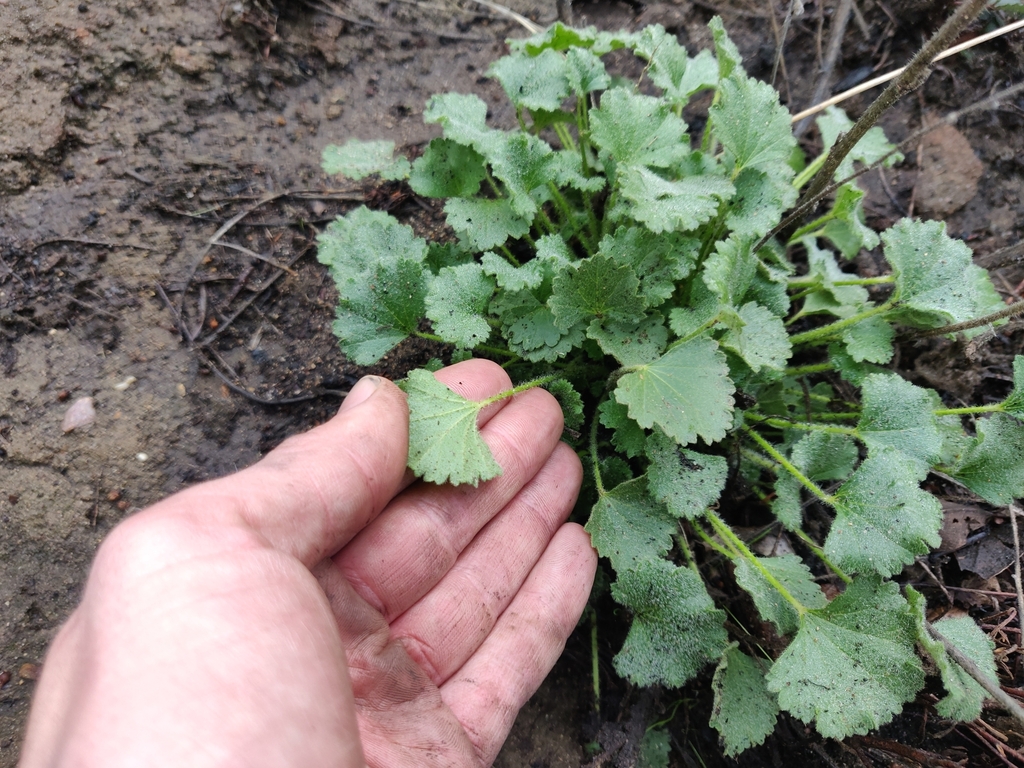
Photo: parent species Sidalcea hickmanii · (c) Alexander Wentworth, some rights reserved (CC BY), uploaded by Alexander Wentworth · licence
Family: Malvaceae · Type: Subshrub · Native
Conservation status: CNPS 1B.3
Sidalcea hickmanii subsp. hickmanii (Hickman's checkerbloom) is a native California subshrub in the Malvaceae family, recognized by 6 sympatric hickmanii subspecies - distinguished by crenate leaves and grayish pubescence.
Hickman's checkerbloom is a rare (CNPS 1B.3) California native perennial found in the Santa Lucia Range in Monterey County's chaparral at elevations of 330 to 1,200 meters. Flowering from May to July, this plant produces pale pink to lavender flowers with petals approximately 16 to 17 millimeters long. Growing with grayish-canescent stems 40 to 80 centimeters tall, often brick-red near the base and covered in coarsely stellate hairs, it develops an upright, somewhat dense form. Its leaves are closely crenate with generally rounded lobes and shallow sinuses, creating a softly textured appearance. The plant's delicate flowers are framed by small linear bracts and feature acute calyx lobes with longest hairs along the margins.
Identification and appearance
Key characters: 6 sympatric hickmanii subspecies - distinguished by crenate leaves and grayish pubescence
Habitat and range
Habitat: Chaparral
Elevation: 330-1200 m
Bloom period
Sidalcea hickmanii subsp. hickmanii blooms May-Jul.
Conservation status
CNPS 1B.3
How to tell it apart
vs Malva: Sidalcea has no bract ring below flowers and anthers in two circles; Malva has 3 bracts and scattered anthers.; vs Clarkia: Sidalcea has mallow flowers with fused stamens; Clarkia has 4 separate petals and 8 separate stamens.; vs Geranium: Sidalcea has bowl-shaped flowers with fused stamens; Geranium has 5 separate petals and long beaked fruits.; vs Malacothamnus: Sidalcea is herbaceous in meadows; Malacothamnus is a woody shrub in chaparral.; vs Calochortus: Sidalcea is a dicot with 5-petaled flowers; Calochortus is a monocot with 3-petaled flowers from bulbs.
Frequently asked questions
Is Sidalcea hickmanii subsp. hickmanii native to California?
Yes. Sidalcea hickmanii subsp. hickmanii is native to California (recorded as native).
When does Sidalcea hickmanii subsp. hickmanii bloom?
Sidalcea hickmanii subsp. hickmanii blooms May-Jul.
What plant family does Sidalcea hickmanii subsp. hickmanii belong to?
Sidalcea hickmanii subsp. hickmanii is in the Malvaceae family, genus Sidalcea.
Is Sidalcea hickmanii subsp. hickmanii rare or endangered?
Sidalcea hickmanii subsp. hickmanii carries California Rare Plant Rank 1B.3, state rank S2.
What habitat does Sidalcea hickmanii subsp. hickmanii grow in?
Sidalcea hickmanii subsp. hickmanii grows in Chaparral.
Related species
Other California species in the same genus, family, or bioregion.
- Sidalcea hickmanii subsp. napensis — Napa checkerbloom
- Sidalcea hickmanii subsp. parishii — Parish's checkerbloom
- Sidalcea hickmanii subsp. pillsburiensis — Lake pillsbury checkerbloom
- Sidalcea hickmanii subsp. viridis — Marin checkerbloom
- Sidalcea hirsuta — Hairy checkerbloom
- Sidalcea keckii — Keck's checkerbloom
Sources: Jepson eFlora · CalPhotos · CDFW CNDDB
Last updated 2026-10-07
Data from The California Species Project — 14,000+ California species with verified data from CNPS, CDFW, USFWS, Cal-IPC, and more.