Silybum marianum
Blessed milkthistle
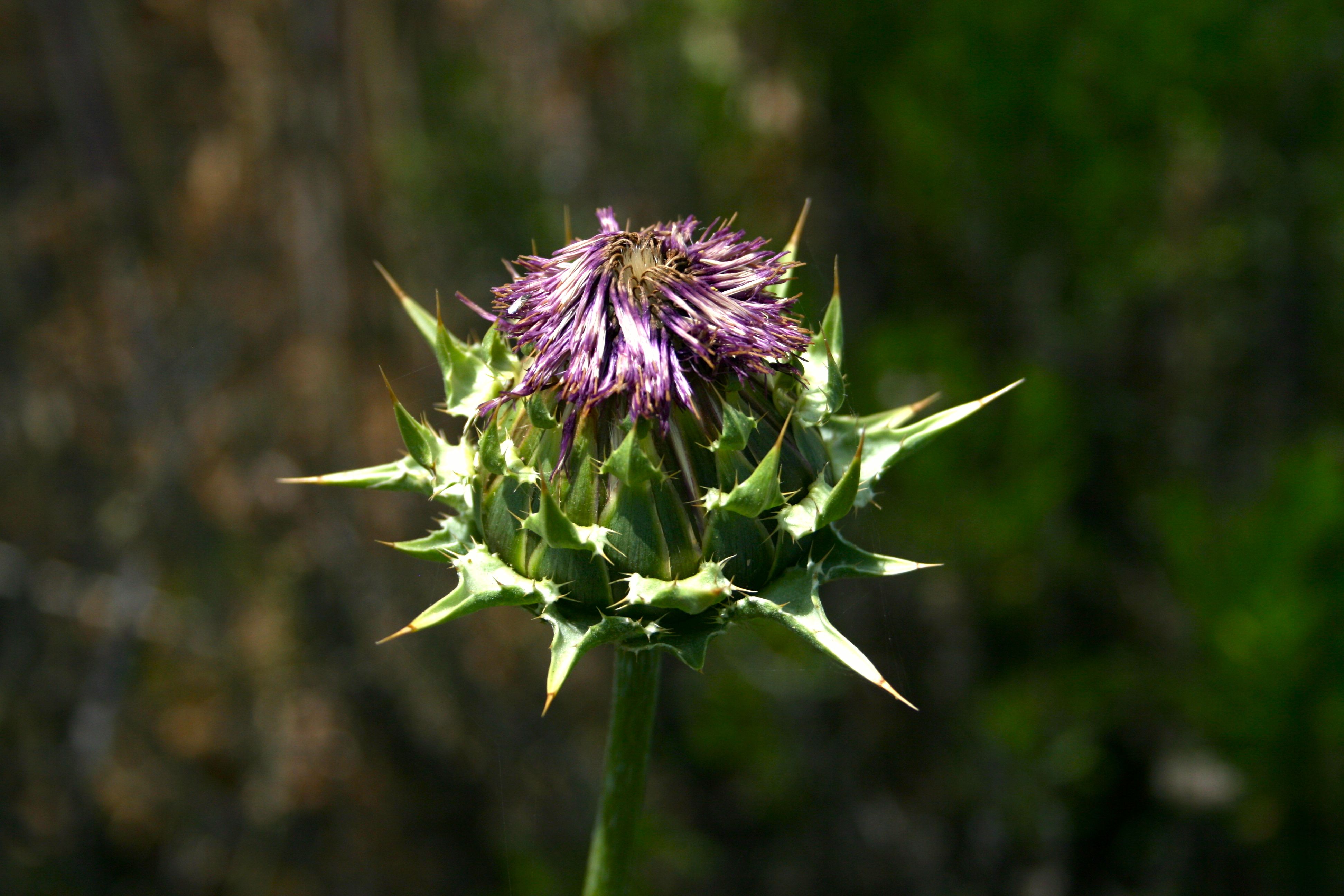
Photo by Chez Brungraber
Family: Asteraceae · Type: Herb · Not Native
Conservation status: Cal-IPC Yes
Silybum marianum (Blessed milkthistle) is a non-native California herb in the Asteraceae family, recognized by Silybum is a small Mediterranean genus distinct from true thistles (Cirsium) and other spiny Asteraceae.
Blessed milkthistle is a naturalized annual found in northern coastal California, northern Coast Ranges, northeastern Sierra Nevada foothills, Central Valley, central western California, and southwestern California in disturbed areas like roadsides and pastures at elevations below 900 meters. Flowering from February to June, this plant produces purple flowers in large spiny heads up to 6 centimeters in diameter. Growing with tall stems 20 to 300 centimeters high that are glabrous or slightly woolly, it has a distinctive branching habit. Its basal leaves reach 15 to 60 centimeters long with winged petioles, while cauline leaves have spiny, clasping bases that coil around the stem. The fruit is 6 to 8 millimeters long, tan to brown, and often marked with black spots.
Identification and appearance
Key characters: Silybum is a small Mediterranean genus distinct from true thistles (Cirsium) and other spiny Asteraceae
Habitat and range
Habitat: Invasive. Roadsides, pastures, disturbed areas
Elevation: < 900 m
Outside California: native to Mediterranean
Bloom period
Silybum marianum blooms Feb-Jun.
Conservation status
Cal-IPC Yes
How to tell it apart
vs Carduus: Silybum has white-marbled leaves and smooth stems; Carduus lacks white marbling and has continuous spiny wings down stems.; vs Cirsium: Silybum leaves have bright white vein marbling; Cirsium leaves are plain green without white markings.; vs Centaurea: Silybum has large glossy leaves with white marbling; Centaurea has smaller, non-glossy leaves without white veins.; vs Cynara: Silybum has white-marbled leaves and heads on long stalks; Cynara lacks marbling and has massive short-stalked heads.; vs Sonchus: Silybum has spiny thistle heads; Sonchus has dandelion-like yellow flowers and hollow stems with milky sap.
Frequently asked questions
Is Silybum marianum native to California?
No. Silybum marianum is not native to California (recorded as not native).
When does Silybum marianum bloom?
Silybum marianum blooms Feb-Jun.
What plant family does Silybum marianum belong to?
Silybum marianum is in the Asteraceae family, genus Silybum.
Is Silybum marianum invasive in California?
Silybum marianum is listed by Cal-IPC with an invasiveness rating of Yes.
What habitat does Silybum marianum grow in?
Silybum marianum grows in Invasive. Roadsides, pastures, disturbed areas.
Related species
Other California species in the same genus, family, or bioregion.
Sources: Jepson eFlora · Index of California Plant Names · CalPhotos
Last updated 2026-10-07
Data from The California Species Project — 14,000+ California species with verified data from CNPS, CDFW, USFWS, Cal-IPC, and more.