Solidago lepida var. salebrosa
Western goldenrod
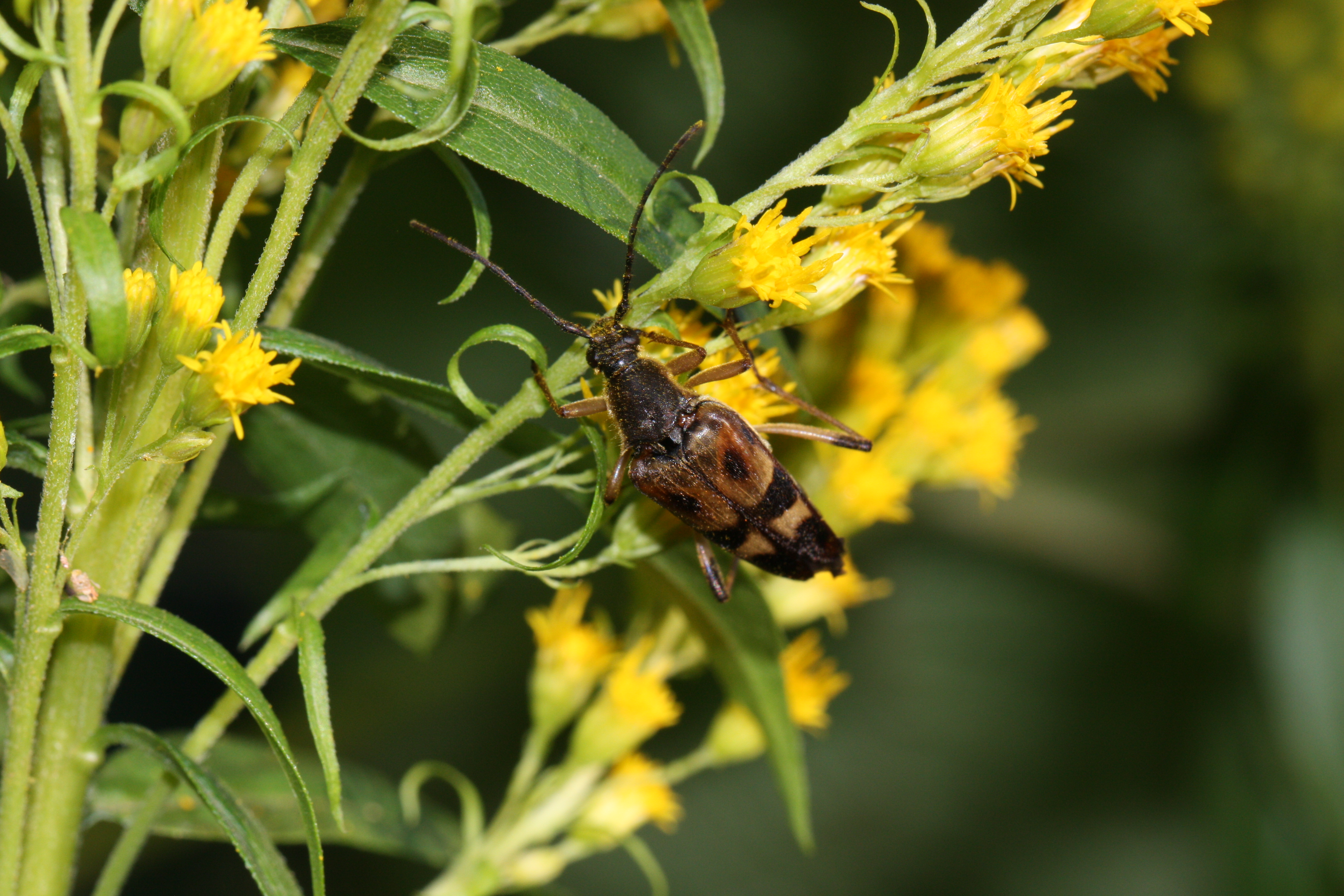
Walter Siegmund (talk) (via Wikimedia Commons) · CC BY-SA
Family: Asteraceae · Type: Herb · Native
Conservation status: CNPS 3.2
Solidago lepida var. salebrosa (Western goldenrod) is a native California herb in the Asteraceae family, recognized by high elevation wet habitats, minutely stalked-glandular inflorescence branches, sometimes waxy stems.
Western goldenrod is a California native perennial found in northern Sierra Nevada and Modoc Plateau regions on moist streambanks and lakesides at elevations of 1,000 to 2,000 meters. Flowering from May to September, this plant produces golden yellow flowers in many-headed, pyramid-shaped clusters with ray flowers 2 to 2.5 millimeters long. Growing with rhizomatous stems up to 1.5 meters tall that can be slightly waxy, it has an open, spreading growth habit. Its mid-stem leaves are narrowly elliptic to lance-shaped, 5 to 15 centimeters long with three prominent veins and toothed edges. The small fruits are 1 to 1.5 millimeters long and sparsely covered with stiff hairs.
Identification and appearance
Key characters: 7 sympatric species; key features are high elevation wet habitats, minutely stalked-glandular inflorescence branches, sometimes waxy stems
Habitat and range
Habitat: Moist streambanks, lakesides
Elevation: 1000-2000 m
Outside California: to Alaska, central and eastern Canada, northern Mexico
Bloom period
Solidago lepida var. salebrosa blooms May-Sep.
Conservation status
CNPS 3.2
How to tell it apart
vs Euthamia: Solidago flowers cluster one-sided on branches; Euthamia flowers form flat-topped clusters.; vs Isocoma: Solidago has small yellow ray petals; Isocoma completely lacks ray petals (disk flowers only).; vs Senecio: Solidago heads in one-sided clusters; Senecio heads in flat or rounded clusters, never one-sided.; vs Eriophyllum: Solidago foliage is green and smooth; Eriophyllum foliage is densely white-woolly.; vs Artemisia: Solidago has showy yellow ray petals; Artemisia has tiny inconspicuous rayless heads.
Frequently asked questions
Is Solidago lepida var. salebrosa native to California?
Yes. Solidago lepida var. salebrosa is native to California (recorded as native).
When does Solidago lepida var. salebrosa bloom?
Solidago lepida var. salebrosa blooms May-Sep.
What plant family does Solidago lepida var. salebrosa belong to?
Solidago lepida var. salebrosa is in the Asteraceae family, genus Solidago.
Is Solidago lepida var. salebrosa rare or endangered?
Solidago lepida var. salebrosa carries California Rare Plant Rank 3.2, state rank S1.
What habitat does Solidago lepida var. salebrosa grow in?
Solidago lepida var. salebrosa grows in Moist streambanks, lakesides.
Related species
Other California species in the same genus, family, or bioregion.
Sources: Jepson eFlora · CalPhotos · CDFW CNDDB
Last updated 2026-10-07
Data from The California Species Project — 14,000+ California species with verified data from CNPS, CDFW, USFWS, Cal-IPC, and more.