Solidago velutina subsp. californica
California goldenrod, California Goldenrod
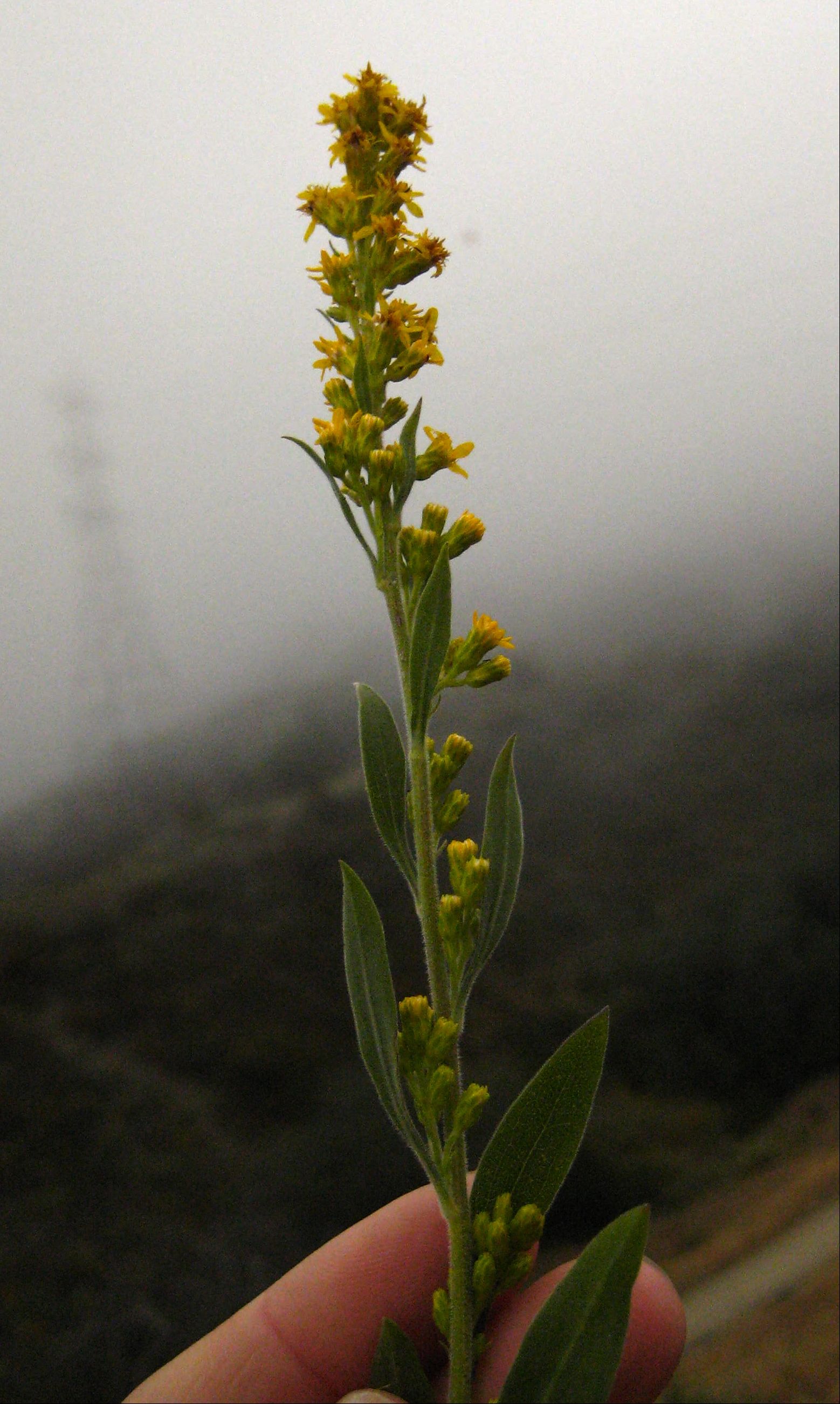
Photo by Chez Brungraber
Family: Asteraceae · Type: Perennial · Native
Solidago velutina subsp. californica (California goldenrod) is a native California perennial in the Asteraceae family, recognized by densely soft-hairy herbage, 1-sided inflorescence, non-resinous phyllaries, wide CA-FP distribution.
California goldenrod is a California native perennial found in the California Floristic Province, North Coast Ranges, Western Transverse Ranges, and Inland Ranges in woodland margins, grasslands, and disturbed soils at elevations up to 2,500 meters. Flowering from May to November, this plant produces bright yellow flowers in long, pyramid-shaped clusters with heads containing 6 to 11 ray flowers. Growing 30 to 100 centimeters tall with generally soft and short-hairy stems, it forms dense herbage with sometimes three-veined leaves. Its leaves are typically narrow and sometimes slightly toothed, with a soft, velvety texture that gives the plant its distinctive appearance. The compact flower heads are characterized by narrow, acute phyllary bracts that are strigose and contribute to the plant's delicate golden appearance.
Identification and appearance
Key characters: 10 sympatric species; key features are densely soft-hairy herbage, 1-sided inflorescence, non-resinous phyllaries, wide CA-FP distribution
Habitat and range
Habitat: Woodland margins, grassland, disturbed soils
Elevation: < 2500 m
California counties: Humboldt, Sonoma, San Bernardino, Kern, Los Angeles, Riverside, San Diego, Siskiyou, Lake, Mendocino, Nevada, Plumas, Santa Barbara, Santa Cruz, Shasta, Tuolumne, Ventura, San Luis Obispo, Orange, Modoc, Trinity, Marin, Monterey, Amador, Calaveras, Contra Costa, Del Norte, Kings, Lassen, Madera, Sierra, Stanislaus, Sutter, Yuba, Alameda, Butte, El Dorado, Fresno, Inyo, Mariposa, Napa, Placer, San Benito, San Francisco, San Mateo, Santa Clara, Solano, Tulare, San Joaquin, Tehama, Colusa, Glenn, Merced
Outside California: Oregon, Baja California
Bloom period
Solidago velutina subsp. californica blooms May-Nov.
How to tell it apart
vs Euthamia: Solidago flowers cluster one-sided on branches; Euthamia flowers form flat-topped clusters.; vs Isocoma: Solidago has small yellow ray petals; Isocoma completely lacks ray petals (disk flowers only).; vs Senecio: Solidago heads in one-sided clusters; Senecio heads in flat or rounded clusters, never one-sided.; vs Eriophyllum: Solidago foliage is green and smooth; Eriophyllum foliage is densely white-woolly.; vs Artemisia: Solidago has showy yellow ray petals; Artemisia has tiny inconspicuous rayless heads.
Frequently asked questions
Is Solidago velutina subsp. californica native to California?
Yes. Solidago velutina subsp. californica is native to California (recorded as native).
When does Solidago velutina subsp. californica bloom?
Solidago velutina subsp. californica blooms May-Nov.
Where in California does Solidago velutina subsp. californica grow?
Solidago velutina subsp. californica occurs in Humboldt, Sonoma, San Bernardino, Kern, Los Angeles, Riverside, San Diego, Siskiyou and other counties, at elevations of < 2500 m.
What plant family does Solidago velutina subsp. californica belong to?
Solidago velutina subsp. californica is in the Asteraceae family, genus Solidago.
What habitat does Solidago velutina subsp. californica grow in?
Solidago velutina subsp. californica grows in Woodland margins, grassland, disturbed soils.
Related species
Other California species in the same genus, family, or bioregion.
- Solidago velutina subsp. sparsiflora
- Solidago altissima subsp. altissima — Late goldenrod
- Solidago confinis — Southern goldenrod
- Solidago elongata — West coast canada goldenrod
- Solidago guiradonis — Guirado's goldenrod
- Solidago lepida var. salebrosa — Western goldenrod
- Soliva sessilis — Common soliva
- Soliva sp.
- Sonchus arvensis — Perennial sow thistle
Sources: Jepson eFlora · Index of California Plant Names · CalPhotos
Last updated 2026-09-30
Data from The California Species Project — 14,000+ California species with verified data from CNPS, CDFW, USFWS, Cal-IPC, and more.