Staphylea bolanderi
Sierra bladdernut, Sierra Bladdernut
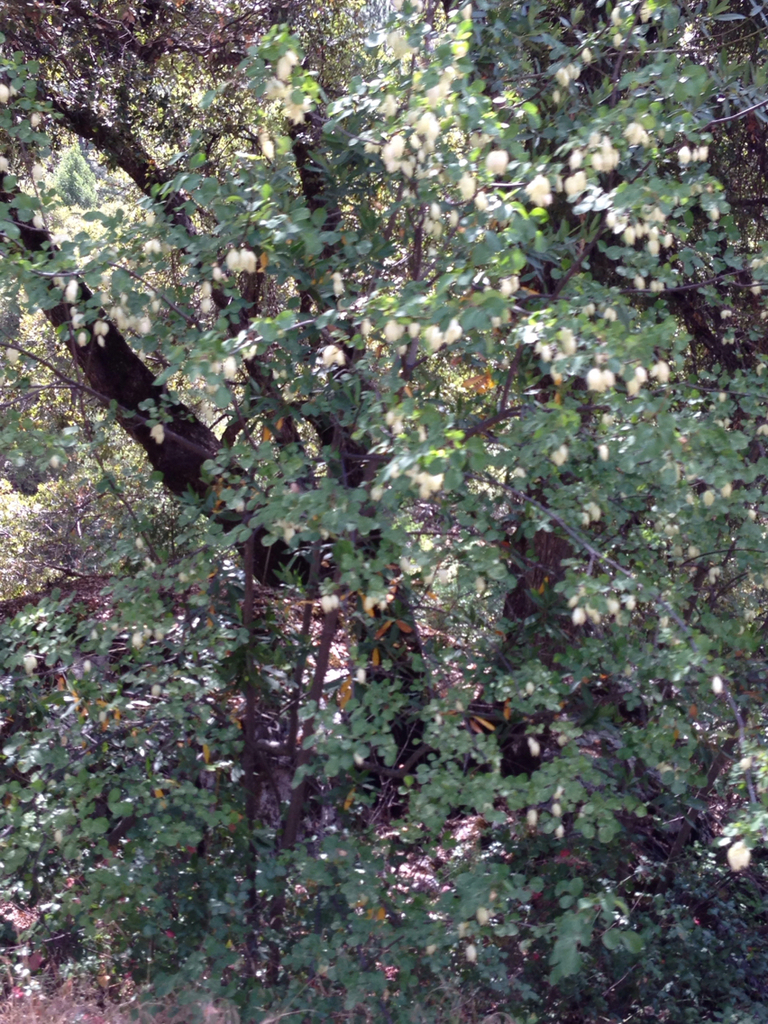
(c) naturalist charlie, some rights reserved (CC BY) · licence
Family: Staphyleaceae · Type: Shrub / Tree · Native
Staphylea bolanderi (Sierra bladdernut) is a native California shrub / tree in the Staphyleaceae family, recognized by Endemic California representative of small temperate family, distinguished by inflated bladder-like fruits.
Sierra bladdernut is a California native shrub found in eastern Klamath Ranges, Cascade Range, and central Sierra Nevada in wooded or shrubby slopes at elevations of 240 to 1,720 meters. Flowering from March to May, this plant produces delicate white flowers with prominent stamens that extend beyond the petals. Growing as a small shrub or tree 2 to 6 meters tall, it has a glabrous (smooth) form with an upright, rounded structure. Its leaves feature widely ovate to round leaflets 2.5 to 6 centimeters long with finely serrated edges, creating a delicate green canopy. The distinctive fruit is 2.5 to 5 centimeters long with prominent horns, containing light brown smooth seeds 5 to 7 millimeters in size.
Identification and appearance
Key characters: Endemic California representative of small temperate family, distinguished by inflated bladder-like fruits
Habitat and range
Habitat: Wooded or shrubby slopes
Elevation: 240-1720 m
California counties: Madera, Fresno, Tulare, Mariposa, Shasta, El Dorado, Siskiyou, Calaveras, Tuolumne, Tehama
Bloom period
Staphylea bolanderi blooms Mar-May.
How to tell it apart
vs Ptelea: Staphylea has opposite trifoliolate leaves and an inflated bladder capsule; hoptree (Ptelea) has alternate trifoliolate leaves and a flat, winged samara.; vs Acer negundo: Staphylea leaves are consistently 3-foliolate with finely serrate leaflets and its fruit is an inflated pod; box-elder has pinnate leaves of 3-5 coarsely toothed leaflets and paired winged samaras.; vs Rhus trilobata: Staphylea leaves are opposite and odorless; skunkbush (Rhus trilobata) has alternate, aromatic leaves and a fleshy reddish fruit.; vs Sambucus: Staphylea has only 3 leaflets and a papery inflated capsule; elderberry (Sambucus) has pinnate leaves of 5-9 leaflets and clusters of small berries.; vs Fraxinus: Staphylea has 3 leaflets and showy white bell flowers; ash (Fraxinus) has 5-9 leaflets, tiny petal-less flowers, and single-winged samaras.
Frequently asked questions
Is Staphylea bolanderi native to California?
Yes. Staphylea bolanderi is native to California (recorded as native).
When does Staphylea bolanderi bloom?
Staphylea bolanderi blooms Mar-May.
Where in California does Staphylea bolanderi grow?
Staphylea bolanderi occurs in Madera, Fresno, Tulare, Mariposa, Shasta, El Dorado, Siskiyou, Calaveras and other counties, at elevations of 240-1720 m.
What plant family does Staphylea bolanderi belong to?
Staphylea bolanderi is in the Staphyleaceae family, genus Staphylea.
What habitat does Staphylea bolanderi grow in?
Staphylea bolanderi grows in Wooded or shrubby slopes.
Related species
Other California species in the same genus, family, or bioregion.
Sources: Jepson eFlora · Index of California Plant Names · CalPhotos
Last updated 2026-10-07
Data from The California Species Project — 14,000+ California species with verified data from CNPS, CDFW, USFWS, Cal-IPC, and more.