Stenanthium occidentale
Western featherbells
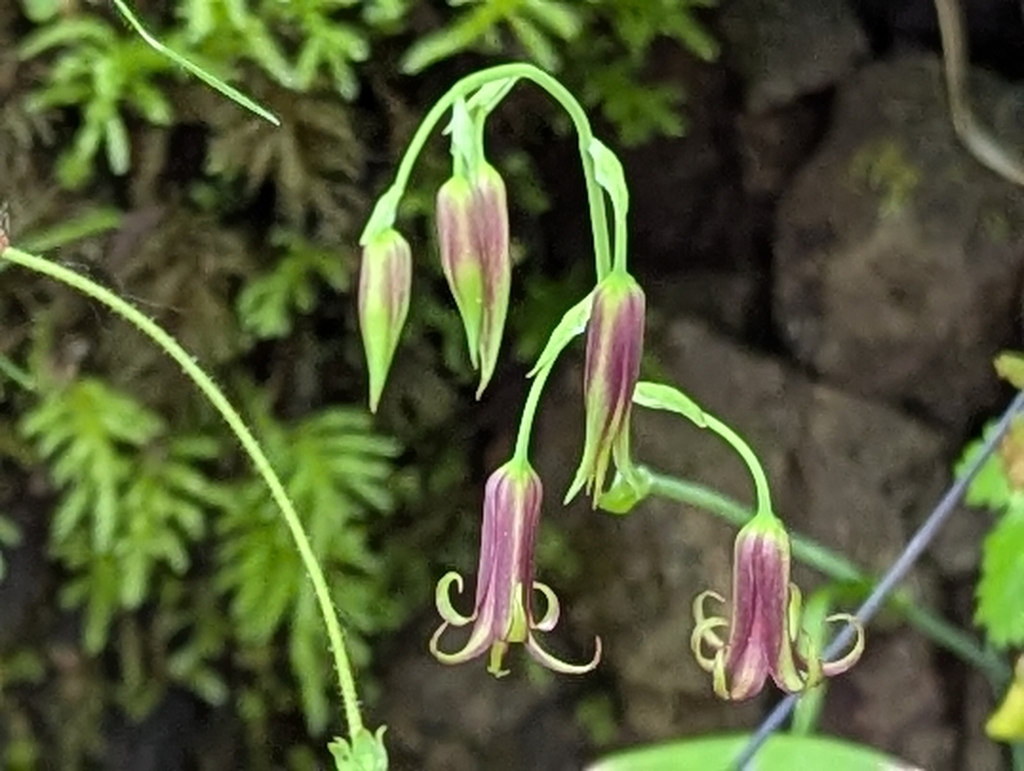
(c) David Anderson, some rights reserved (CC BY) · licence
Family: Melanthiaceae · Type: Herb · Native
Stenanthium occidentale (Western featherbells) is a native California herb in the Melanthiaceae family, recognized by Northwestern montane species representing southern range limit of genus, adapted to cool moist mountain habitats.
Western featherbells is a California native perennial found in the Klamath Ranges on moist banks, thickets, and meadows at elevations of 1,500 to 1,900 meters. Flowering from late May to July, this plant produces pale green-yellow to purple bell-shaped flowers 1 to 2 centimeters long with recurved tips. Growing with erect stems 20 to 50 centimeters tall emerging from a small bulb 2 to 4 centimeters in size, it develops an elegant raceme or panicle inflorescence 10 to 20 centimeters long. Its leaves are elongated, measuring 10 to 30 centimeters in length and 3 to 15 millimeters wide, with lance-linear bracts accompanying the delicate flower clusters. The fruit is distinctive, reaching 15 to 20 millimeters long and retaining persistent styles.
Identification and appearance
Key characters: Northwestern montane species representing southern range limit of genus, adapted to cool moist mountain habitats
Habitat and range
Habitat: Moist banks, thickets, meadows
Elevation: 1500-1900 m
California counties: Siskiyou, Del Norte, Humboldt, Marin, Alameda, Trinity
Outside California: to western Canada, Montana
Bloom period
Stenanthium occidentale blooms Late May-Jul.
How to tell it apart
vs Trillium: Stenanthium has narrow grass-like leaves and small flowers in tall spikes, while Trillium has three broad leaves and large solitary flowers.; vs Pseudotrillium: Stenanthium has narrow grass-like leaves and small flowers in tall spikes, while Pseudotrillium has three broad leaves and large solitary flowers.; vs Veratrum: Stenanthium has narrow grass-like leaves, while Veratrum has broad, strongly pleated leaves like a fan.; vs Xerophyllum: Stenanthium flowers are greenish-yellow to purple without glands, while Xerophyllum has dense white flower clusters.; vs Toxicoscordion: Stenanthium flowers are smooth at the base without glands, while Toxicoscordion has distinct glistening glands on each petal.
Frequently asked questions
Is Stenanthium occidentale native to California?
Yes. Stenanthium occidentale is native to California (recorded as native).
When does Stenanthium occidentale bloom?
Stenanthium occidentale blooms Late May-Jul.
Where in California does Stenanthium occidentale grow?
Stenanthium occidentale occurs in Siskiyou, Del Norte, Humboldt, Marin, Alameda, Trinity, at elevations of 1500-1900 m.
What plant family does Stenanthium occidentale belong to?
Stenanthium occidentale is in the Melanthiaceae family, genus Stenanthium.
What habitat does Stenanthium occidentale grow in?
Stenanthium occidentale grows in Moist banks, thickets, meadows.
Related species
Other California species in the same genus, family, or bioregion.
Sources: Jepson eFlora · Index of California Plant Names · CalPhotos
Last updated 2026-10-07
Data from The California Species Project — 14,000+ California species with verified data from CNPS, CDFW, USFWS, Cal-IPC, and more.