Streptanthus insignis subsp. lyonii
Arburua ranch jewelflower, Arburua Ranch Jewelflower
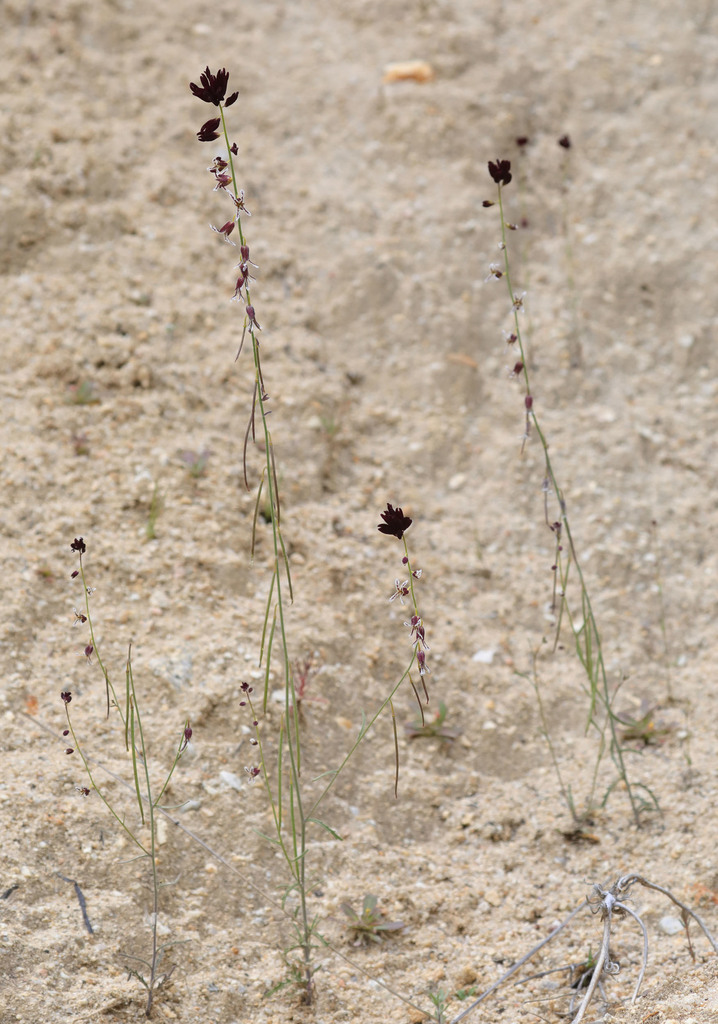
(c) Pinnacles National Park, some rights reserved (CC BY), uploaded by Pinnacles National Park · licence
Family: Brassicaceae · Type: Herb · Native
Conservation status: CNPS 1B.2
Streptanthus insignis subsp. lyonii (Arburua ranch jewelflower) is a native California herb in the Brassicaceae family, recognized by other subspecies by pale terminal clusters and yellow petals.
Arburua ranch jewelflower is a rare (CNPS 1B.2) California native annual found in the south-central Inner Coast Ranges near Ortigalita Peak in western Merced County, inhabiting serpentine grasslands and oak woodlands at elevations of 200 to 900 meters. Flowering from April to May, this plant produces delicate lemon yellow to yellow-white flowers with pale yellow to green-yellow terminal sterile flower clusters. Growing with slender stems featuring distinctive fertile flowers with green-yellow or purple sepals, the plant develops an intricate inflorescence. Its leaves are characterized by their adaptation to serpentine soils, with varied shapes complementing the plant's unique flowering structure. The fruit is moderately to densely covered in bristly hairs, adding textural complexity to this rare and localized jewelflower.
Identification and appearance
Key characters: 3 sympatric species; distinguished from other subspecies by pale terminal clusters and yellow petals
Habitat and range
Habitat: Serpentine, grassland, oak woodland
Elevation: 200-900 m
Bloom period
Streptanthus insignis subsp. lyonii blooms Apr-May.
Conservation status
CNPS 1B.2
How to tell it apart
vs Caulanthus: Seed pods are flattened like sword blades versus cylindrical tubes in Caulanthus.; vs Boechera: Robust plants often over 2.5 feet with large flowers (sepals 4-8mm) versus more delicate habit.; vs Claytonia: Mustard family with 4 petals and 6 stamens versus Claytonia with 5 petals.; vs Silene: Mustard family with seed pods versus Silene with inflated capsules and opposite leaves.; vs Lonicera: Herbaceous mustard with alternate leaves versus woody vine with opposite leaves.
Frequently asked questions
Is Streptanthus insignis subsp. lyonii native to California?
Yes. Streptanthus insignis subsp. lyonii is native to California (recorded as native).
When does Streptanthus insignis subsp. lyonii bloom?
Streptanthus insignis subsp. lyonii blooms Apr-May.
What plant family does Streptanthus insignis subsp. lyonii belong to?
Streptanthus insignis subsp. lyonii is in the Brassicaceae family, genus Streptanthus.
Is Streptanthus insignis subsp. lyonii rare or endangered?
Streptanthus insignis subsp. lyonii carries California Rare Plant Rank 1B.2, state rank S2.
What habitat does Streptanthus insignis subsp. lyonii grow in?
Streptanthus insignis subsp. lyonii grows in Serpentine, grassland, oak woodland.
Related species
Other California species in the same genus, family, or bioregion.
- Streptanthus juneae — June's jewelflower
- Streptanthus longisiliquus — Long-fruit jewelflower
- Streptanthus medeirosii — Tejon jewelflower
- Streptanthus morrisonii — Morrison's jewelflower
- Streptanthus morrisonii ssp. elatus — Three Peaks jewel-flower
- Streptanthus morrisonii ssp. hirtiflorus — Dorr's Cabin jewel-flower
Sources: Jepson eFlora · CNPS Rare Plant Inventory · Index of California Plant Names · CalPhotos · CDFW CNDDB
Last updated 2026-10-07
Data from The California Species Project — 14,000+ California species with verified data from CNPS, CDFW, USFWS, Cal-IPC, and more.