Struthiopteris spicant
Deer fern, Deer Fern
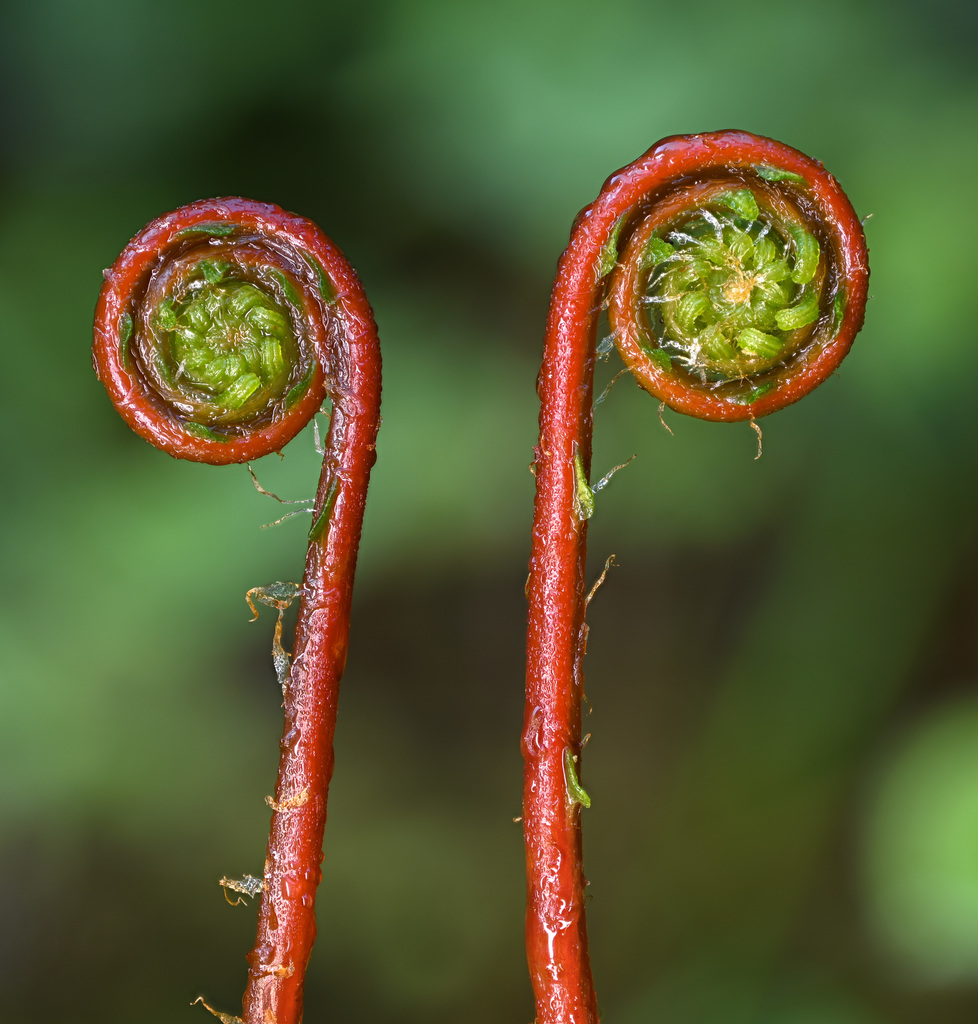
(c) Alan Rockefeller, some rights reserved (CC BY) · licence
Family: Blechnaceae · Type: Herb · Native
Struthiopteris spicant (Deer fern) is a native California herb in the Blechnaceae family, recognized by Northern temperate species with distinctive dimorphic fronds, representing specialized spore-dispersal adaptation within Blechnaceae.
Deer fern is a native fern found in northern California coastal regions, northern Coast Ranges, northern Sierra Nevada, central coastal California, and San Francisco Bay Area in shaded, neutral to acid moist areas at elevations from 0 to 1,500 meters. Its sterile leaves form an arching rosette up to 1 meter tall with 20 to 80 pairs of firm, deep green pinnae 5 to 8 millimeters wide, spreading in a graceful circular pattern. Growing with a short, dark-based stipe covered in persistent brown scales, the fern develops distinctive sterile and fertile leaf structures with the fertile leaves emerging later in the center of the rosette. Its pinnae range from entire to shallowly crenate, with lower pinnae gradually reducing to semicircular lobes less than 5 millimeters long. The fertile leaves stand more upright, with narrower pinnae approximately 2 millimeters wide and completely unlobed.
Identification and appearance
Key characters: Northern temperate species with distinctive dimorphic fronds, representing specialized spore-dispersal adaptation within Blechnaceae
Habitat and range
Habitat: Shaded, neutral to acid moist areas
Elevation: +- 0-1500 m.
Outside California: to Alaska, Idaho, Europe, southwestern Asia, northern Africa
How to tell it apart
vs Polystichum: Struthiopteris has two frond kinds—flat spreading sterile fronds and erect, narrow fertile fronds—while sword fern (Polystichum) fronds are all alike, each 1-pinnate with a thumb-like basal lobe on every pinna.; vs Woodwardia: Struthiopteris is a modest rosette under 1 m with sharply dimorphic fronds; Woodwardia is a coarse fern often 1-3 m with uniform fronds bearing chain-like rows of sori along the veins.; vs Blechnum: Struthiopteris fronds are strongly dimorphic and form a tight ground rosette; naturalized Blechnum appendiculatum has scarcely dimorphic fronds and a spreading habit.; vs Polypodium: Struthiopteris forms an upright rosette from a stout base; Polypodium arises singly along a creeping rhizome with round, naked sori.; vs Dryopteris: Struthiopteris fronds are only once-pinnate to pinnatifid and dimorphic; Dryopteris fronds are 2-3-pinnate, lacy, and all of one kind.
Frequently asked questions
Is Struthiopteris spicant native to California?
Yes. Struthiopteris spicant is native to California (recorded as native).
What plant family does Struthiopteris spicant belong to?
Struthiopteris spicant is in the Blechnaceae family, genus Struthiopteris.
What habitat does Struthiopteris spicant grow in?
Struthiopteris spicant grows in Shaded, neutral to acid moist areas.
Related species
Other California species in the same genus, family, or bioregion.
Sources: Jepson eFlora · Index of California Plant Names · CalPhotos
Last updated 2026-10-07
Data from The California Species Project — 14,000+ California species with verified data from CNPS, CDFW, USFWS, Cal-IPC, and more.