Suaeda nigra
Bush seepweed
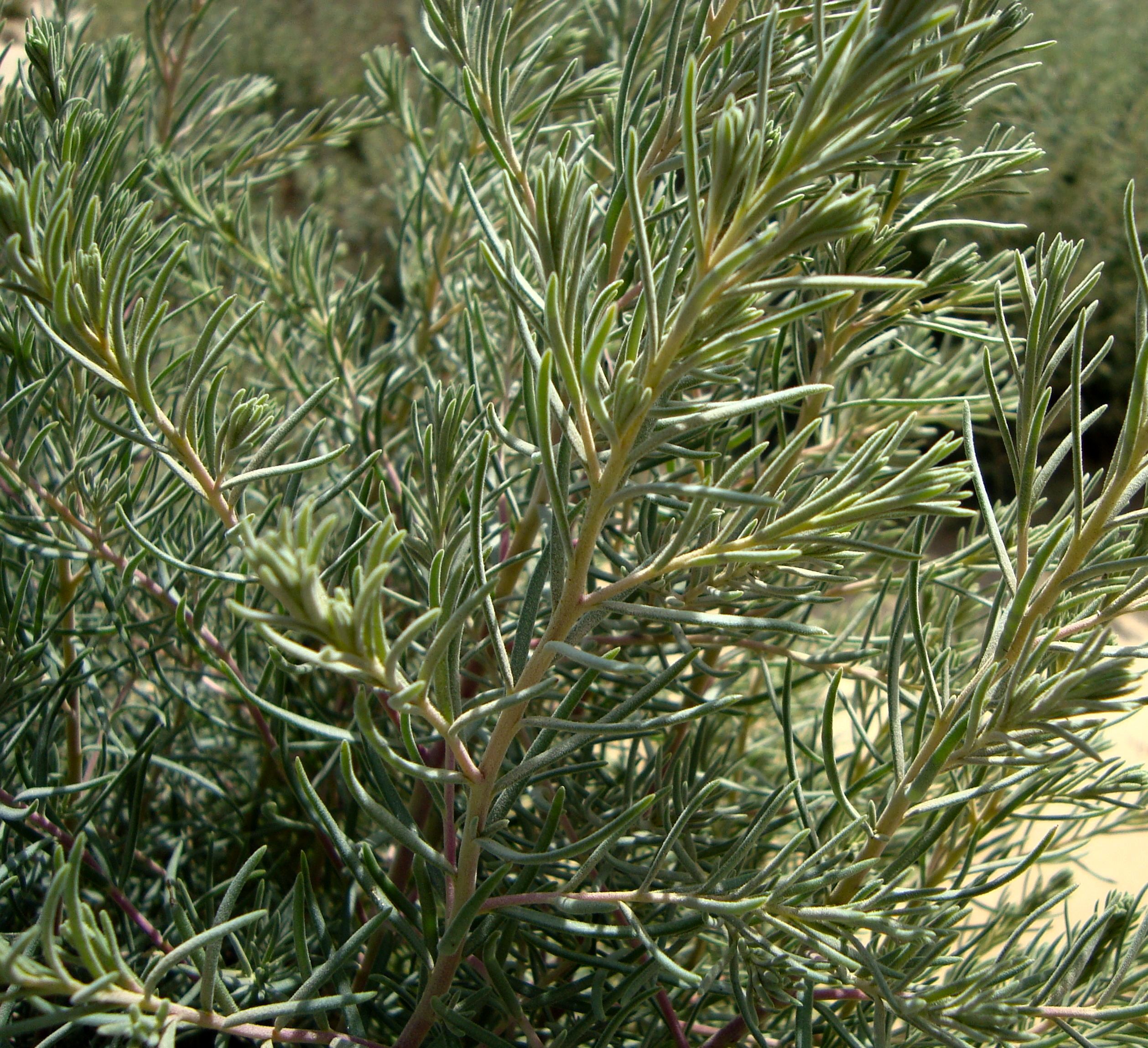
Photo by Chez Brungraber
Family: Chenopodiaceae · Type: Shrub · Native
Suaeda nigra (Bush seepweed) is a native California shrub in the Chenopodiaceae family, recognized by widespread distribution and thin branching pattern help distinguish it.
Bush seepweed is a California native annual found in the Great Valley, Central Coast, San Francisco Bay Area, southwestern California, Great Basin, and desert regions in alkaline and saline habitats at elevations below 1,600 meters. Flowering from May to September, this plant produces tiny green to yellow-green flowers in small clusters along its stems. Growing with spreading to erect stems 20 to 150 centimeters tall, it develops multiple branches from a woody base with shiny green to yellow-brown or reddish herbaceous stems. Its leaves are ascending to wide-spreading, narrow and somewhat cylindrical, ranging from 5 to 30 millimeters long and varying in color from yellow-green to red. The small black seeds are horizontal or vertical, lenticular and shiny, contributing to the plant's distinctive appearance in harsh, salty environments.
Identification and appearance
Key characters: 5 sympatric species; widespread distribution and thin branching pattern help distinguish it
Habitat and range
Habitat: Alkaline, saline habitats in interior and desert, occasionally coastal
Elevation: < 1600 m
California counties: Inyo, Ventura, San Luis Obispo, Imperial, Riverside, Los Angeles, San Bernardino, Kern, Mono, Modoc, Merced, Kings, Yolo, Fresno, Monterey, Tulare, Contra Costa, Colusa, Lassen, Orange, Santa Barbara, San Diego, Lake, Butte, Glenn, Solano, Alameda, Madera
Outside California: to western Canada, Texas, Mexico
Bloom period
Suaeda nigra blooms May-Sep.
How to tell it apart
vs Eriogonum: Suaeda has thick succulent leaves; Eriogonum has thin, often woolly leaves and clustered flowers.; vs Atriplex: Suaeda leaves are thick and succulent; Atriplex leaves are thin with scaly white coating.; vs Salsola: Suaeda leaves end in soft rounded tips; Salsola leaves taper to sharp spine tips.; vs Curio: Suaeda has simple cylindrical leaves; Curio has compound leaves or distinctive leaf shapes.; vs Frankenia: Suaeda has succulent cylindrical leaves; Frankenia has tiny opposite leaves with rolled-under edges.
Frequently asked questions
Is Suaeda nigra native to California?
Yes. Suaeda nigra is native to California (recorded as native).
When does Suaeda nigra bloom?
Suaeda nigra blooms May-Sep.
Where in California does Suaeda nigra grow?
Suaeda nigra occurs in Inyo, Ventura, San Luis Obispo, Imperial, Riverside, Los Angeles, San Bernardino, Kern and other counties, at elevations of < 1600 m.
What plant family does Suaeda nigra belong to?
Suaeda nigra is in the Chenopodiaceae family, genus Suaeda.
What habitat does Suaeda nigra grow in?
Suaeda nigra grows in Alkaline, saline habitats in interior and desert, occasionally coastal.
Related species
Other California species in the same genus, family, or bioregion.
Sources: Jepson eFlora · Index of California Plant Names · CalPhotos
Last updated 2026-10-07
Data from The California Species Project — 14,000+ California species with verified data from CNPS, CDFW, USFWS, Cal-IPC, and more.