Symphoricarpos albus var. laevigatus
Snowberry, Snowberry
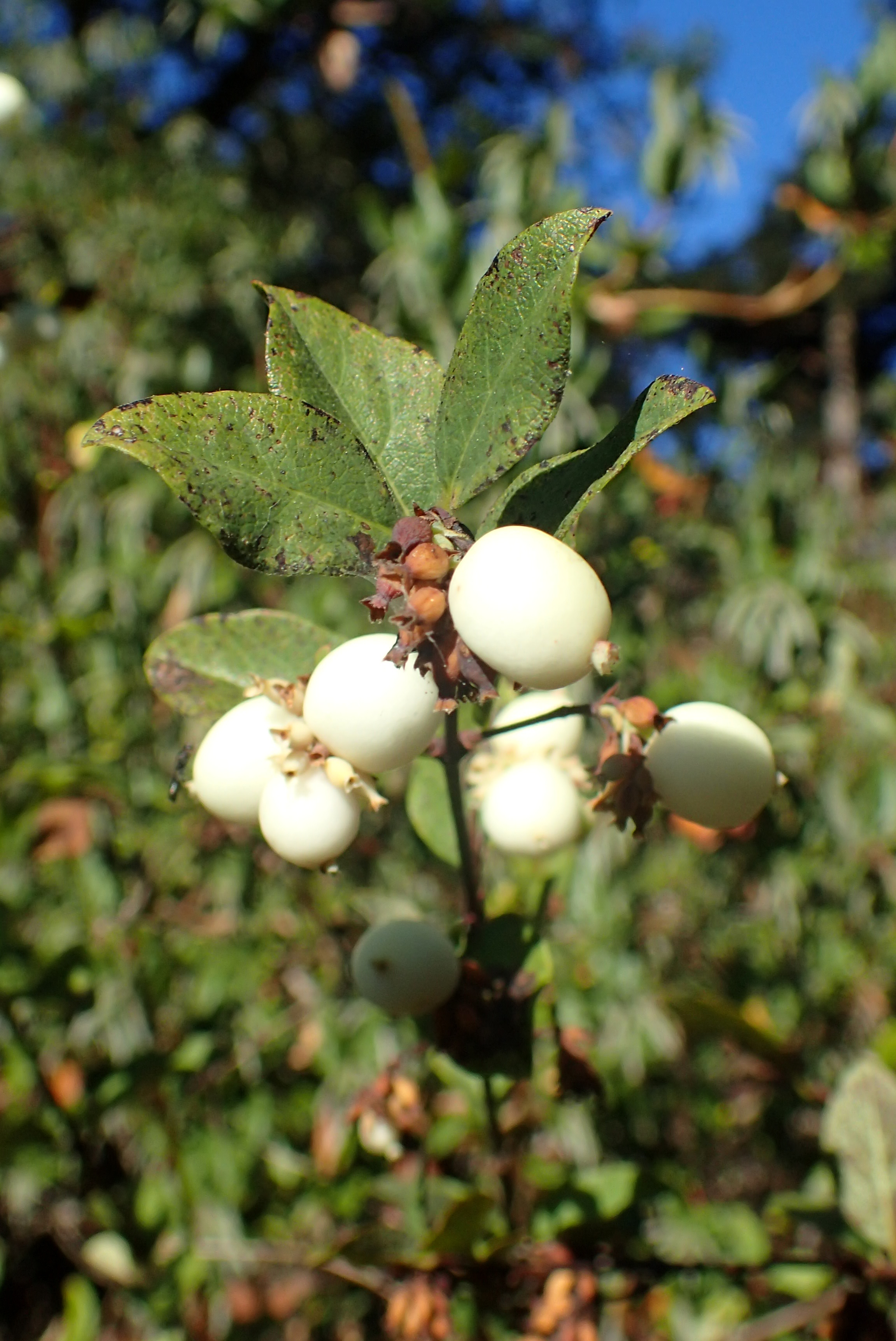
Krzysztof Ziarnek, Kenraiz (via Wikimedia Commons) · CC BY-SA
Family: Caprifoliaceae · Type: Shrub · Native
Symphoricarpos albus var. laevigatus (Snowberry) is a native California shrub in the Caprifoliaceae family, recognized by erect habit, clustered flowers, round white fruits.
Snowberry is a California native shrub found in northwestern California, western edge of the Cascade Range, northern Sierra Nevada foothills, central western, and southwestern California in shady woodlands, streambanks, and northern slopes at elevations below 1,200 meters. Flowering from May to July, this plant produces delicate pink flowers in clusters of 8 to 16, with bell-shaped blooms swollen on one side. Growing 0.6 to 1.8 meters tall with stiff, spreading branches and erect new shoots, the shrub forms an open, distinctive structure. Its leaves are typically 1 to 3 centimeters long, becoming larger on new shoots, with blades that vary in size and shape. The plant produces round, white fruits 8 to 12 millimeters in diameter that stand out against its branching structure.
Identification and appearance
Key characters: 3 sympatric species; distinguished by erect habit, clustered flowers, round white fruits
Habitat and range
Habitat: Shady woodland, streambanks, northern slopes
Elevation: < 1200 m
California counties: Siskiyou, San Mateo, Monterey, Humboldt, Plumas, Santa Clara, Santa Barbara, Mendocino, Santa Cruz, Alameda, Los Angeles, Riverside, Lake, San Diego, San Francisco, Kern, Contra Costa, Glenn, Ventura, Sonoma, Shasta, Del Norte, Orange, Marin, Amador, Trinity, San Bernardino, San Luis Obispo, El Dorado, Calaveras, Butte, Napa, Nevada, Sutter, San Benito, Tuolumne, Sacramento, Tehama, Solano, Tulare, Yolo, Placer, Stanislaus
Outside California: to Alaska, Montana, naturalized in eastern United States
Bloom period
Symphoricarpos albus var. laevigatus blooms May-Jul(Sep).
How to tell it apart
vs Lonicera: Symphoricarpos has symmetrical bell flowers and white berries; Lonicera has lopsided tubular flowers and dark berries.; vs Gaultheria: Symphoricarpos has opposite leaves and exactly 2 seeds per berry; Gaultheria has alternate leaves and many tiny seeds.; vs Apocynum: Symphoricarpos produces white berries; Apocynum produces paired dry seed pods and has milky sap.; vs Rosa: Symphoricarpos has opposite leaves and white berries; Rosa has alternate compound leaves and red rose hips.; vs Toxicodendron: Symphoricarpos has opposite simple leaves and white berries; Toxicodendron has alternate compound leaves and whitish drupes.
Frequently asked questions
Is Symphoricarpos albus var. laevigatus native to California?
Yes. Symphoricarpos albus var. laevigatus is native to California (recorded as native).
When does Symphoricarpos albus var. laevigatus bloom?
Symphoricarpos albus var. laevigatus blooms May-Jul(Sep).
Where in California does Symphoricarpos albus var. laevigatus grow?
Symphoricarpos albus var. laevigatus occurs in Siskiyou, San Mateo, Monterey, Humboldt, Plumas, Santa Clara, Santa Barbara, Mendocino and other counties, at elevations of < 1200 m.
What plant family does Symphoricarpos albus var. laevigatus belong to?
Symphoricarpos albus var. laevigatus is in the Caprifoliaceae family, genus Symphoricarpos.
What habitat does Symphoricarpos albus var. laevigatus grow in?
Symphoricarpos albus var. laevigatus grows in Shady woodland, streambanks, northern slopes.
Related species
Other California species in the same genus, family, or bioregion.
- Symphoricarpos longiflorus — Fragrant snowberry
- Symphoricarpos mollis — Creeping snowberry
- Symphoricarpos rotundifolius — Mountain snowberry
- Symphoricarpos rotundifolius var. parishii — Parish's snowberry
- Symphoricarpos rotundifolius var. rotundifolius — Long flowered snowberry
- Symphoricarpos sp. — Waxberry
Sources: Jepson eFlora · Index of California Plant Names · CalPhotos
Last updated 2026-10-07
Data from The California Species Project — 14,000+ California species with verified data from CNPS, CDFW, USFWS, Cal-IPC, and more.