Symphyotrichum ascendens
Western aster
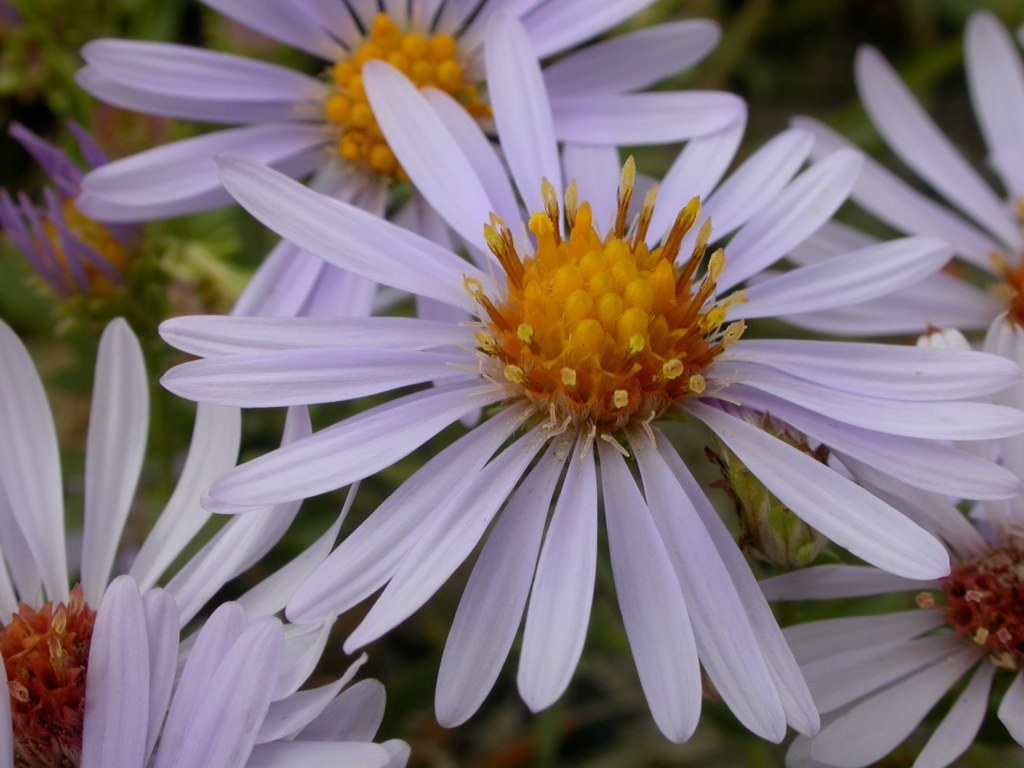
(c) Matt Lavin, some rights reserved (CC BY-SA) · licence
Family: Asteraceae · Type: Herb · Native
Symphyotrichum ascendens (Western aster) is a native California herb in the Asteraceae family, recognized by violet rays and rhizomatous habit key features.
Western aster is a California native perennial found in the eastern Sierra Nevada, Tehachapi, southern Sierra Nevada, southern Coast Ranges, and Great Basin in meadows and disturbed places at elevations of 500 to 2,500 meters. Flowering from July to September, this plant produces violet ray flowers 8 to 15 millimeters long in open, clustered flower heads. Growing with erect stems 20 to 60 centimeters tall that are strigose (especially toward the top), it emerges from a long rhizome. Its leaves range from 5 to 15 centimeters long, becoming smaller toward the stem's top, with oblong to oblanceolate shapes that are acute and mostly glabrous. The fruit is characteristically hairy, adding textural interest to this widespread California native plant.
Identification and appearance
Key characters: 13 sympatric species; violet rays and rhizomatous habit key features
Habitat and range
Habitat: Meadows, disturbed places
Elevation: 500-2500 m
California counties: Kern, San Bernardino, Los Angeles, Mono, Tulare, Alpine, Plumas, Lassen, Placer, Siskiyou, Sierra, Inyo, El Dorado, Fresno, Nevada, Riverside, Tuolumne, Tehama, Mariposa, Shasta, Butte, San Diego, Trinity, Amador, Modoc, Calaveras, Yuba, Ventura, Sonoma
Outside California: to western Canada, Colorado, northern Arizona
Bloom period
Symphyotrichum ascendens blooms Jul-Sep.
How to tell it apart
vs Corethrogyne: Corethrogyne has distinctive brown/reddish pappus; Symphyotrichum has white pappus; vs Erigeron: Erigeron has 50+ very thin rays per head; Symphyotrichum has fewer wider rays; vs Eurybia: Eurybia has two-toned bracts (green tips, white bases); Symphyotrichum bracts are all green; vs Aster: Aster is the old name for Symphyotrichum - they're the same plants; vs Dieteria: Dieteria has spinulose-tipped bracts; Symphyotrichum bracts lack spiny tips
Frequently asked questions
Is Symphyotrichum ascendens native to California?
Yes. Symphyotrichum ascendens is native to California (recorded as native).
When does Symphyotrichum ascendens bloom?
Symphyotrichum ascendens blooms Jul-Sep.
Where in California does Symphyotrichum ascendens grow?
Symphyotrichum ascendens occurs in Kern, San Bernardino, Los Angeles, Mono, Tulare, Alpine, Plumas, Lassen and other counties, at elevations of 500-2500 m.
What plant family does Symphyotrichum ascendens belong to?
Symphyotrichum ascendens is in the Asteraceae family, genus Symphyotrichum.
What habitat does Symphyotrichum ascendens grow in?
Symphyotrichum ascendens grows in Meadows, disturbed places.
Related species
Other California species in the same genus, family, or bioregion.
Sources: Jepson eFlora · Index of California Plant Names · CalPhotos
Last updated 2026-10-07
Data from The California Species Project — 14,000+ California species with verified data from CNPS, CDFW, USFWS, Cal-IPC, and more.