Symphytum officinale
Comfrey
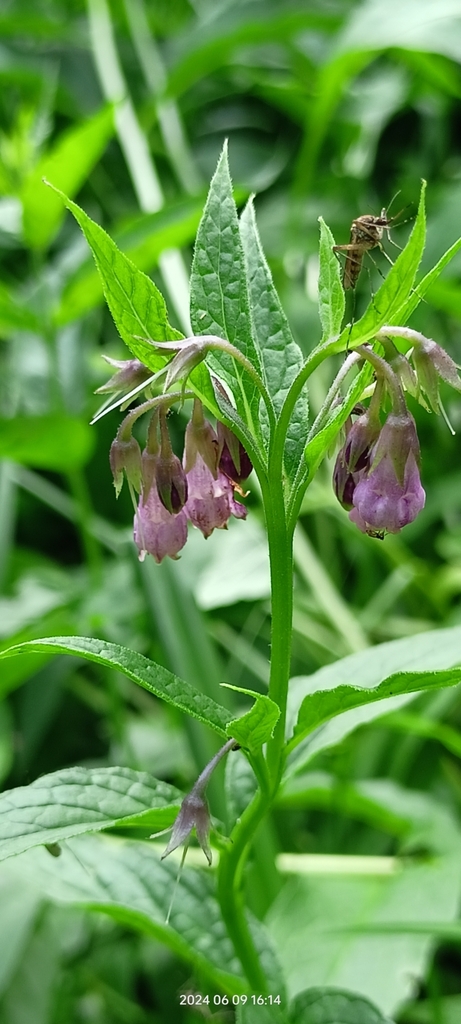
no rights reserved · CC0
Family: Boraginaceae · Type: Herb · Not Native
Symphytum officinale (Comfrey) is a non-native California herb in the Boraginaceae family, recognized by . Distinguished by largest corolla size and specific bioregional restriction.
Comfrey is a naturalized perennial found in the southern California Ranges in Butte County, typically occurring in disturbed sites at elevations below 1,150 meters. Flowering from May to July, this plant produces red to purple (occasionally white) flowers about 15 to 19 millimeters long with distinctive lanceolate calyx lobes. Growing with branched stems 50 to 100 centimeters tall, it develops robust vegetation with extensive leaf coverage. Its leaves range from 5 to 30 centimeters in length, creating a dense green understory. The plant produces small nutlets 4 to 5 millimeters long, which mature within an enlarging calyx.
Identification and appearance
Key characters: Geographically isolated from all congeners. Distinguished by largest corolla size and specific bioregional restriction.
Habitat and range
Habitat: Disturbed sites
Elevation: < 1150 m
Outside California: to Canada, eastern United States, native to Europe
Bloom period
Symphytum officinale blooms May-Jul.
How to tell it apart
vs Borago: Symphytum has bell-shaped flowers with internal appendages; Borago has star-shaped reflexed petals exposing dark stamens.; vs Anchusa: Symphytum has distinct narrow tube then expanded throat; Anchusa throat gradually widens or stays consistent.
Frequently asked questions
Is Symphytum officinale native to California?
No. Symphytum officinale is not native to California (recorded as not native).
When does Symphytum officinale bloom?
Symphytum officinale blooms May-Jul.
What plant family does Symphytum officinale belong to?
Symphytum officinale is in the Boraginaceae family, genus Symphytum.
What habitat does Symphytum officinale grow in?
Symphytum officinale grows in Disturbed sites.
Related species
Other California species in the same genus, family, or bioregion.
Sources: Jepson eFlora · CalPhotos
Last updated 2026-10-07
Data from The California Species Project — 14,000+ California species with verified data from CNPS, CDFW, USFWS, Cal-IPC, and more.