Symphytum ×uplandicum
Russian comfrey, Russian Comfrey
no rights reserved · CC0
Family: Boraginaceae · Type: Herb · Not Native
Symphytum ×uplandicum (Russian comfrey) is a non-native California herb in the Boraginaceae family, recognized by . Distinguished by hybrid origin and specific bioregional distribution.
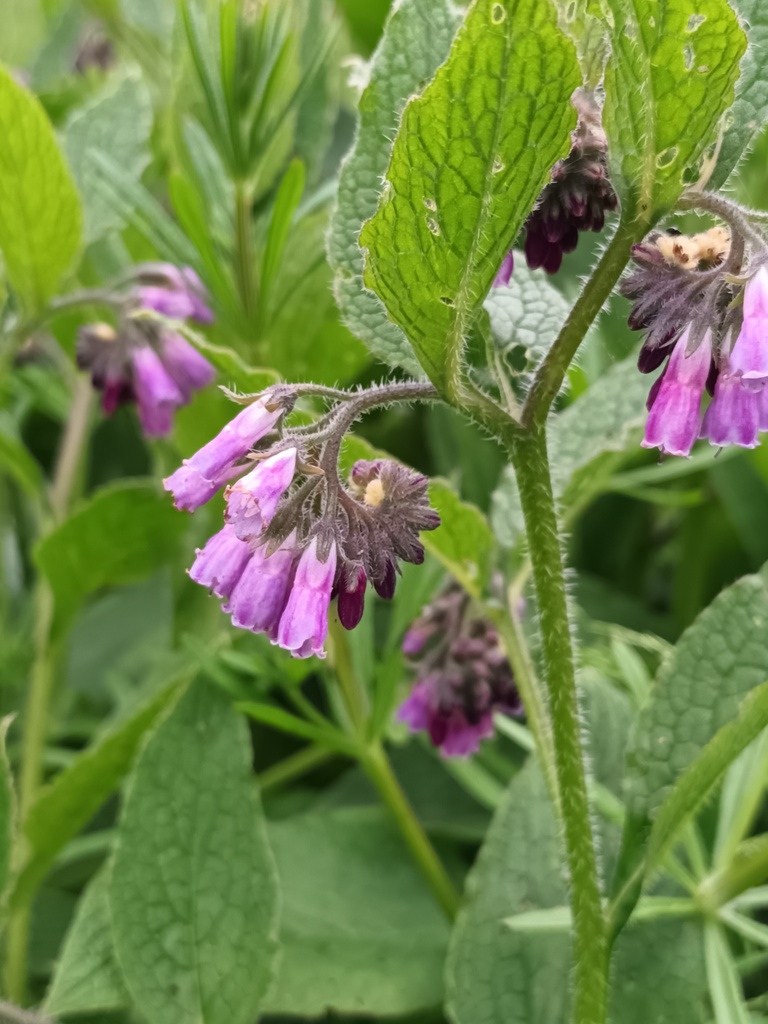
Russian comfrey is a naturalized perennial found in northern coastal California, Sacramento Valley, and as a waif in Yolo County, occurring in wet, open sites at elevations below 100 meters. Flowering from May to July, this plant produces pink flowers that transition to purple and blue-purple, with blooms approximately 13 to 16 millimeters long. Growing with branched stems 60 to 100 centimeters tall, it develops a robust and spreading habit. Its leaves range from 5 to 15 centimeters in length, creating a dense green backdrop for the delicate flower clusters. The fruit develops small nutlets 3 to 4 millimeters long, nestled in a calyx that expands to 5.5 millimeters when mature.
Identification and appearance
Key characters: Geographically isolated from all congeners. Distinguished by hybrid origin and specific bioregional distribution.
Habitat and range
Habitat: Wet, open sites
Elevation: < 100 m
Outside California: to British Columbia, northeastern United States, native to Europe
Bloom period
Symphytum ×uplandicum blooms May-Jul.
How to tell it apart
vs Borago: Symphytum has bell-shaped flowers with internal appendages; Borago has star-shaped reflexed petals exposing dark stamens.; vs Anchusa: Symphytum has distinct narrow tube then expanded throat; Anchusa throat gradually widens or stays consistent.
Frequently asked questions
Is Symphytum ×uplandicum native to California?
No. Symphytum ×uplandicum is not native to California (recorded as not native).
When does Symphytum ×uplandicum bloom?
Symphytum ×uplandicum blooms May-Jul.
What plant family does Symphytum ×uplandicum belong to?
Symphytum ×uplandicum is in the Boraginaceae family, genus Symphytum.
What habitat does Symphytum ×uplandicum grow in?
Symphytum ×uplandicum grows in Wet, open sites.
Related species
Other California species in the same genus, family, or bioregion.
Sources: Jepson eFlora · CalPhotos
Last updated 2026-10-07
Data from The California Species Project — 14,000+ California species with verified data from CNPS, CDFW, USFWS, Cal-IPC, and more.