Tagetes erecta
African or french marigold, African or French Marigold
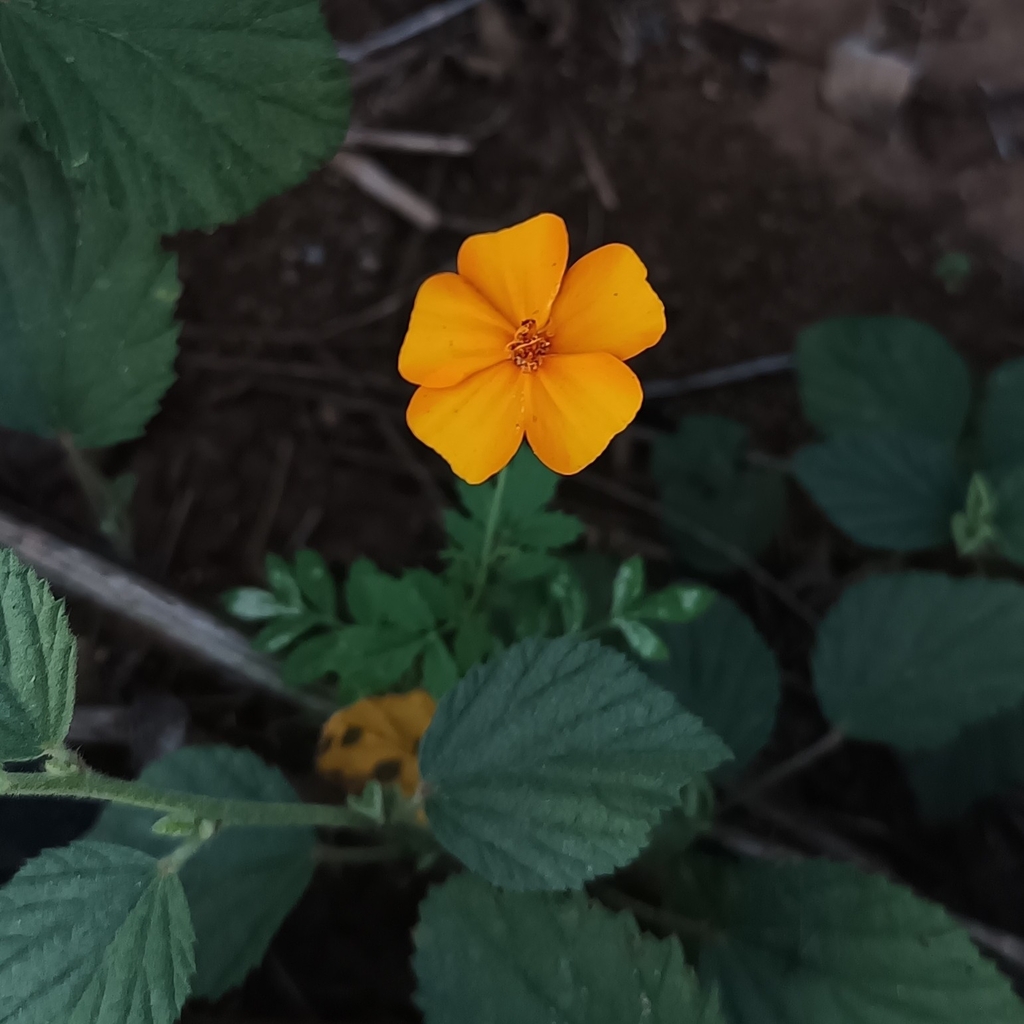
(c) Ricardo Betancourt Sánchez, some rights reserved (CC BY) · licence
Family: Asteraceae · Type: Herb · Not Native
Tagetes erecta (African or french marigold) is a non-native California herb in the Asteraceae family.
African or french marigold is a naturalized annual found in central and southwestern California in disturbed places at elevations below 1,000 meters. Flowering from May to September, this plant produces showy yellow to orange flowers with ray petals 10 to 30 millimeters long in distinctive heads. Growing 1 to 10 decimeters tall with erect, glabrous stems, it forms a robust and upright annual. Its leaves have serrated leaflets that create a delicate, finely-toothed appearance. The flower heads feature prominent ray flowers surrounded by numerous disk flowers, creating a full and vibrant botanical display.
Identification and appearance
Key characters: 1 sympatric species; key differentiators are ray length (10-30mm vs 1-2mm) and peduncle thickness
Habitat and range
Habitat: Uncommon. Disturbed places
Elevation: < 1000 m
Outside California: native to Mexico
Bloom period
Tagetes erecta blooms May-Sep.
How to tell it apart
vs Lantana: Lantana has opposite leaves and tubular flowers in rounded clusters, not daisy-like heads; vs Calendula: Calendula's bracts are separate overlapping scales, not fused into a cup; vs Bahiopsis: Bahiopsis has separate overlapping bracts and lacks the strong marigold scent; vs Eriophyllum: Eriophyllum has woolly gray foliage and separate bracts, not fused tubes; vs Bidens: Bidens has separate bracts and seeds with 2-4 barbed awns, not scales
Frequently asked questions
Is Tagetes erecta native to California?
No. Tagetes erecta is not native to California (recorded as not native).
When does Tagetes erecta bloom?
Tagetes erecta blooms May-Sep.
What plant family does Tagetes erecta belong to?
Tagetes erecta is in the Asteraceae family, genus Tagetes.
What habitat does Tagetes erecta grow in?
Tagetes erecta grows in Uncommon. Disturbed places.
Related species
Other California species in the same genus, family, or bioregion.
Sources: Jepson eFlora · CalPhotos
Last updated 2026-10-07
Data from The California Species Project — 14,000+ California species with verified data from CNPS, CDFW, USFWS, Cal-IPC, and more.