Thingia ambigua
Desert cistanthe, dead man's fingers
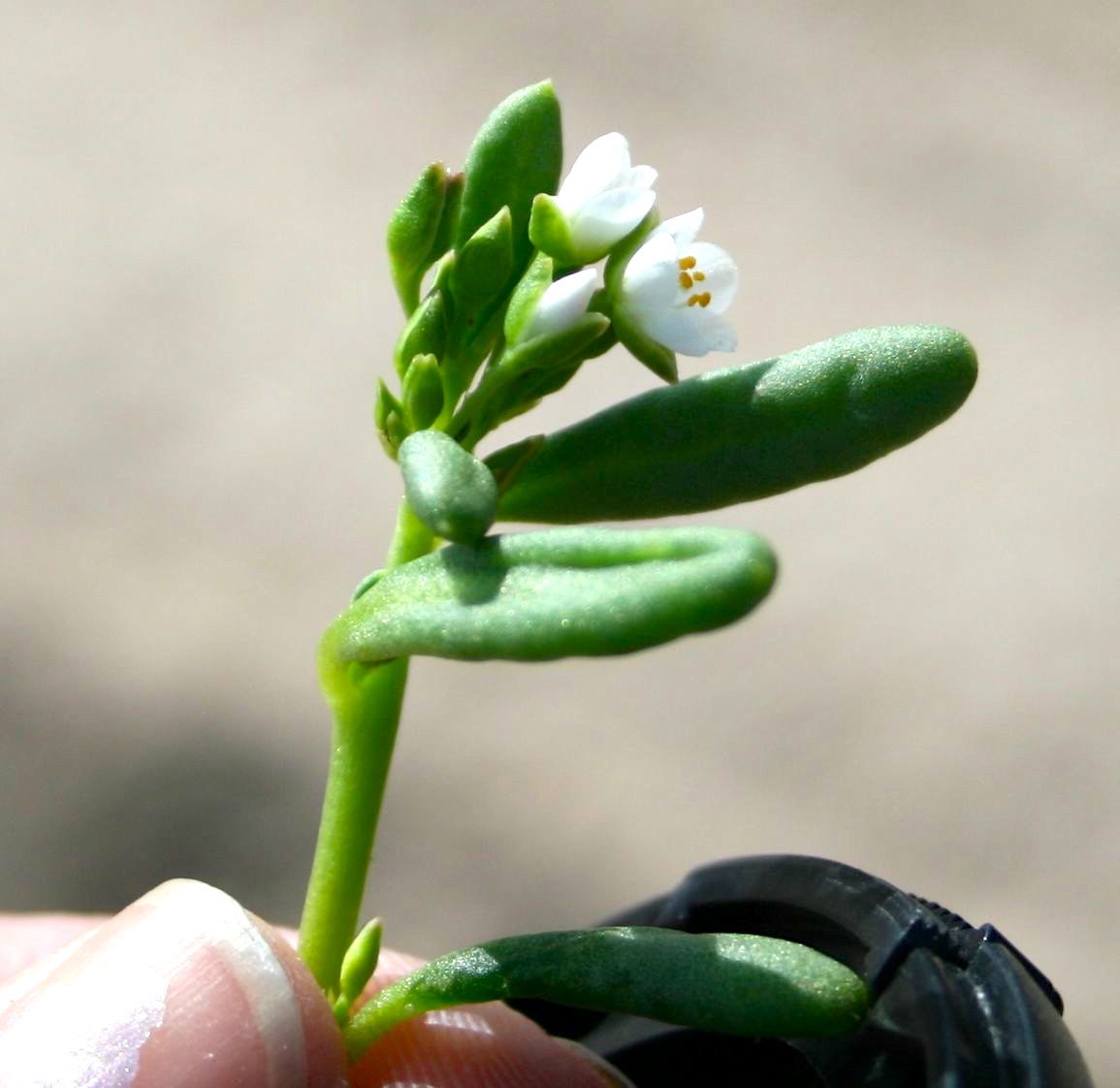
Photo by Chez Brungraber
Family: Montiaceae · Type: Herb · Native
Thingia ambigua (Desert cistanthe) is a native California herb in the Montiaceae family, recognized by Recently segregated genus from former Calyptridium; represents a specialized desert lineage within the purslane family.
Desert cistanthe is a California native annual found in the Desert bioregion in desert scrub with sandy to silty, often alkaline soils at elevations below 1,000 meters. Flowering from January to May, this plant produces delicate white flowers 2 to 5 millimeters long with yellow stamens. Growing with spreading to erect fleshy stems, it forms a distinctive basal rosette with alternate cauline leaves. Its linear to narrowly oblanceolate leaves are 1.5 to 6 centimeters long, bright to dark green, and strongly fleshy. The fruit is an ovoid 3-valved capsule containing 6 to 15 shiny black seeds.
Identification and appearance
Key characters: Recently segregated genus from former Calyptridium; represents a specialized desert lineage within the purslane family
Habitat and range
Habitat: Desert scrub, sandy to silty soil, often alkaline
Elevation: < 1000 m
California counties: San Bernardino, Inyo, Imperial, Riverside, San Diego, Amador
Outside California: southwestern Arizona, northwestern Mexico
Bloom period
Thingia ambigua blooms Jan-May.
Frequently asked questions
Is Thingia ambigua native to California?
Yes. Thingia ambigua is native to California (recorded as native).
When does Thingia ambigua bloom?
Thingia ambigua blooms Jan-May.
Where in California does Thingia ambigua grow?
Thingia ambigua occurs in San Bernardino, Inyo, Imperial, Riverside, San Diego, Amador, at elevations of < 1000 m.
What plant family does Thingia ambigua belong to?
Thingia ambigua is in the Montiaceae family, genus Thingia.
What habitat does Thingia ambigua grow in?
Thingia ambigua grows in Desert scrub, sandy to silty soil, often alkaline.
Related species
Other California species in the same genus, family, or bioregion.
Sources: Jepson eFlora · Index of California Plant Names · CalPhotos
Last updated 2026-10-07
Data from The California Species Project — 14,000+ California species with verified data from CNPS, CDFW, USFWS, Cal-IPC, and more.