Toxicodendron diversilobum
Western poison oak
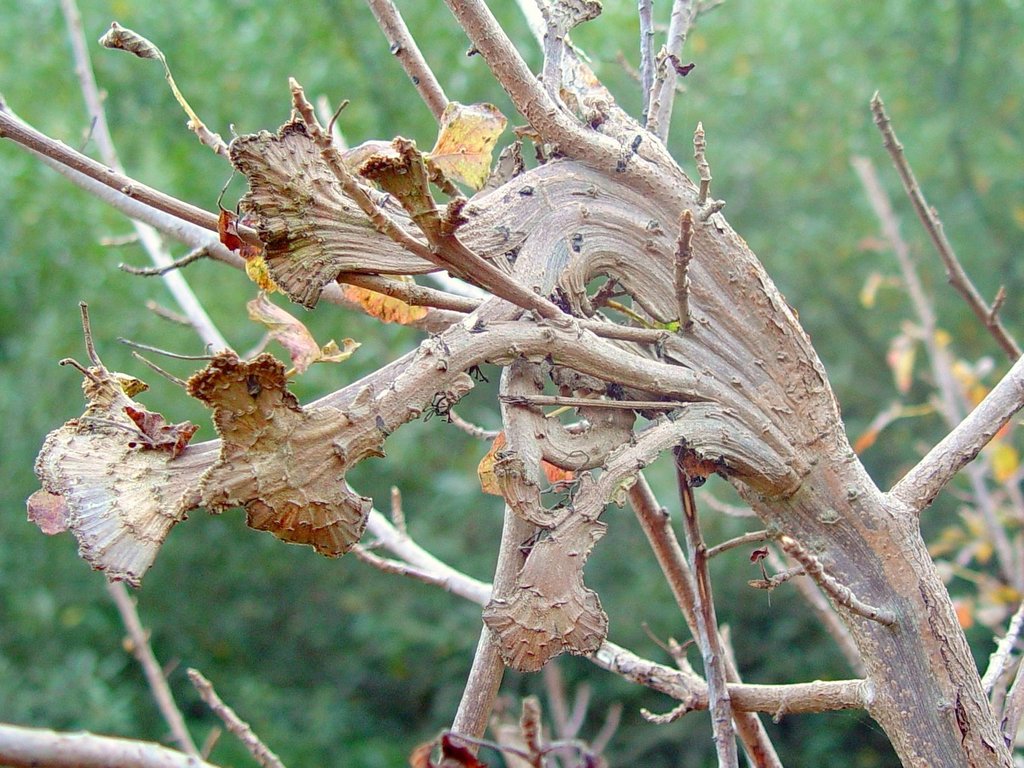
(c) Franco Folini, some rights reserved (CC BY) · licence
Family: Anacardiaceae · Type: Shrub · Native
Toxicodendron diversilobum (Western poison oak) is a native California shrub in the Anacardiaceae family, recognized by Only Toxicodendron species in California; related eastern poison ivy (T. radicans) does not occur in the state.
Western poison oak is a native shrub found in California Floristic Province and southwestern edge of the Mojave Desert in canyons, slopes, chaparral, coastal scrub, and oak woodland at elevations below 2,000 meters. Flowering from April to June, this plant produces yellow- to white-green flowers in loose, generally arched branches. Growing 0.5 to 4 meters tall, it can also develop as a vine-like plant with adventitious roots and gray- to red-brown twigs. Its distinctive leaves grow in clusters of three leaflets that turn bright red in autumn, with terminal leaflets 1 to 13 centimeters long, and are characteristically shiny and glabrous on the upper surface. The fruit is a spheric, creamy white berry 1.5 to 6 millimeters in diameter that develops a leathery texture with age.
Identification and appearance
Key characters: Only Toxicodendron species in California; related eastern poison ivy (T. radicans) does not occur in the state
Habitat and range
Habitat: Canyons, slopes, chaparral, coastal scrub, oak woodland
Elevation: < 2000 m
California counties: Humboldt, Kern, Orange, Los Angeles, Santa Barbara, San Diego, San Mateo, Riverside, Ventura, Monterey, Santa Clara, San Bernardino, Butte, Sacramento, San Francisco, Tulare, San Luis Obispo, Siskiyou, Contra Costa, Lake, Alameda, Yolo, Sonoma, Mendocino, Santa Cruz, Marin, Colusa, San Joaquin, Shasta, Amador, El Dorado, Fresno, Inyo, Nevada, Placer, Del Norte, Plumas, Sierra, Solano, Sutter, Trinity, Tuolumne, Calaveras, Napa, San Benito, Mariposa, Tehama, Stanislaus, Yuba
Outside California: to British Columbia, western Nevada, northern Baja California
Bloom period
Toxicodendron diversilobum blooms Apr-Jun.
How to tell it apart
vs Rubus: Rubus has prickles/thorns and aggregate fruits (like blackberries); Toxicodendron is unarmed with single white berries.; vs Quercus: Quercus has simple leaves with lobes; Toxicodendron has three separate leaflets.; vs Rhus: Rhus leaflets are dull, never shiny; Toxicodendron leaflets are distinctly glossy on top.; vs Rosa: Rosa has thorns, toothed leaflets, and rose hips; Toxicodendron is unarmed with smooth-edged glossy leaflets.; vs Acer: Acer has opposite leaves palmately lobed; Toxicodendron has alternate leaves with three separate leaflets.
Frequently asked questions
Is Toxicodendron diversilobum native to California?
Yes. Toxicodendron diversilobum is native to California (recorded as native).
When does Toxicodendron diversilobum bloom?
Toxicodendron diversilobum blooms Apr-Jun.
Where in California does Toxicodendron diversilobum grow?
Toxicodendron diversilobum occurs in Humboldt, Kern, Orange, Los Angeles, Santa Barbara, San Diego, San Mateo, Riverside and other counties, at elevations of < 2000 m.
What plant family does Toxicodendron diversilobum belong to?
Toxicodendron diversilobum is in the Anacardiaceae family, genus Toxicodendron.
What habitat does Toxicodendron diversilobum grow in?
Toxicodendron diversilobum grows in Canyons, slopes, chaparral, coastal scrub, oak woodland.
Related species
Other California species in the same genus, family, or bioregion.
Sources: Jepson eFlora · Index of California Plant Names · CalPhotos
Last updated 2026-10-07
Data from The California Species Project — 14,000+ California species with verified data from CNPS, CDFW, USFWS, Cal-IPC, and more.