Tradescantia fluminensis
Small leaf spiderwort
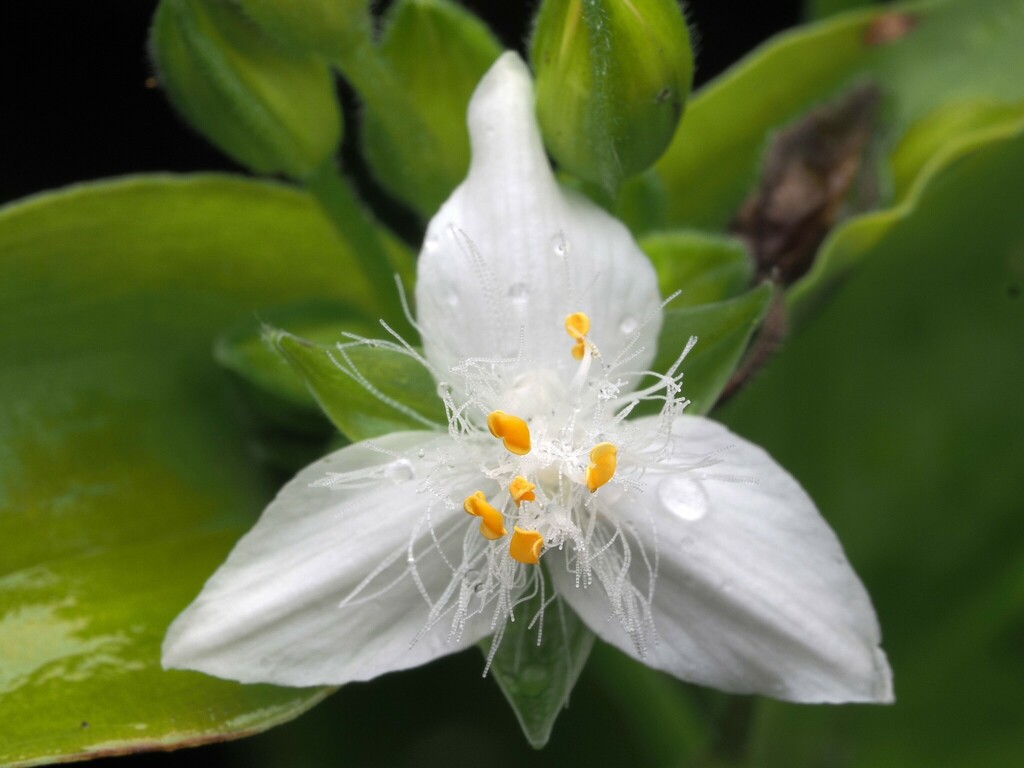
(c) Saryu Mae 前 朝琉, some rights reserved (CC BY), uploaded by Saryu Mae 前 朝琉 · licence
Family: Commelinaceae · Type: Herb · Not Native
Tradescantia fluminensis (Small leaf spiderwort) is a non-native California herb in the Commelinaceae family, recognized by No sympatric species - geographically isolated. Key features: small glabrous, non-glaucous leaves, low elevation habitat.
Small leaf spiderwort is a naturalized perennial found in the San Joaquin Valley, San Francisco Bay Area, southern Coast Ranges, and southern California coastal regions in shaded woodlands and streambanks at elevations of 70 to 255 meters. Flowering from April to July, this plant produces delicate white to pale lavender flowers in small terminal clusters. Growing with slender, sprawling stems up to 30 centimeters long, it forms dense, spreading mats in moist, shaded areas. Its glossy green leaves are smooth and elongated, measuring 25 to 60 millimeters in length, with a soft, almost translucent appearance. The flower sepals are 5 to 7 millimeters long, adding a subtle delicacy to its overall form.
Identification and appearance
Key characters: No sympatric species - geographically isolated. Key features: small glabrous, non-glaucous leaves, low elevation habitat.
Habitat and range
Habitat: Shaded woodland, streambanks
Elevation: 70-255 m
California counties: Los Angeles, Santa Cruz, Ventura, Riverside, Santa Barbara, Alameda, Fresno, Sacramento, Yolo, Marin, Monterey
Outside California: uncommonly naturalized, native to South America
Bloom period
Tradescantia fluminensis blooms Apr-Jul.
How to tell it apart
vs Commelina: Tradescantia has three equal petals (symmetrical); Commelina has two large and one tiny petal (lopsided).; vs Vinca: Tradescantia has 3 petals; Vinca has 5 petals forming a pinwheel with a dark eye in center.; vs Cordyline: Tradescantia has showy three-petaled flowers; Cordyline has tiny flowers in large branched clusters and woody stems.; vs Callisia: Tradescantia has flowers over 1 cm wide; Callisia has tiny flowers under 5 mm and often creeping succulent stems.; vs Oxalis: Tradescantia has 3 petals; Oxalis has 5 petals and distinctive shamrock-like leaves that fold at night.
Frequently asked questions
Is Tradescantia fluminensis native to California?
No. Tradescantia fluminensis is not native to California (recorded as not native).
When does Tradescantia fluminensis bloom?
Tradescantia fluminensis blooms Apr-Jul.
Where in California does Tradescantia fluminensis grow?
Tradescantia fluminensis occurs in Los Angeles, Santa Cruz, Ventura, Riverside, Santa Barbara, Alameda, Fresno, Sacramento and other counties, at elevations of 70-255 m.
What plant family does Tradescantia fluminensis belong to?
Tradescantia fluminensis is in the Commelinaceae family, genus Tradescantia.
What habitat does Tradescantia fluminensis grow in?
Tradescantia fluminensis grows in Shaded woodland, streambanks.
Related species
Other California species in the same genus, family, or bioregion.
Sources: Jepson eFlora · Index of California Plant Names · CalPhotos
Last updated 2026-10-07
Data from The California Species Project — 14,000+ California species with verified data from CNPS, CDFW, USFWS, Cal-IPC, and more.