Tragia ramosa
Desert tragia, Desert Tragia
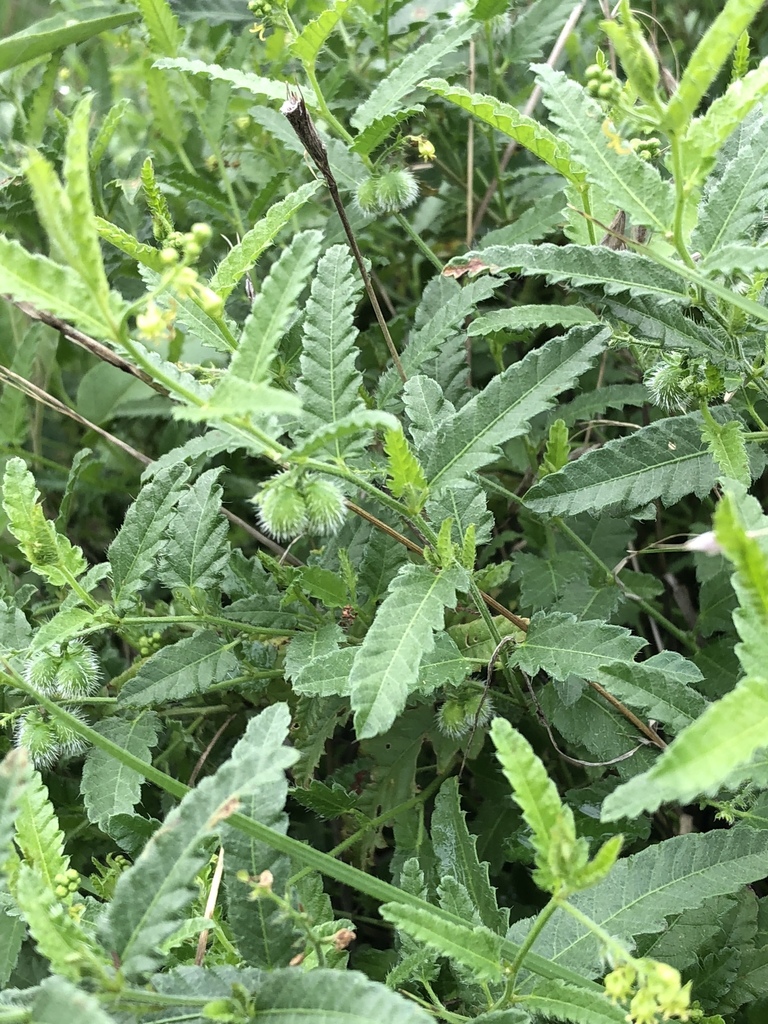
(c) Sam Kieschnick, some rights reserved (CC BY), uploaded by Sam Kieschnick · licence
Family: Euphorbiaceae · Type: Shrub · Native
Conservation status: CNPS 4.3
Tragia ramosa (Desert tragia) is a native California shrub in the Euphorbiaceae family, recognized by Range edge population; genus primarily distributed in southeastern US and Mexico.
Desert tragia is a California native perennial found in the desert mountains in dry, rocky slopes, scrub, and pinyon/juniper woodland at elevations of 900 to 1,900 meters. Flowering from April to May, this plant produces small flowers with white to pale stamens in spreading clusters. Growing with rough-hairy stems 10 to 30 centimeters tall, it has an upright, somewhat branching structure. Its leaves are lanceolate to ovate, 1 to 2 centimeters long with coarse, sharp teeth and a truncate to slightly lobed base. The fruit is a small, depressed-spheric capsule 3 to 4 millimeters long, sparsely covered in fine bristles.
Identification and appearance
Key characters: Range edge population; genus primarily distributed in southeastern US and Mexico
Habitat and range
Habitat: Dry, rocky slopes, scrub, pinyon/juniper woodland
Elevation: 900-1900 m
California counties: San Bernardino, Riverside
Outside California: to central United States, Texas, Mexico
Bloom period
Tragia ramosa blooms Apr-May.
Conservation status
CNPS 4.3
How to tell it apart
vs Ricinus: Tragia has stinging hairs that burn; castor bean is smooth and non-stinging.; vs Croton: Tragia has sharp stinging hairs; Croton has soft star-shaped non-stinging hairs.; vs Bernardia: Tragia stings on contact; Bernardia has soft star-hairs that don't sting.; vs Acalypha: Tragia has stinging hairs; Acalypha has soft simple hairs or is smooth.; vs Triadica: Tragia is low desert herb with stinging hairs; Triadica is smooth-leaved tree.
Frequently asked questions
Is Tragia ramosa native to California?
Yes. Tragia ramosa is native to California (recorded as native).
When does Tragia ramosa bloom?
Tragia ramosa blooms Apr-May.
Where in California does Tragia ramosa grow?
Tragia ramosa occurs in San Bernardino, Riverside, at elevations of 900-1900 m.
What plant family does Tragia ramosa belong to?
Tragia ramosa is in the Euphorbiaceae family, genus Tragia.
Is Tragia ramosa rare or endangered?
Tragia ramosa carries California Rare Plant Rank 4.3, state rank S4.
Related species
Other California species in the same genus, family, or bioregion.
Sources: Jepson eFlora · CNPS Rare Plant Inventory · Index of California Plant Names · CalPhotos · CDFW CNDDB
Last updated 2026-10-07
Data from The California Species Project — 14,000+ California species with verified data from CNPS, CDFW, USFWS, Cal-IPC, and more.