Trichostema rubisepalum
Hernandez bluecurls
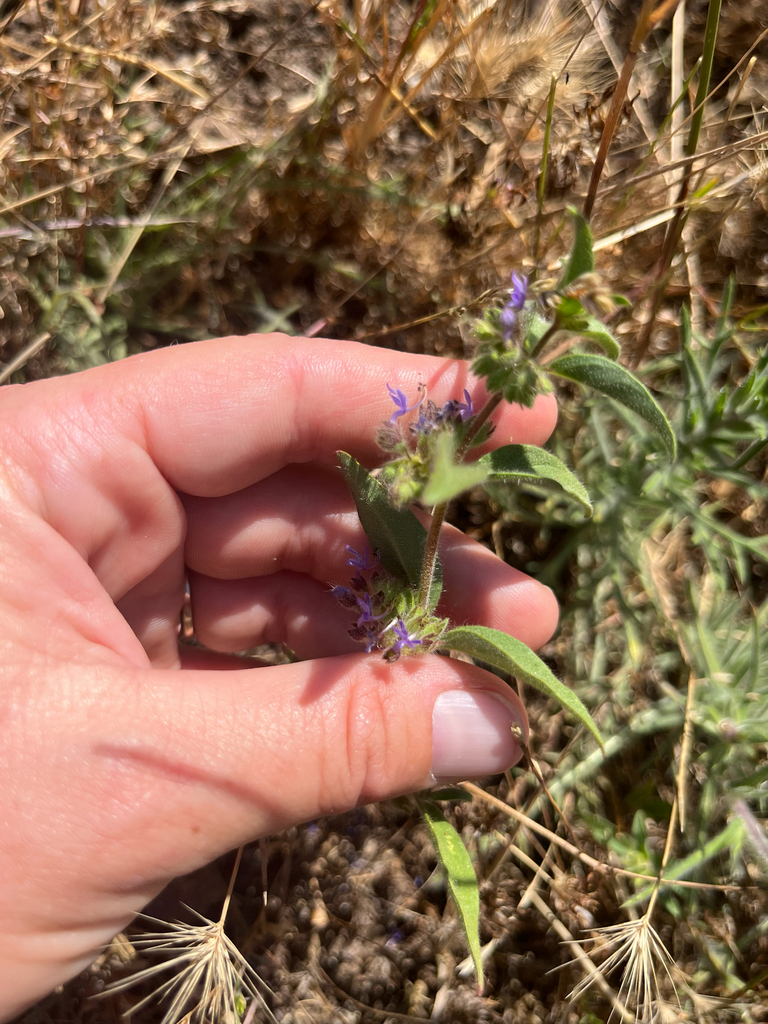
no rights reserved · CC0
Family: Lamiaceae · Type: Herb · Native
Conservation status: CNPS 4.3
Trichostema rubisepalum (Hernandez bluecurls) is a native California herb in the Lamiaceae family, recognized by red-tinged calyx with short lobes.
Hernandez bluecurls is a California native annual herb found in the central Sierra Nevada Foothills in Tuolumne and Mariposa counties and San Benito County, growing in seasonal seeps and gravelly streambeds on serpentine soils at elevations of 250 to 1,400 meters. Flowering from July to September, this plant produces delicate flowers with curved corollas emerging from red-tinged calyxes. Growing less than 50 centimeters tall with long, spreading hairs and some short glandular stems, it has a distinctive wispy appearance. Its leaves are lanceolate to narrowly ovate with indistinct or very short petioles, creating a fine, delicate foliage structure. The plant's four to six millimeter stamens and curved corolla tubes contribute to its unique bluecurls characteristics.
Identification and appearance
Key characters: 4 sympatric species; key features are red-tinged calyx with short lobes
Habitat and range
Habitat: Seasonal seeps and gravelly streambeds, serpentine
Elevation: 250-1400 m
California counties: Tuolumne, Kern, Mariposa, San Benito, Sierra, Tulare, Shasta, El Dorado
Bloom period
Trichostema rubisepalum blooms Jul-Sep.
Conservation status
CNPS 4.3
How to tell it apart
vs Salvia: Trichostema flowers have five equal lobes; sage flowers are distinctly two-lipped.; vs Lavandula: Trichostema stamens arch dramatically outward; lavender stamens stay hidden inside the flower tube.; vs Penstemon: Trichostema has square stems and opposite leaves; penstemon stems are round.; vs Lupinus: Trichostema flowers have five equal lobes; lupine flowers are pea-shaped with banner and keel.; vs Sairocarpus: Trichostema has four stamens visible arching out; snapdragons hide stamens inside closed throat.
Frequently asked questions
Is Trichostema rubisepalum native to California?
Yes. Trichostema rubisepalum is native to California (recorded as native).
When does Trichostema rubisepalum bloom?
Trichostema rubisepalum blooms Jul-Sep.
Where in California does Trichostema rubisepalum grow?
Trichostema rubisepalum occurs in Tuolumne, Kern, Mariposa, San Benito, Sierra, Tulare, Shasta, El Dorado, at elevations of 250-1400 m.
What plant family does Trichostema rubisepalum belong to?
Trichostema rubisepalum is in the Lamiaceae family, genus Trichostema.
Is Trichostema rubisepalum rare or endangered?
Trichostema rubisepalum carries California Rare Plant Rank 4.3, state rank S4.
Related species
Other California species in the same genus, family, or bioregion.
- Trichostema ruygtii — Napa bluecurls
- Trichostema simulatum — Siskiyou bluecurls
- Trichostema sp. — Blue curls
- Trichostema austromontanum — San jacinto bluecurls
- Trichostema austromontanum subsp. austromontanum
- Trichostema austromontanum subsp. compactum — Hidden lake bluecurls
- Acanthomintha duttonii — San mateo thornmint
Sources: Jepson eFlora · CNPS Rare Plant Inventory · Index of California Plant Names · CalPhotos · CDFW CNDDB
Last updated 2026-10-07
Data from The California Species Project — 14,000+ California species with verified data from CNPS, CDFW, USFWS, Cal-IPC, and more.