Trifolium eriocephalum subsp. eriocephalum
Hairy head clover, Hairy Head Clover
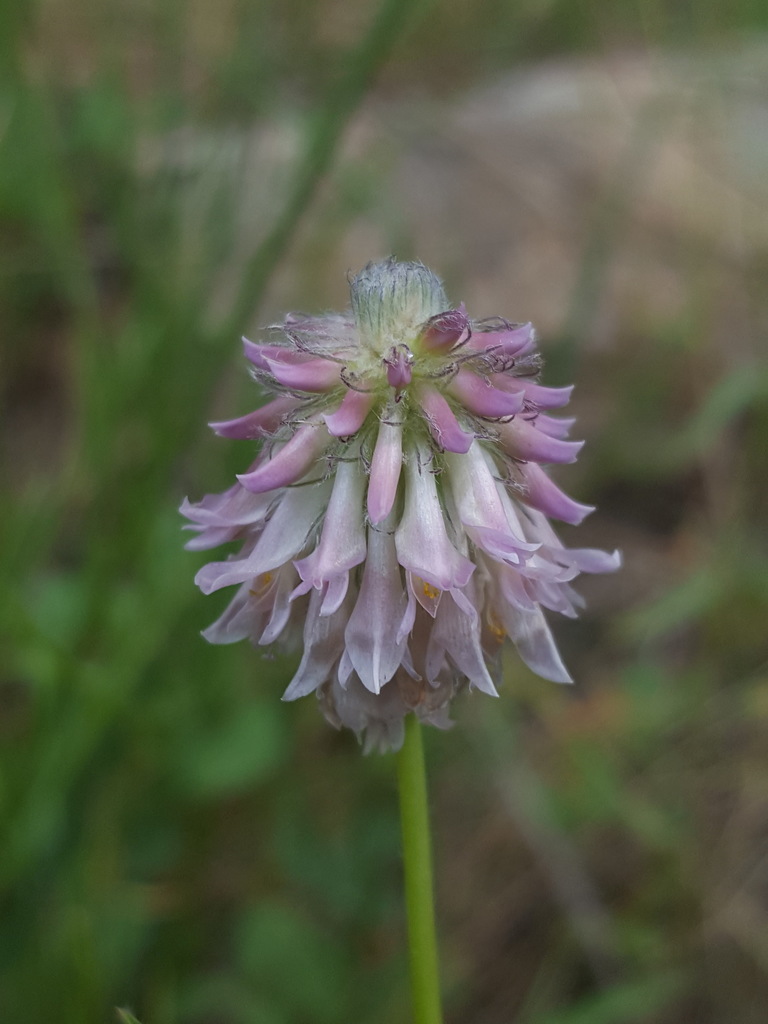
(c) Alex Abair, some rights reserved (CC BY), uploaded by Alex Abair · licence
Family: Fabaceae · Type: Herb · Native
Trifolium eriocephalum subsp. eriocephalum (Hairy head clover) is a native California herb in the Fabaceae family, recognized by plumose calyx lobes and heads turned to side.
Hairy head clover is a California native perennial found in northwestern California, the Cascade Range, and northern Sierra Nevada in moist meadows to dry, open slopes at elevations of 300 to 1,500 meters. Flowering from May to August, this plant produces dull white to yellow flowers in dense, distinctive heads 1.5 to 3 centimeters long that typically lean to one side or droop downward. Growing with ascending or erect stems 15 to 45 centimeters tall, it develops hairy stems that are generally unbranched. Its leaves feature 3 leaflets 1 to 4 centimeters long, ranging from elliptic-oblong to ovate, with lower stipules sheathing the stem and upper stipules becoming lanceolate. The fruit is hairy, typically containing 1 to 3 seeds.
Identification and appearance
Key characters: 58 sympatric species; key features are plumose calyx lobes and heads turned to side
Habitat and range
Habitat: Locally common. Moist meadows to dry, open slopes
Elevation: 300-1500 m
California counties: Humboldt, Siskiyou, Trinity, Mendocino, Shasta
Outside California: Oregon
Bloom period
Trifolium eriocephalum subsp. eriocephalum blooms May-Aug.
How to tell it apart
vs Medicago: Trifolium flowers persist around fruits; Medicago flowers fall off leaving exposed coiled fruits.; vs Oxalis: Trifolium has pea-shaped flowers; wood-sorrels (Oxalis) have 5-petaled star-shaped flowers and heart-notched leaflets.; vs Melilotus: Trifolium flowers persist enclosing fruits; Melilotus flowers fall off leaving exposed ridged pods.; vs Castilleja: Trifolium has pea flowers and 3 toothed leaflets; paintbrush (Castilleja) has tubular flowers in colorful bracts.; vs Acmispon: Trifolium leaflets have toothed edges; Acmispon leaflets have smooth untoothed margins.
Frequently asked questions
Is Trifolium eriocephalum subsp. eriocephalum native to California?
Yes. Trifolium eriocephalum subsp. eriocephalum is native to California (recorded as native).
When does Trifolium eriocephalum subsp. eriocephalum bloom?
Trifolium eriocephalum subsp. eriocephalum blooms May-Aug.
Where in California does Trifolium eriocephalum subsp. eriocephalum grow?
Trifolium eriocephalum subsp. eriocephalum occurs in Humboldt, Siskiyou, Trinity, Mendocino, Shasta, at elevations of 300-1500 m.
What plant family does Trifolium eriocephalum subsp. eriocephalum belong to?
Trifolium eriocephalum subsp. eriocephalum is in the Fabaceae family, genus Trifolium.
What habitat does Trifolium eriocephalum subsp. eriocephalum grow in?
Trifolium eriocephalum subsp. eriocephalum grows in Locally common. Moist meadows to dry, open slopes.
Related species
Other California species in the same genus, family, or bioregion.
Sources: Jepson eFlora · Index of California Plant Names · CalPhotos
Last updated 2026-10-07
Data from The California Species Project — 14,000+ California species with verified data from CNPS, CDFW, USFWS, Cal-IPC, and more.