Trisetum spicatum
Spike false oat, Spike False Oat
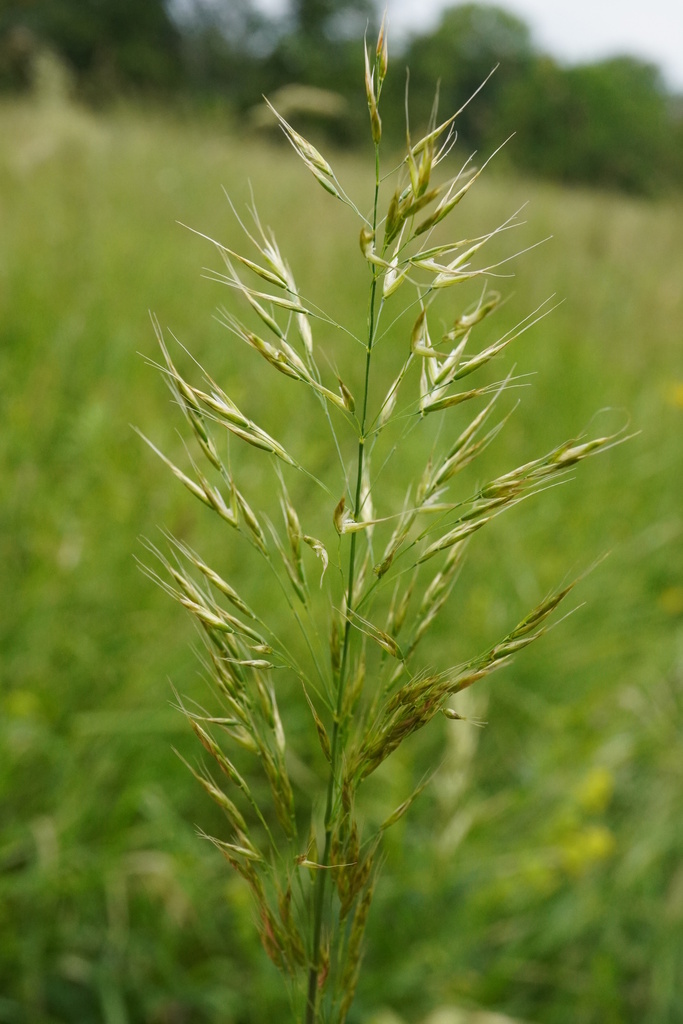
(c) Patrick Hacker, some rights reserved (CC BY) · licence
Family: Poaceae · Type: Grass · Native
Trisetum spicatum (Spike false oat) is a native California grass in the Poaceae family, recognized by short stature, dense cylindrical spike, and purple coloration.
Spike false oat is a California native perennial found in the Klamath Ranges, high Cascade Range, Sierra Nevada, northern and southern Coast Ranges, San Bernardino Mountains, San Jacinto Mountains, Warner Mountains, northern eastern Sierra Nevada, and White and Inyo Mountains in dry to moist meadows, streambanks, rock outcrops, and open conifer forests at elevations of 1,370 to 3,900 meters. Flowering from July to August, this plant produces purple-tinged flowers in dense, spike-like inflorescences 2.5 to 7 centimeters long. Growing in densely clumped tufts 0.5 to 4 decimeters tall with erect stems, it forms compact grass-like clusters. Its mostly basal leaves are glabrous or densely soft-hairy, with narrow blades 1 to 4 millimeters wide and short ligules 1 to 3 millimeters long. The distinctive spikelets feature lanceolate glumes and lemmas with awns 4 to 8 millimeters long, often bent near the base.
Identification and appearance
Key characters: 3 sympatric species; distinguished by short stature, dense cylindrical spike, and purple coloration
Habitat and range
Habitat: dry to moist sites, meadows, streambanks, rock outcrops, open areas in conifer forest, sagebrush scrub
Elevation: 1370-3900 m
California counties: Tulare, Los Angeles, Tuolumne, Fresno, Alpine, Nevada, Mono, Siskiyou, Inyo, Shasta, Riverside, Mariposa, San Diego, Modoc, San Bernardino, Trinity, El Dorado, Placer, Butte, Amador, Lassen, Plumas, Sierra, Madera, Tehama, Yuba, Calaveras
Outside California: worldwide (except Africa), temperate
Bloom period
Trisetum spicatum blooms Jul-Aug.
How to tell it apart
vs Schismus: Trisetum has hairy spikelet axes extending beyond flowers; Schismus has no extension or hairs.; vs Koeleria: Trisetum has dull spikelets with wide-spaced flowers; Koeleria has shiny, compact spikelets.; vs Aira: Trisetum is perennial with hairy axis extensions; Aira is annual with no axis extension.; vs Vahlodea: Trisetum's axis extension is clearly hairy (1-2mm); Vahlodea's is nearly hairless and tiny.; vs Deschampsia: Trisetum has obviously hairy spikelet axes; Deschampsia's axes are smooth or barely hairy.
Frequently asked questions
Is Trisetum spicatum native to California?
Yes. Trisetum spicatum is native to California (recorded as native).
When does Trisetum spicatum bloom?
Trisetum spicatum blooms Jul-Aug.
Where in California does Trisetum spicatum grow?
Trisetum spicatum occurs in Tulare, Los Angeles, Tuolumne, Fresno, Alpine, Nevada, Mono, Siskiyou and other counties, at elevations of 1370-3900 m.
What plant family does Trisetum spicatum belong to?
Trisetum spicatum is in the Poaceae family, genus Trisetum.
What habitat does Trisetum spicatum grow in?
Trisetum spicatum grows in dry to moist sites, meadows, streambanks, rock outcrops, open areas in conifer forest, sagebrush scrub.
Related species
Other California species in the same genus, family, or bioregion.
Sources: Jepson eFlora · Index of California Plant Names · CalPhotos
Last updated 2026-10-07
Data from The California Species Project — 14,000+ California species with verified data from CNPS, CDFW, USFWS, Cal-IPC, and more.