Urtica gracilis
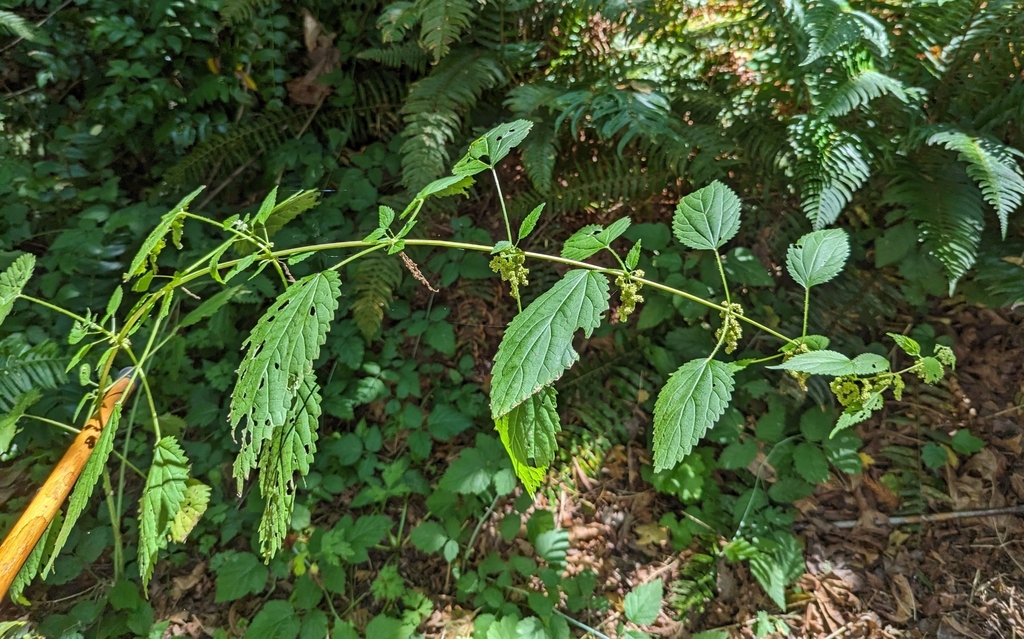
(c) John A Haskins, some rights reserved (CC BY) · licence
Family: Urticaceae · Type: Perennial · Native
Urtica gracilis is a native California perennial in the Urticaceae family, recognized by Tall (5–30 dm) native rhizomatous perennial nettle with stinging hairs; only congener is the weedy annual U. urens.
Slender nettle is a California native perennial herb found in various bioregions in moist woodlands and streamside habitats at elevations of low to mid-elevation ranges. Flowering from June to September, this plant produces small greenish-white flowers in slender clusters that hang from the stems. Growing 50 to 300 centimeters tall with erect stems covered in both stinging and non-stinging hairs, it has a robust rhizomatous root system. Its leaves are narrow to wide, ranging from lance-shaped to ovate, with bases that vary from tapered to heart-shaped, typically 6 to 20 centimeters long. The plant produces small ovate fruits that develop after flowering.
Identification and appearance
Key characters: Tall (5–30 dm) native rhizomatous perennial nettle with stinging hairs; only congener is the weedy annual U. urens
How to tell it apart
vs Hesperocnide: Urtica has 4 separate unequal sepals; Hesperocnide has 2-4 fused equal sepals.; vs Scrophularia: Urtica has stinging hairs; Scrophularia is safe to touch.; vs Stachys: Urtica stings and has tiny nettle flowers; Stachys is safe with tubular mint flowers.; vs Phacelia: Urtica has opposite leaves and stings; Phacelia has coiled flower clusters and doesn't sting.; vs Rubus: Urtica has stinging hairs on herbaceous stems; Rubus has thorns on woody canes.
Frequently asked questions
Is Urtica gracilis native to California?
Yes. Urtica gracilis is native to California (recorded as native).
What plant family does Urtica gracilis belong to?
Urtica gracilis is in the Urticaceae family, genus Urtica.
Related species
Other California species in the same genus, family, or bioregion.
Sources: Jepson eFlora · Index of California Plant Names · CalPhotos
Last updated 2026-09-30
Data from The California Species Project — 14,000+ California species with verified data from CNPS, CDFW, USFWS, Cal-IPC, and more.