Vaccinium macrocarpon
Cranberry
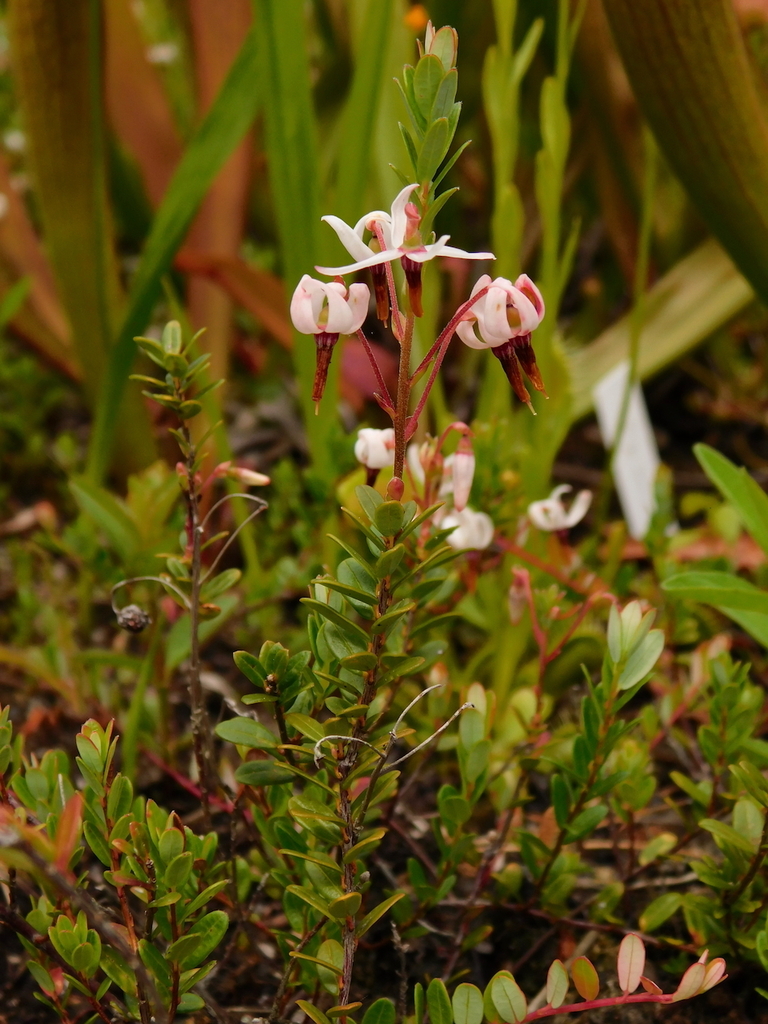
(c) Michael J. Papay, some rights reserved (CC BY), uploaded by Michael J. Papay · licence
Family: Ericaceae · Type: Shrub · Not Native
Vaccinium macrocarpon (Cranberry) is a non-native California shrub in the Ericaceae family, recognized by red fruits, evergreen leaves, and reflexed petals.
Cranberry is a naturalized shrub found in northern Sierra Nevada at elevations around 900 meters in boggy soil at an abandoned placer mine. Flowering from June to July, this plant produces white to pink flowers with petals that dramatically reflex when anthers open. Growing with prostrate and erect stems less than 15 centimeters tall that root easily, it has a distinctive rhizomatous growth pattern. Its evergreen leaves are narrowly elliptic to oblong, 7 to 17 millimeters long, with a leathery texture and glaucous undersides. The fruit is a bright red berry approximately 9 to 14 millimeters in diameter.
Identification and appearance
Key characters: 4 sympatric species; key features are red fruits, evergreen leaves, and reflexed petals
Habitat and range
Habitat: Boggy soil at abandoned placer mine
Elevation: +- 900 m.
Outside California: native to eastern North America
Bloom period
Vaccinium macrocarpon blooms Jun-Jul.
Frequently asked questions
Is Vaccinium macrocarpon native to California?
No. Vaccinium macrocarpon is not native to California (recorded as not native).
When does Vaccinium macrocarpon bloom?
Vaccinium macrocarpon blooms Jun-Jul.
What plant family does Vaccinium macrocarpon belong to?
Vaccinium macrocarpon is in the Ericaceae family, genus Vaccinium.
What habitat does Vaccinium macrocarpon grow in?
Vaccinium macrocarpon grows in Boggy soil at abandoned placer mine.
Related species
Other California species in the same genus, family, or bioregion.
Sources: Jepson eFlora · CalPhotos
Last updated 2026-10-07
Data from The California Species Project — 14,000+ California species with verified data from CNPS, CDFW, USFWS, Cal-IPC, and more.