Valeriana occidentalis
Western valerian, Western Valerian
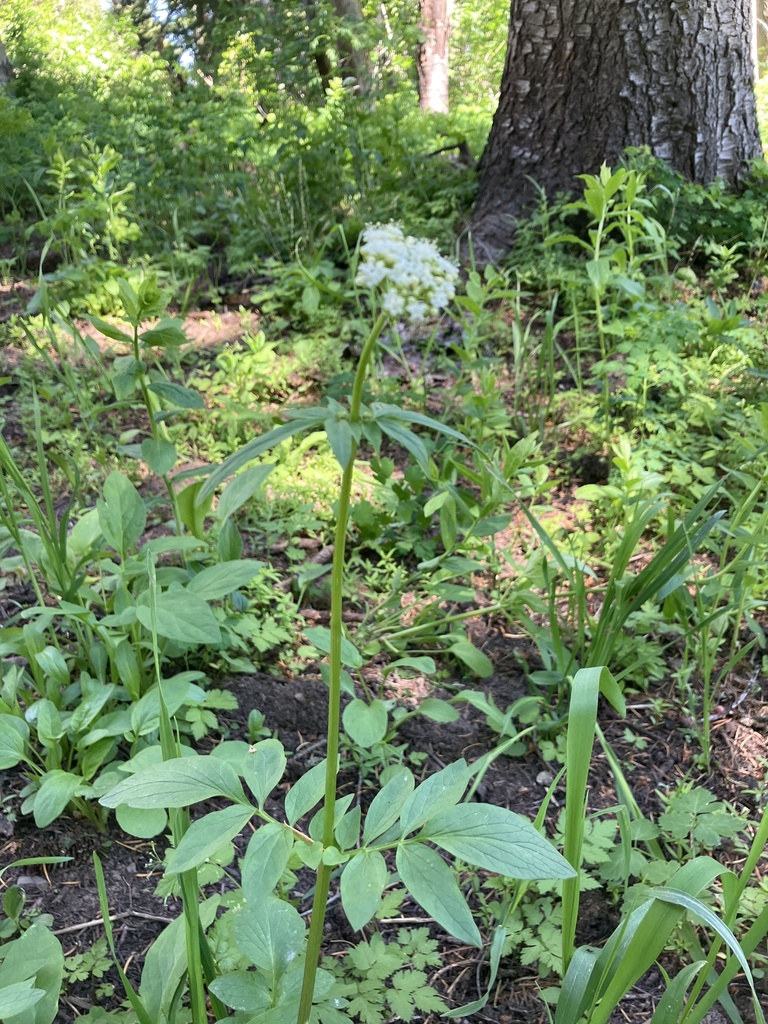
(c) anguspritchard, some rights reserved (CC BY) · licence
Family: Valerianaceae · Type: Herb · Native
Conservation status: CNPS 2B.3
Valeriana occidentalis (Western valerian) is a native California herb in the Valerianaceae family, recognized by Co-occurs with only 1 species; clear size and habitat differences.
Western valerian is a California native perennial found in the Modoc Plateau in moist conifer forest locations at elevations of 1,500 to 2,200 meters. Flowering from June to July, this plant produces delicate white flowers approximately 3.5 to 4.5 millimeters long with lobes slightly shorter than the flower throat. Growing with stems 30 to 75 centimeters tall that have short hairs at the nodes, it develops complex leaf structures. Its leaves range from 5 to 30 centimeters long, with basal leaves that are simple to compound and often ovate to round, occasionally deeply three-lobed, and cauline leaves with 3 to 7 distinct lobes that have entire to finely crenate margins. The fruit is an ovoid structure 3 to 5 millimeters in length.
Identification and appearance
Key characters: Co-occurs with only 1 species; clear size and habitat differences
Habitat and range
Habitat: Moist places, conifer forest
Elevation: 1500-2200 m
Outside California: to Oregon, Montana, Colorado
Bloom period
Valeriana occidentalis blooms Jun-Jul.
Conservation status
CNPS 2B.3
How to tell it apart
vs Centranthus: Valeriana has fern-like compound leaves; Centranthus has simple, undivided leaves.; vs Monardella: Valeriana has compound leaves and spurless flowers; Monardella has simple leaves and mint-family square stems.; vs Plectritis: Valeriana is perennial with compound leaves; Plectritis is annual with simple leaves.; vs Bistorta: Valeriana has compound leaves and clusters of small flowers; Bistorta has simple leaves and dense bottlebrush spikes.; vs Antennaria: Valeriana has compound leaves and open flower clusters; Antennaria has simple woolly leaves and fuzzy flower heads.
Frequently asked questions
Is Valeriana occidentalis native to California?
Yes. Valeriana occidentalis is native to California (recorded as native).
When does Valeriana occidentalis bloom?
Valeriana occidentalis blooms Jun-Jul.
What plant family does Valeriana occidentalis belong to?
Valeriana occidentalis is in the Valerianaceae family, genus Valeriana.
Is Valeriana occidentalis rare or endangered?
Valeriana occidentalis carries California Rare Plant Rank 2B.3, state rank S1.
What habitat does Valeriana occidentalis grow in?
Valeriana occidentalis grows in Moist places, conifer forest.
Related species
Other California species in the same genus, family, or bioregion.
Sources: Jepson eFlora · CalPhotos · CDFW CNDDB
Last updated 2026-10-07
Data from The California Species Project — 14,000+ California species with verified data from CNPS, CDFW, USFWS, Cal-IPC, and more.