Vancouveria planipetala
Redwood ivy, Redwood Ivy
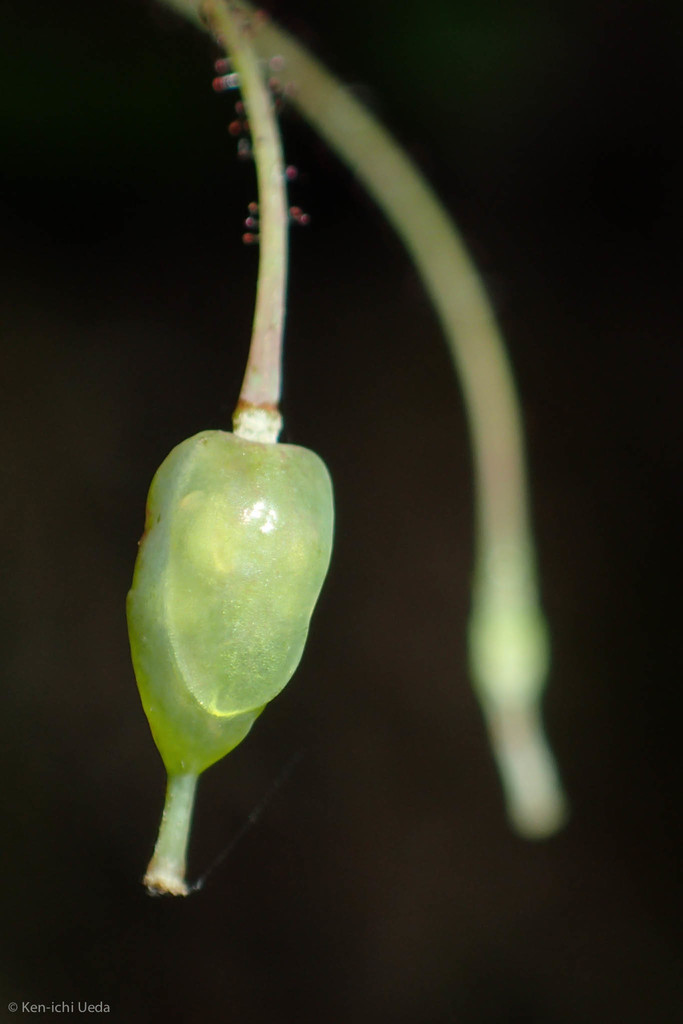
(c) Ken-ichi Ueda, some rights reserved (CC BY) · licence
Family: Berberidaceae · Type: Herb · Native
Vancouveria planipetala (Redwood ivy) is a native California herb in the Berberidaceae family, recognized by persistent leaves and flat petal tips diagnostic versus other white-flowered species.
Redwood ivy is a California native perennial found in northwestern California (excluding northern Coast Ranges Interior), San Francisco Bay Area, and southern coastal ranges of the Santa Lucia Mountains in coastal conifer forest at elevations below 1,550 meters. Flowering from late April to July, this plant produces white to lavender-tinged flowers with flat, notched petals 3 to 4 millimeters long. Growing with delicate stems that reach 10 to 30 centimeters tall, it spreads with persistent leaves that remain through fruiting. Its leaves are distinctive, with smooth upper surfaces and sparse hair on the undersides, featuring red-brown petioles that become glabrous with age. The fruit develops as a small 5 to 7 millimeter glabrous body, completing its subtle yet elegant lifecycle.
Identification and appearance
Key characters: 2 sympatric species; persistent leaves and flat petal tips diagnostic versus other white-flowered species
Habitat and range
Habitat: Coastal conifer forest
Elevation: < 1550 m
California counties: Humboldt, Santa Cruz, Trinity, Mendocino, San Mateo, Del Norte, Sonoma, Santa Clara, Mariposa, Monterey, Marin, Lake, Alameda, Napa, Siskiyou
Outside California: southwestern Oregon
Bloom period
Vancouveria planipetala blooms Late Apr-Jul.
How to tell it apart
vs Cardamine: Vancouveria has heart-shaped leaflets and reflexed petals; Cardamine has rounded leaflets and flat 4-petaled flowers.; vs Tiarella: Vancouveria has compound leaves divided into heart-shaped leaflets; Tiarella has simple, lobed maple-like leaves.; vs Hedera: Vancouveria is a ground-level herb; Hedera is a woody climbing vine with thick leathery leaves.; vs Asarum: Vancouveria has compound leaves and white flowers; Asarum has simple kidney-shaped leaves and hidden brownish flowers at ground level.; vs Oxalis: Vancouveria has heart-shaped leaflets and backward-curved petals; Oxalis has notched heart-shaped leaflets and cup-shaped flowers.
Frequently asked questions
Is Vancouveria planipetala native to California?
Yes. Vancouveria planipetala is native to California (recorded as native).
When does Vancouveria planipetala bloom?
Vancouveria planipetala blooms Late Apr-Jul.
Where in California does Vancouveria planipetala grow?
Vancouveria planipetala occurs in Humboldt, Santa Cruz, Trinity, Mendocino, San Mateo, Del Norte, Sonoma, Santa Clara and other counties, at elevations of < 1550 m.
What plant family does Vancouveria planipetala belong to?
Vancouveria planipetala is in the Berberidaceae family, genus Vancouveria.
What habitat does Vancouveria planipetala grow in?
Vancouveria planipetala grows in Coastal conifer forest.
Related species
Other California species in the same genus, family, or bioregion.
Sources: Jepson eFlora · Index of California Plant Names · CalPhotos
Last updated 2026-10-07
Data from The California Species Project — 14,000+ California species with verified data from CNPS, CDFW, USFWS, Cal-IPC, and more.