Verbascum blattaria
Moth mullein, Moth Mullein
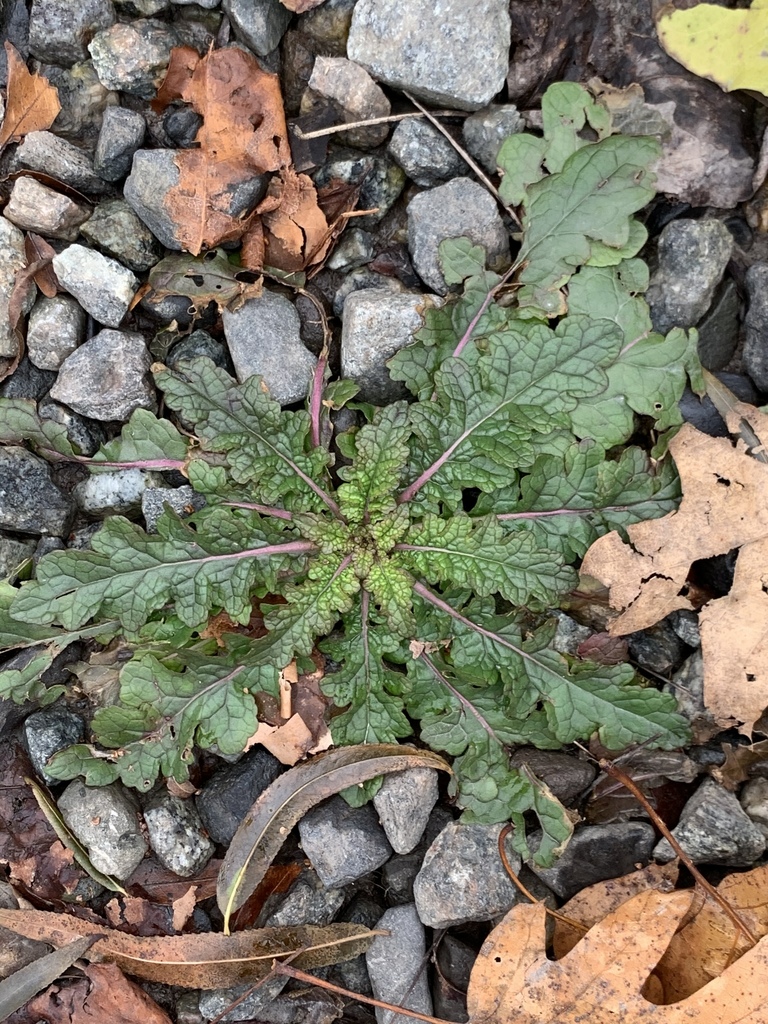
(c) Sandy Wolkenberg, some rights reserved (CC BY), uploaded by Sandy Wolkenberg · licence
Family: Scrophulariaceae · Type: Herb · Not Native
Verbascum blattaria (Moth mullein) is a non-native California herb in the Scrophulariaceae family.
Moth mullein is a naturalized annual found in northwestern California, the high Cascade Range, northern Sierra Nevada, Central Valley, San Francisco Bay Area, western Transverse Ranges, southern coastal California, and desert mountains at elevations of 10 to 1,660 meters in roadsides, seeps, streambanks, and disturbed grasslands. Flowering from May to August, this plant produces yellow or white flowers 25 to 30 millimeters wide with distinctive purple-hairy stamens. Growing 30 to 120 centimeters tall with occasionally branched stems, it forms upright plants with a glabrous lower portion. Its leaves vary from basal oblanceolate leaves 4 to 25 centimeters long with crenate edges to sessile cauline leaves that are elliptic to ovate and dentate. The fruit is a small spherical capsule 6 to 8 millimeters in diameter.
Identification and appearance
Key characters: Co-occurs with 4 species; key differentiator is glabrous habit and single flowers per node with long pedicels
Habitat and range
Habitat: Roadsides, seeps, streambanks, disturbed grassland, foothill woodland, chaparral, yellow-pine forest
Elevation: 10-1660 m
California counties: Amador, Los Angeles, Shasta, Placer, Plumas, Tuolumne, Santa Clara, Sonoma, Del Norte, Siskiyou, Butte, Lake, San Diego, Humboldt, Mendocino, San Joaquin, El Dorado, Calaveras, Modoc, Sacramento, Colusa, Glenn, Tehama, Yuba, Lassen, Merced, Napa, Madera, Yolo, Contra Costa, Stanislaus, Trinity, Alameda, Ventura, Sierra, Nevada, Solano, Santa Cruz, Santa Barbara, Monterey
Outside California: native of Eurasia
Bloom period
Verbascum blattaria blooms May-Aug.
How to tell it apart
vs Stachys: Verbascum has nearly radial flowers in tall spikes; Stachys has bilateral flowers in whorled clusters.; vs Heterotheca: Verbascum has 5-petaled flowers with fuzzy stamens; Heterotheca has composite flower heads with ray and disk flowers.; vs Croton: Verbascum has showy yellow petaled flowers; Croton has tiny flowers without petals.; vs Oenothera: Verbascum has 5 stamens and fuzzy stalks; Oenothera has 8 stamens and smooth flower parts.; vs Dipsacus: Verbascum has individual flowers along spike; Dipsacus has flowers in dense, spiny, rounded heads.
Frequently asked questions
Is Verbascum blattaria native to California?
No. Verbascum blattaria is not native to California (recorded as not native).
When does Verbascum blattaria bloom?
Verbascum blattaria blooms May-Aug.
Where in California does Verbascum blattaria grow?
Verbascum blattaria occurs in Amador, Los Angeles, Shasta, Placer, Plumas, Tuolumne, Santa Clara, Sonoma and other counties, at elevations of 10-1660 m.
What plant family does Verbascum blattaria belong to?
Verbascum blattaria is in the Scrophulariaceae family, genus Verbascum.
What habitat does Verbascum blattaria grow in?
Verbascum blattaria grows in Roadsides, seeps, streambanks, disturbed grassland, foothill woodland, chaparral, yellow-pine forest.
Related species
Other California species in the same genus, family, or bioregion.
Sources: Jepson eFlora · Index of California Plant Names · CalPhotos
Last updated 2026-10-07
Data from The California Species Project — 14,000+ California species with verified data from CNPS, CDFW, USFWS, Cal-IPC, and more.