Viburnum rigidum
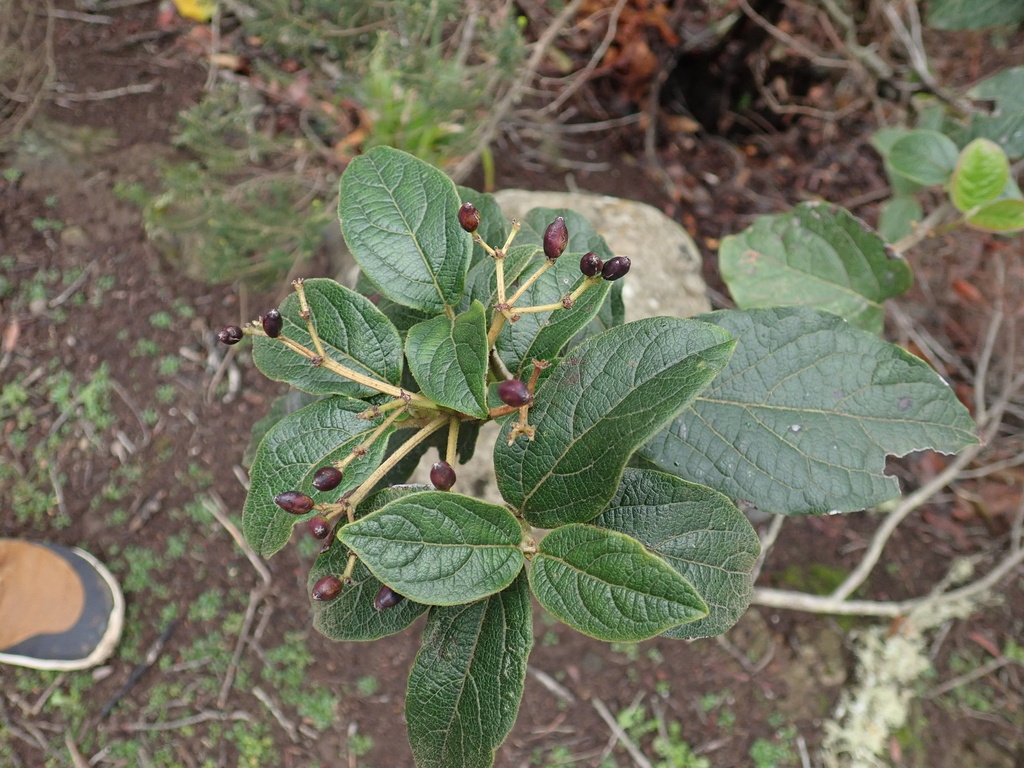
no rights reserved · CC0
Family: Viburnaceae · Type: Shrub · Not Native
Viburnum rigidum is a non-native California shrub in the Viburnaceae family, recognized by (V. ellipticum); distinguished by entire vs dentate leaves and fruit color.
Viburnum rigidum is a naturalized shrub found in the San Francisco Bay Area at Tilden Park in mixed forest at approximately 250 meters elevation. Flowering in October, this plant produces white flowers in clusters approximately 4 to 9 centimeters wide, each flower 5 to 9 millimeters in diameter. Growing with dense, upright branches, the shrub features ovate-lanceolate leaves 3 to 10 centimeters long, covered in nonglandular hairs and remaining entirely unlobed. Its leaf stalks range from 5 to 15 millimeters long, supporting broad, rounded leaf blades. The plant produces dark blue, nearly spherical fruits 6 to 8 millimeters in size.
Identification and appearance
Key characters: 1 sympatric species (V. ellipticum); distinguished by entire vs dentate leaves and fruit color
Habitat and range
Habitat: Mixed forest
Elevation: +- 250 m.
Outside California: native to s Europe
Bloom period
Viburnum rigidum blooms Oct.
How to tell it apart
vs Hydrangea: Leaves with simple veining from midrib vs. Hydrangea's strongly palm-veined leaves.; vs Photinia: Opposite leaves vs. Photinia's alternate leaf arrangement.; vs Rosa: Leaves without thorns or prickles vs. rose's armed stems.; vs Rhaphiolepis: Opposite leaves vs. Rhaphiolepis's alternate leaves.; vs Sambucus: Simple undivided leaves vs. elderberry's compound leaves divided into 5-9 leaflets.
Frequently asked questions
Is Viburnum rigidum native to California?
No. Viburnum rigidum is not native to California (recorded as not native).
When does Viburnum rigidum bloom?
Viburnum rigidum blooms Oct.
What plant family does Viburnum rigidum belong to?
Viburnum rigidum is in the Viburnaceae family, genus Viburnum.
What habitat does Viburnum rigidum grow in?
Viburnum rigidum grows in Mixed forest.
Related species
Other California species in the same genus, family, or bioregion.
Sources: Jepson eFlora · CalPhotos
Last updated 2026-09-30
Data from The California Species Project — 14,000+ California species with verified data from CNPS, CDFW, USFWS, Cal-IPC, and more.