Viola adunca subsp. adunca
Western dog violet, early blue violet, Early Blue Violet
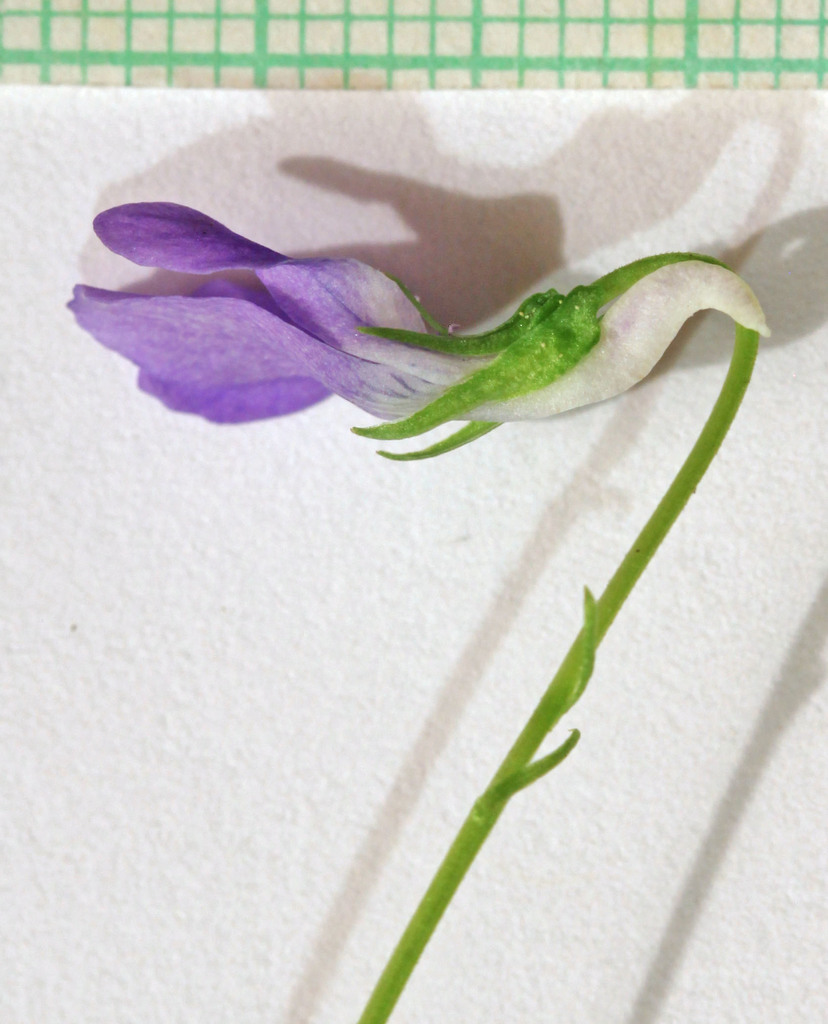
(c) Andrey Zharkikh, some rights reserved (CC BY) · licence
Family: Violaceae · Type: Perennial · Native
Viola adunca subsp. adunca (Western dog violet) is a native California perennial in the Violaceae family, recognized by . Key features: spurred violet flowers, simple leaves, elongating stems.
Western dog violet is a California native perennial found in the Coast Ranges and northern California mountains, typically inhabiting vernally moist meadows and damp streambanks in conifer forests at elevations up to 3,570 meters. Flowering from April to August, this violet produces light to deep violet flowers with white bases, the lower petals intricately veined in dark violet and featuring distinctive bearded lateral petals. Growing prostrate to erect with multiple stems 3.5 to 30 centimeters tall, it develops a woody base and emerges from underground rhizomes. Its leaves are simple and variable, ranging from ovate to ovate-triangular, with blades 0.5 to 6.6 centimeters long, featuring entire to crenate margins and cordate or truncate bases. The plant produces short-ovoid fruits 6 to 11 millimeters long, containing dark brown to olive-black seeds.
Identification and appearance
Key characters: 34 sympatric species. Key features: spurred violet flowers, simple leaves, elongating stems
Habitat and range
Habitat: Vernally moist meadows, damp streambanks, meadow edges in conifer forest, generally shade
Elevation: < 3570 m
California counties: Butte, Colusa, Trinity, Alameda, Mariposa, San Bernardino, Plumas, Glenn, Tulare, San Diego, Tuolumne, El Dorado, San Francisco, San Mateo, Lake, Mendocino, Sonoma, Shasta, Alpine, Modoc
Outside California: to Alaska, Yukon Territory, eastern North America, New Mexico
Bloom period
Viola adunca subsp. adunca blooms Apr-Aug.
How to tell it apart
vs Asarum: Viola flowers sit above ground on stalks; Asarum flowers hide at ground level under heart-shaped leaves.; vs Cardamine: Viola has irregular flowers with a spur; Cardamine has 4-petaled symmetrical flowers.; vs Lycianthes: Viola flowers have a backward spur; Lycianthes has star-shaped flowers with no spur.; vs Pelargonium: Viola has a petal-derived spur; Pelargonium has a sepal-derived spur fused to the flower stalk.; vs Eschscholzia: Viola has 5 petals with one forming a spur; Eschscholzia has 4 separate fan-shaped petals.
Frequently asked questions
Is Viola adunca subsp. adunca native to California?
Yes. Viola adunca subsp. adunca is native to California (recorded as native).
When does Viola adunca subsp. adunca bloom?
Viola adunca subsp. adunca blooms Apr-Aug.
Where in California does Viola adunca subsp. adunca grow?
Viola adunca subsp. adunca occurs in Butte, Colusa, Trinity, Alameda, Mariposa, San Bernardino, Plumas, Glenn and other counties, at elevations of < 3570 m.
What plant family does Viola adunca subsp. adunca belong to?
Viola adunca subsp. adunca is in the Violaceae family, genus Viola.
What habitat does Viola adunca subsp. adunca grow in?
Viola adunca subsp. adunca grows in Vernally moist meadows, damp streambanks, meadow edges in conifer forest, generally shade.
Related species
Other California species in the same genus, family, or bioregion.
Sources: Jepson eFlora · Index of California Plant Names · CalPhotos
Last updated 2026-10-06
Data from The California Species Project — 14,000+ California species with verified data from CNPS, CDFW, USFWS, Cal-IPC, and more.