Xanthium orientale
Common cocklebur, Cocklebur
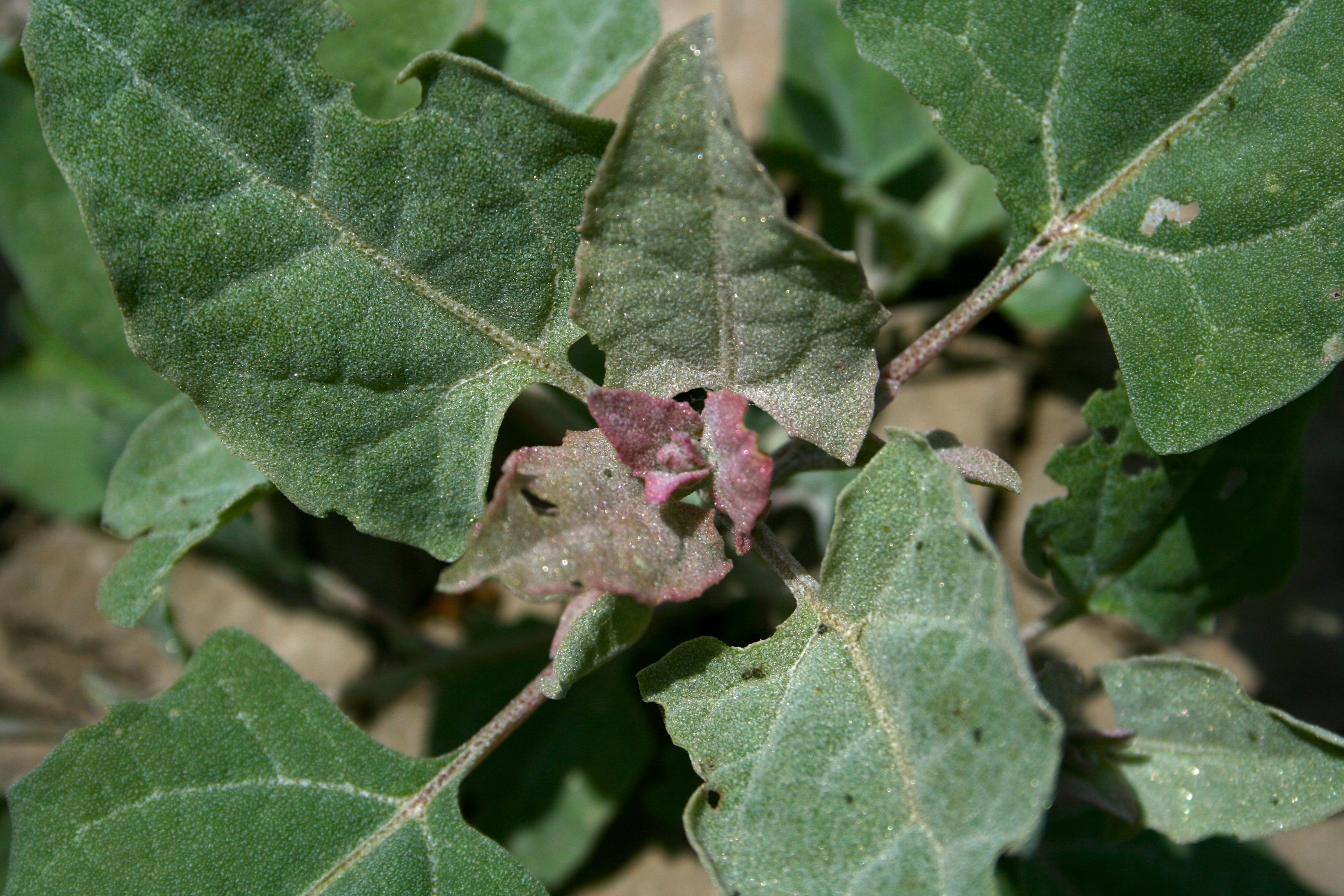
Photo by Chez Brungraber
Family: Asteraceae · Type: Annual · Native
Xanthium orientale (Common cocklebur) is a native California annual in the Asteraceae family.
Common cocklebur is a California native annual found in disturbed, seasonally wet sites including grasslands, marshes, and watercourses at elevations generally below 1,400 meters. Flowering from July to October, this plant produces small, inconspicuous flowers in heads with distinctive burred fruits. Growing 10 to 80 centimeters tall with finely puberulent to scabrous herbage, it develops an upright, branching form. Its leaves are palmately veined, often three to five-lobed, with blades 4 to 12 centimeters long and margins ranging from crenate to coarsely dentate. The plant produces hard, spiny burs 10 to 30 millimeters long that readily attach to clothing and animal fur.
Identification and appearance
Key characters: 1 sympatric species. Key differentiator is palmately vs pinnately veined leaves and leaf shape/margin differences.
Habitat and range
Habitat: Disturbed, seasonally wet, often alkaline sites, in grassland, marshes, watercourses
Elevation: generally < 1400 m
Outside California: native to Americas, naturalized +- worldwide
Bloom period
Xanthium orientale blooms Jul-Oct.
How to tell it apart
vs Ambrosia: Cockleburs are closest to ragweeds and bursages, both being monoecious with inconspicuous petal-less heads, but Ambrosia burs are small with a single seed and one ring of short spines, while Xanthium burs are large (1-3 cm), two-seeded, densely hook-prickled, and tipped by a pair of beaks.; vs Arctium: Burdock burs also cling by hooked spines, but a burdock bur is a whole flower head of many purple disk florets ringed by hooked phyllaries, whereas the Xanthium bur is a hard, woody, two-chambered case.; vs Amaranthus: Spiny amaranth shares the paired sharp spines at leaf nodes seen in spiny cocklebur, but amaranth bears tiny green flower clusters and never forms a bur.; vs Datura: Thorn-apple also has a spiny fruit, but it is a broad-leaved forb with large white trumpet flowers and a spiny capsule that splits open, not a composite bur.; vs Cirsium: Thistles are spiny weeds too, but they carry showy pink to purple flower heads with plumed pappus, unlike cocklebur's drab, inconspicuous heads and beaked prickly bur.
Frequently asked questions
Is Xanthium orientale native to California?
Yes. Xanthium orientale is native to California (recorded as native).
When does Xanthium orientale bloom?
Xanthium orientale blooms Jul-Oct.
What plant family does Xanthium orientale belong to?
Xanthium orientale is in the Asteraceae family, genus Xanthium.
What habitat does Xanthium orientale grow in?
Xanthium orientale grows in Disturbed, seasonally wet, often alkaline sites, in grassland, marshes, watercourses.
Related species
Other California species in the same genus, family, or bioregion.
Sources: Jepson eFlora · Index of California Plant Names · CalPhotos
Last updated 2026-10-06
Data from The California Species Project — 14,000+ California species with verified data from CNPS, CDFW, USFWS, Cal-IPC, and more.