Xylococcus bicolor
Mission manzanita
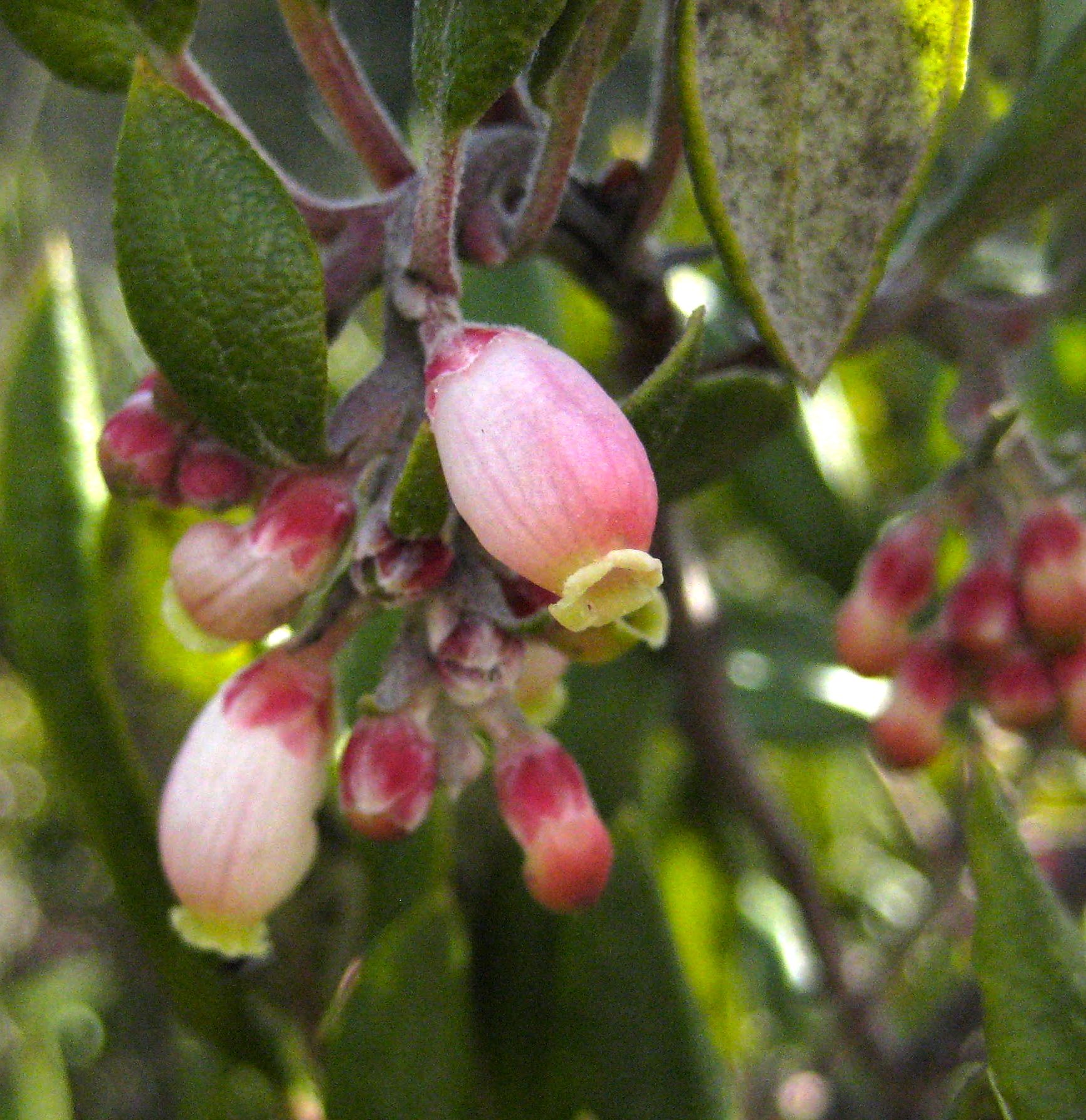
Photo by Chez Brungraber
Family: Ericaceae · Type: Shrub · Native
Xylococcus bicolor (Mission manzanita) is a native California shrub in the Ericaceae family, recognized by Monotypic genus, represents distinct lineage within California heath family.
Mission manzanita is a native shrub found in southern California coastal regions, Santa Catalina Island, and the Peninsular Ranges in chaparral habitats at elevations below 650 meters. Flowering from December to February, this plant produces white to pale pink flowers in dense, somewhat reflexed panicles less than 9 millimeters long. Growing as a burred shrub with erect stems up to 2.5 meters tall and shredding bark, it develops distinctive canescent twigs. Its leathery, elliptic to oblong evergreen leaves are dark green on the upper surface, densely white to gray-hairy underneath, with margins rolled under and measuring 2.5 to 4.5 centimeters long. The fruit is a smooth drupe less than 9 millimeters wide, with (3)5 fused stone segments forming a smooth unit.
Identification and appearance
Key characters: Monotypic genus, represents distinct lineage within California heath family
Habitat and range
Habitat: Chaparral
Elevation: < 650 m
California counties: San Diego, Los Angeles, Riverside, Orange, Alameda, San Francisco
Outside California: northern Baja California
Bloom period
Xylococcus bicolor blooms Dec-Feb.
How to tell it apart
vs Arctostaphylos: Xylococcus leaves have margins rolled tightly under; Arctostaphylos leaves are flat.; vs Comarostaphylis: Xylococcus fruits are dry and hard; Comarostaphylis fruits are juicy drupes.; vs Frangula: Xylococcus has urn-shaped flowers and rolled leaf margins; Frangula has small star flowers and flat leaves.; vs Rhus: Xylococcus has simple leaves with rolled margins; Rhus has compound pinnate leaves.; vs Rhamnus: Xylococcus has urn-shaped flowers and rolled leaf margins; Rhamnus has tiny star flowers and flat leaves.
Frequently asked questions
Is Xylococcus bicolor native to California?
Yes. Xylococcus bicolor is native to California (recorded as native).
When does Xylococcus bicolor bloom?
Xylococcus bicolor blooms Dec-Feb.
Where in California does Xylococcus bicolor grow?
Xylococcus bicolor occurs in San Diego, Los Angeles, Riverside, Orange, Alameda, San Francisco, at elevations of < 650 m.
What plant family does Xylococcus bicolor belong to?
Xylococcus bicolor is in the Ericaceae family, genus Xylococcus.
What habitat does Xylococcus bicolor grow in?
Xylococcus bicolor grows in Chaparral.
Related species
Other California species in the same genus, family, or bioregion.
Sources: Jepson eFlora · Index of California Plant Names · CalPhotos
Last updated 2026-10-07
Data from The California Species Project — 14,000+ California species with verified data from CNPS, CDFW, USFWS, Cal-IPC, and more.