Zeltnera venusta
California centaury, charming centaury, Charming Centaury
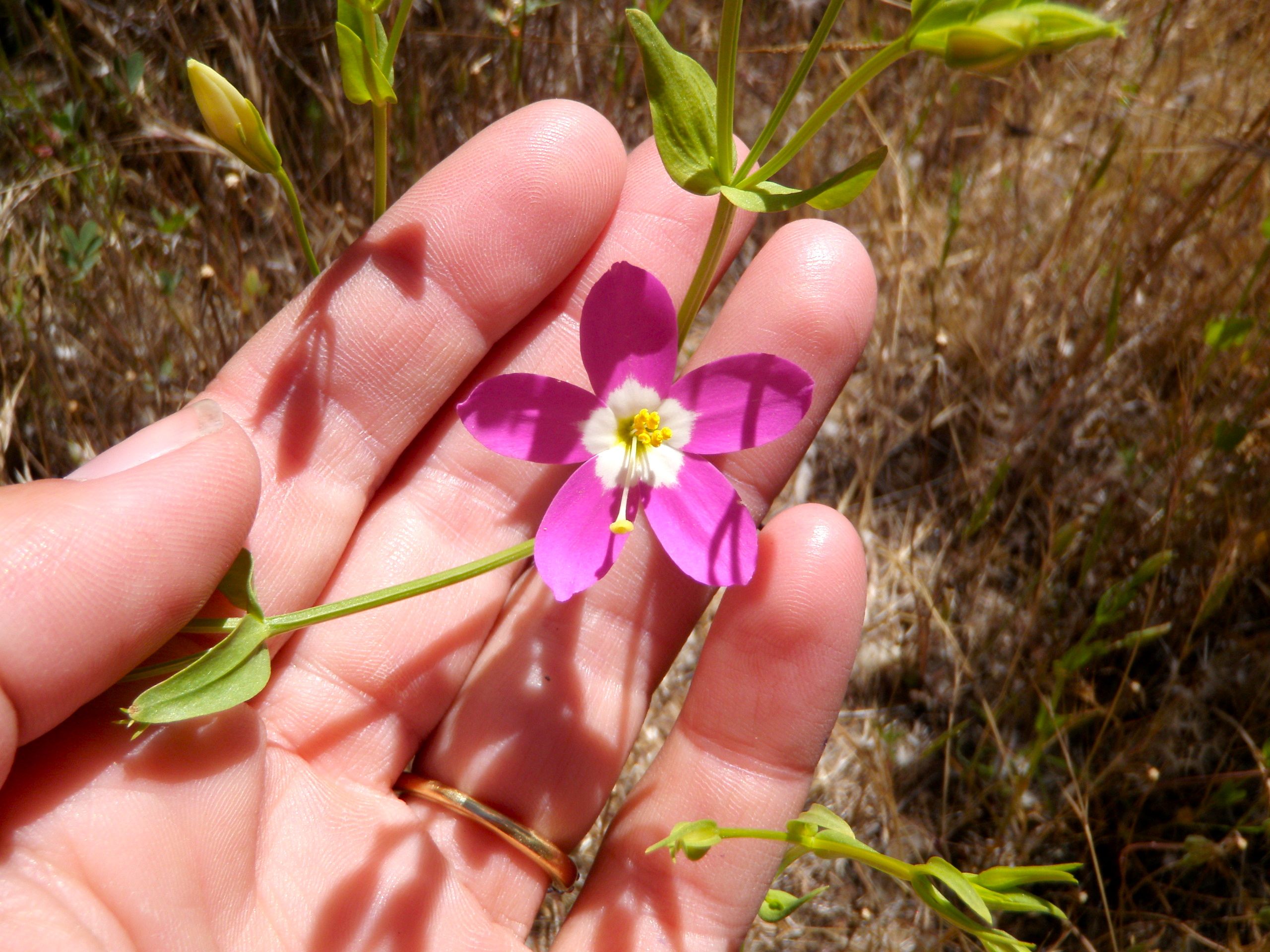
Photo by Chez Brungraber
Family: Gentianaceae · Type: Herb · Native
Zeltnera venusta (California centaury) is a native California herb in the Gentianaceae family, recognized by largest flowers and dry habitat preference diagnostic.
California centaury is a California native annual found in the Klamath Ranges, southern North Coast Ranges, North Coast Ranges, Cascade Range foothills, Sierra Nevada Foothills, eastern San Joaquin Valley, southwestern California (excluding northern Channel Islands), Sierra Nevada eastern edges, and Mojave Desert in dry grasslands, scrub, chaparral, and woodland openings at elevations below 1,800 meters. Flowering from May to August, this plant produces delicate, pale pink to white flowers with corolla tubes 16 to 30 millimeters long and slender lobes 5 to 20 millimeters long. Growing with slender stems 3 to 50 centimeters tall, it forms an open, graceful structure with multiple branching stems. Its narrow cauline leaves range from 5 to 25 millimeters long, with an elongated oval to lance-like shape positioned along the stem. The plant's intricate flower structure features two-lobed stigmas and lanceolate to spoon-shaped petals with obtuse to slightly pointed tips.
Identification and appearance
Key characters: 5 sympatric species; largest flowers and dry habitat preference diagnostic
Habitat and range
Habitat: dry grassland, scrub, chaparral, openings in woodland
Elevation: < 1800 m
California counties: San Bernardino, Tulare, Los Angeles, San Diego, Riverside, Fresno, Orange, Amador, Butte, Shasta, Tehama, Lake, Monterey, Yuba, Nevada, Calaveras, Madera, Marin, Tuolumne, Ventura, Mariposa, El Dorado, San Luis Obispo, Santa Barbara, Placer, Inyo, Imperial, Sacramento, Colusa, Stanislaus, Yolo
Outside California: to Baja California
Bloom period
Zeltnera venusta blooms May-Aug.
How to tell it apart
vs Centaurium: Zeltnera has wedge-shaped stigmas; Centaurium has oval stigmas (need hand lens).; vs Calandrinia: Zeltnera has tubular gentian flowers; Calandrinia has separate petals.; vs Sabatia: Zeltnera has narrow flower tubes; marsh pink has rotate flowers.; vs Clarkia: Zeltnera has tubular flowers; Clarkia has four separate petals.; vs Leptosiphon: Zeltnera has pink/white flowers; Leptosiphon often multicolored with very narrow tubes.
Frequently asked questions
Is Zeltnera venusta native to California?
Yes. Zeltnera venusta is native to California (recorded as native).
When does Zeltnera venusta bloom?
Zeltnera venusta blooms May-Aug.
Where in California does Zeltnera venusta grow?
Zeltnera venusta occurs in San Bernardino, Tulare, Los Angeles, San Diego, Riverside, Fresno, Orange, Amador and other counties, at elevations of < 1800 m.
What plant family does Zeltnera venusta belong to?
Zeltnera venusta is in the Gentianaceae family, genus Zeltnera.
What habitat does Zeltnera venusta grow in?
Zeltnera venusta grows in dry grassland, scrub, chaparral, openings in woodland.
Related species
Other California species in the same genus, family, or bioregion.
- Zeltnera arizonica — Arizona centaury
- Zeltnera davyi — Davy's centaury
- Zeltnera exaltata — Tall centaury
- Zeltnera muehlenbergii — Monterey centaury
- Zeltnera namophila — Spring-loving centaury
- Zeltnera sp. — Centaury
- Centaurium erythraea — European centaury
- Centaurium pulchellum — Lesser centaury
- Centaurium sp. — Centaury
- Centaurium tenuiflorum — Slender centaury
Sources: Jepson eFlora · Index of California Plant Names · CalPhotos
Last updated 2026-10-07
Data from The California Species Project — 14,000+ California species with verified data from CNPS, CDFW, USFWS, Cal-IPC, and more.