Zygophyllum fabago
Syrian beancape
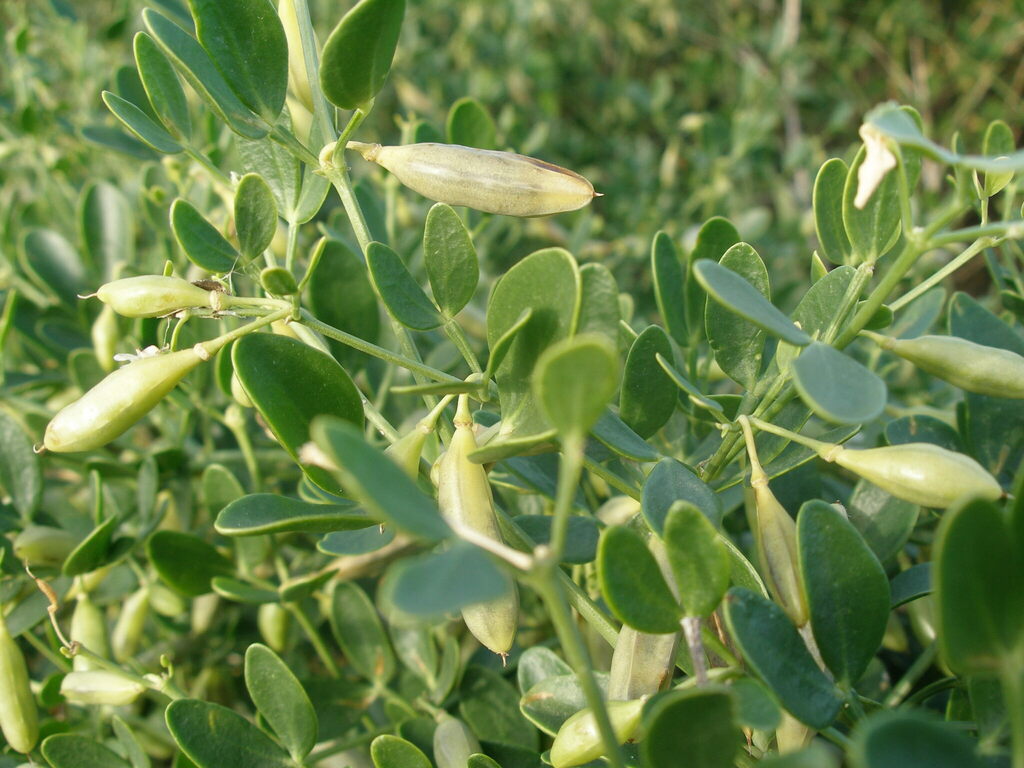
(c) Анна Митрошенкова, some rights reserved (CC BY) · licence
Family: Zygophyllaceae · Type: Subshrub · Not Native
Conservation status: Cal-IPC Yes
Zygophyllum fabago (Syrian beancape) is a non-native California subshrub in the Zygophyllaceae family, recognized by Only member of a largely Old World desert genus, established as a naturalized introduction from Mediterranean and central Asian regions.
Syrian beancape is a naturalized perennial found in southern North Coast Ranges, San Joaquin Valley, and Desert regions in disturbed areas at elevations below 1,000 meters. Flowering during summer, this plant produces pale flowers approximately 6 to 7 millimeters long with sepals roughly equal to the petals. Growing with erect, glabrous stems less than 1 meter tall, it develops distinctive leaflets up to 4.5 centimeters long that are obliquely ovate with a small 1-millimeter persistent awn between them. Its leaves feature 3-centimeter wide leaflets with a unique structural arrangement, creating an interesting botanical profile. The fruit is an oblong-cylindric structure 25 to 35 millimeters long, with a thread-like persistent style less than 7 millimeters in length.
Identification and appearance
Key characters: Only member of a largely Old World desert genus, established as a naturalized introduction from Mediterranean and central Asian regions
Habitat and range
Habitat: Uncommon. Disturbed areas
Elevation: < 1000 m
Outside California: to Kansas, Texas, also in New York, Pennsylvania, native to Mediterranean, central Asia
Bloom period
Zygophyllum fabago blooms Summer.
Conservation status
Cal-IPC Yes
How to tell it apart
vs Larrea: Zygophyllum leaflets are separate at base and fleshy; Larrea leaflets fuse at base forming V-shape and smell like creosote.; vs Fagonia: Zygophyllum has 2 fleshy leaflets without spines; Fagonia has 3 leaflets and spiny stems.; vs Kallstroemia: Zygophyllum has 2 thick paired leaflets; Kallstroemia has many small leaflets arranged feather-like along stem.; vs Tribulus: Zygophyllum has 2 fleshy paired leaflets; Tribulus has many small leaflets arranged feather-like and spiny fruits.
Frequently asked questions
Is Zygophyllum fabago native to California?
No. Zygophyllum fabago is not native to California (recorded as not native).
When does Zygophyllum fabago bloom?
Zygophyllum fabago blooms Summer.
What plant family does Zygophyllum fabago belong to?
Zygophyllum fabago is in the Zygophyllaceae family, genus Zygophyllum.
Is Zygophyllum fabago invasive in California?
Zygophyllum fabago is listed by Cal-IPC with an invasiveness rating of Yes.
What habitat does Zygophyllum fabago grow in?
Zygophyllum fabago grows in Uncommon. Disturbed areas.
Related species
Other California species in the same genus, family, or bioregion.
Sources: Jepson eFlora · CalPhotos
Last updated 2026-10-07
Data from The California Species Project — 14,000+ California species with verified data from CNPS, CDFW, USFWS, Cal-IPC, and more.