Isocoma menziesii var. diabolica
Satan's goldenbush, Satan's Goldenbush
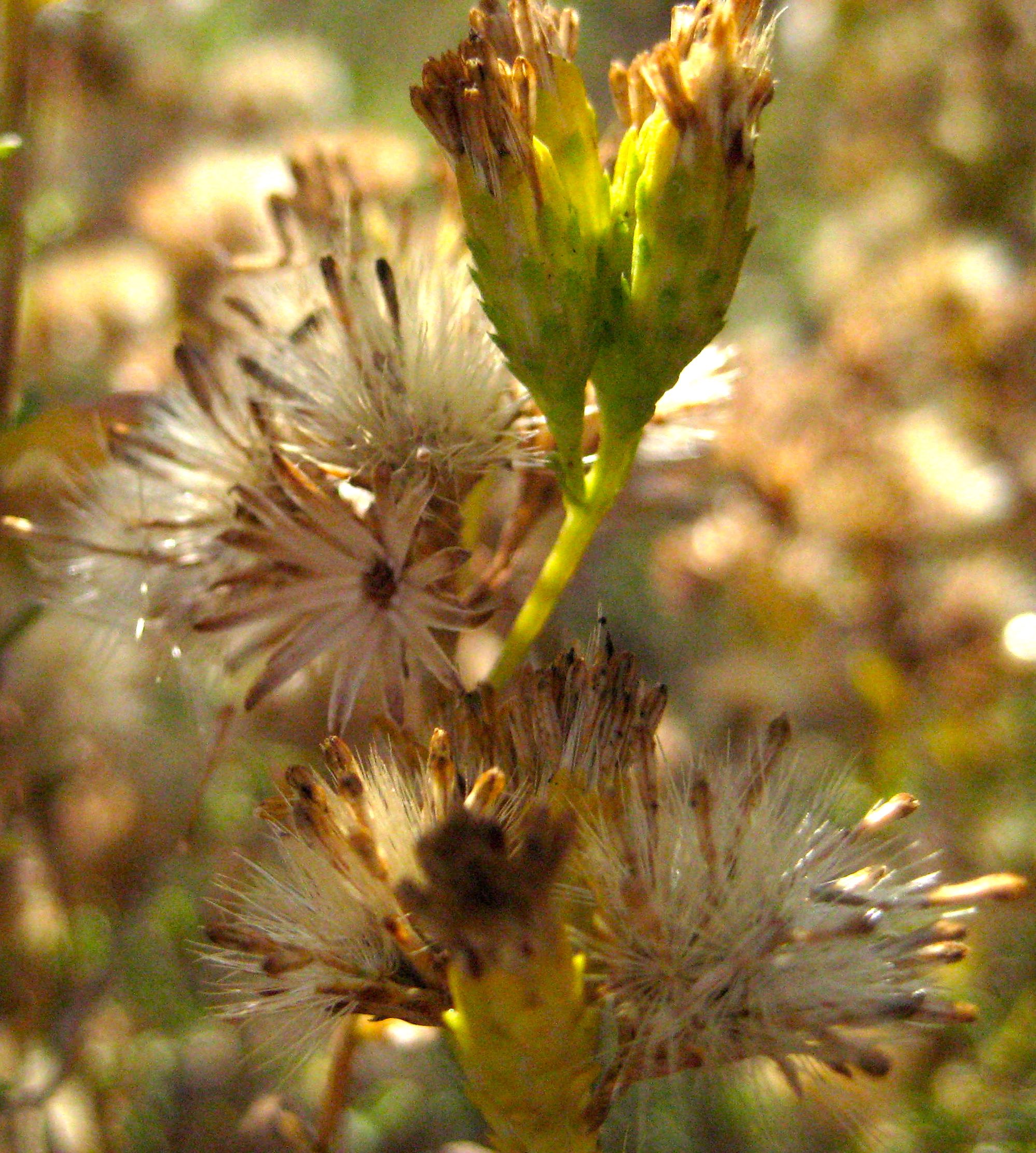
Photo: parent species Isocoma menziesii · Photo by Chez Brungraber
Family: Asteraceae · Type: Subshrub · Native
Conservation status: CNPS 4.2
Isocoma menziesii var. diabolica (Satan's goldenbush) is a native California subshrub in the Asteraceae family, recognized by sticky glandular herbage and serrate leaves diagnostic.
Satan's goldenbush is a California native shrub ranked 4.2 by CNPS, found in southern San Francisco Bay and northern South Coast Ranges in open slopes and cliffs within foothill woodland and grassland habitats at elevations below 800 meters. Flowering from August to November, this plant produces yellow flowers in flat-topped clusters, with individual flower heads approximately 6 to 7 millimeters long. Growing 4 to 7 meters tall with erect stems branched at the base, it features a sticky, sometimes varnished appearance with stalked-glandular herbage. Its leaves are narrowly oblanceolate to obovate, clustered in axils, measuring 2 to 4.5 centimeters long, with proximal leaves having shallow serrations. The fruit is 4.5 to 5 millimeters long, contributing to its distinctive appearance in its native grassland habitats.
Identification and appearance
Key characters: 6 sympatric species; sticky glandular herbage and serrate leaves diagnostic
Habitat and range
Habitat: Open slopes and cliffs, generally in foothill woodland, grassland
Elevation: < 800 m
Bloom period
Isocoma menziesii var. diabolica blooms Aug-Nov.
Conservation status
CNPS 4.2
How to tell it apart
vs Ericameria: Isocoma has randomly arranged bracts; Ericameria has bracts in 5 distinct vertical rows.; vs Hazardia: Isocoma has smooth or slightly hairy stems; Hazardia has densely hairy stems and leaves.; vs Baccharis: Isocoma has yellow bisexual flowers; Baccharis has whitish flowers on separate male/female plants.; vs Heterotheca: Isocoma has only disk flowers; Heterotheca has showy yellow ray flowers around the disk.; vs Eriogonum: Isocoma has yellow composite flowers; Eriogonum has small clustered flowers with colorful sepals but no petals.
Frequently asked questions
Is Isocoma menziesii var. diabolica native to California?
Yes. Isocoma menziesii var. diabolica is native to California (recorded as native).
When does Isocoma menziesii var. diabolica bloom?
Isocoma menziesii var. diabolica blooms Aug-Nov.
What plant family does Isocoma menziesii var. diabolica belong to?
Isocoma menziesii var. diabolica is in the Asteraceae family, genus Isocoma.
Is Isocoma menziesii var. diabolica rare or endangered?
Isocoma menziesii var. diabolica carries California Rare Plant Rank 4.2, state rank S3.
What habitat does Isocoma menziesii var. diabolica grow in?
Isocoma menziesii var. diabolica grows in Open slopes and cliffs, generally in foothill woodland, grassland.
Related species
Other California species in the same genus, family, or bioregion.
Sources: Jepson eFlora · CNPS Rare Plant Inventory · Index of California Plant Names · CalPhotos · CDFW CNDDB
Last updated 2026-10-07
Data from The California Species Project — 14,000+ California species with verified data from CNPS, CDFW, USFWS, Cal-IPC, and more.