Lupinus paynei
Payne's Bush Lupine
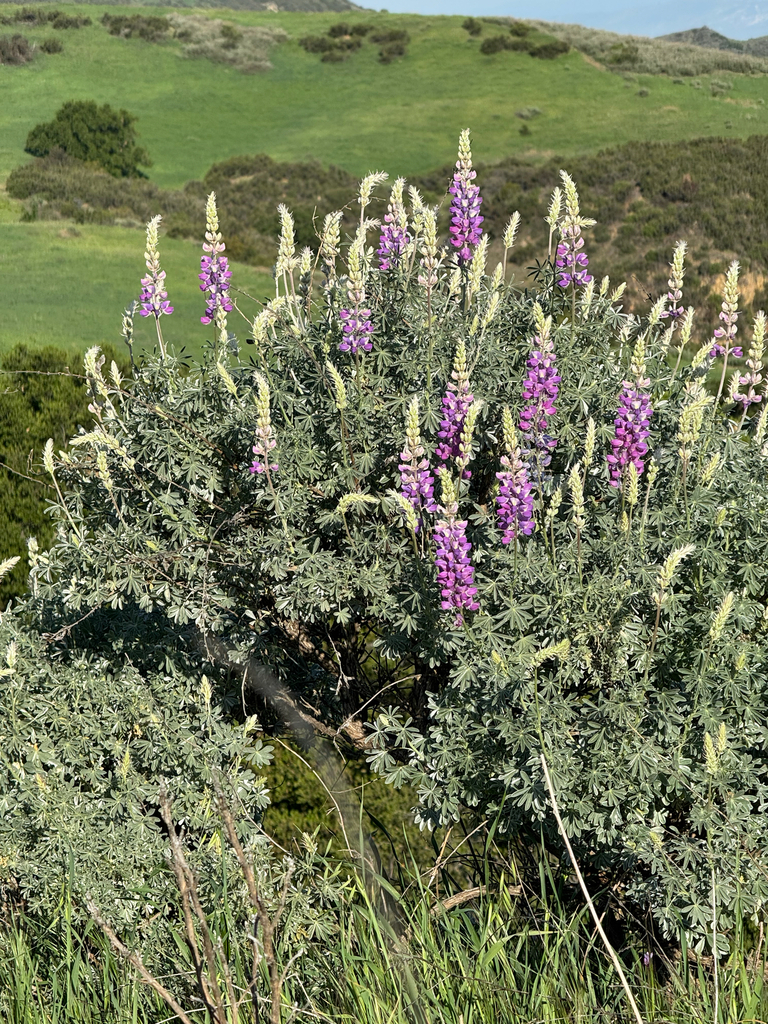
(c) klicklo, some rights reserved (CC BY) · licence
Family: Fabaceae
Conservation status: CNPS 1B.1
Lupinus paynei (Payne's Bush Lupine) is a California plant in the Fabaceae family.
Payne's bush lupine is a rare California native shrub in the Lupinus albifrons (silver bush lupine) complex, endemic to the Santa Susana Mountains and nearby ranges of Los Angeles and Ventura counties at about 220 to 420 meters. It was recognized as genetically distinct from the rest of the complex rather than by morphology; it has been described as somewhat more arborescent, though that trait is unsubstantiated. Like other members of the complex it is a silvery, palmately compound-leaved shrub with blue to violet pea-flowers. It is seriously threatened by development and non-native plants.
Identification and appearance
Key characters: Differentiators are not available at this time.
Conservation status
CNPS 1B.1
How to tell it apart
vs Salvia: Lupine has pea flowers and palmate leaves; sage has tubular two-lipped flowers and opposite leaves.; vs Artemisia: Lupine has large showy flower spikes; sagebrush has tiny inconspicuous flowers and silvery aromatic foliage.; vs Thermopsis: Lupine typically has 7-11 leaflets; false lupine has exactly 3 leaflets and bright yellow flowers.; vs Delphinium: Lupine has pea flowers; larkspur has flowers with prominent backward-pointing spur.; vs Vicia: Lupine is upright with palmate leaves; vetch is climbing with pinnate leaves and tendrils.
Frequently asked questions
What plant family does Lupinus paynei belong to?
Lupinus paynei is in the Fabaceae family, genus Lupinus.
Is Lupinus paynei rare or endangered?
Lupinus paynei carries California Rare Plant Rank 1B.1, state rank S1.
Related species
Other California species in the same genus, family, or bioregion.
Sources: CDFW CNDDB
Last updated 2026-10-29
Data from The California Species Project — 14,000+ California species with verified data from CNPS, CDFW, USFWS, Cal-IPC, and more.