Cerastium sp.
Mouse-Ear Chickweed
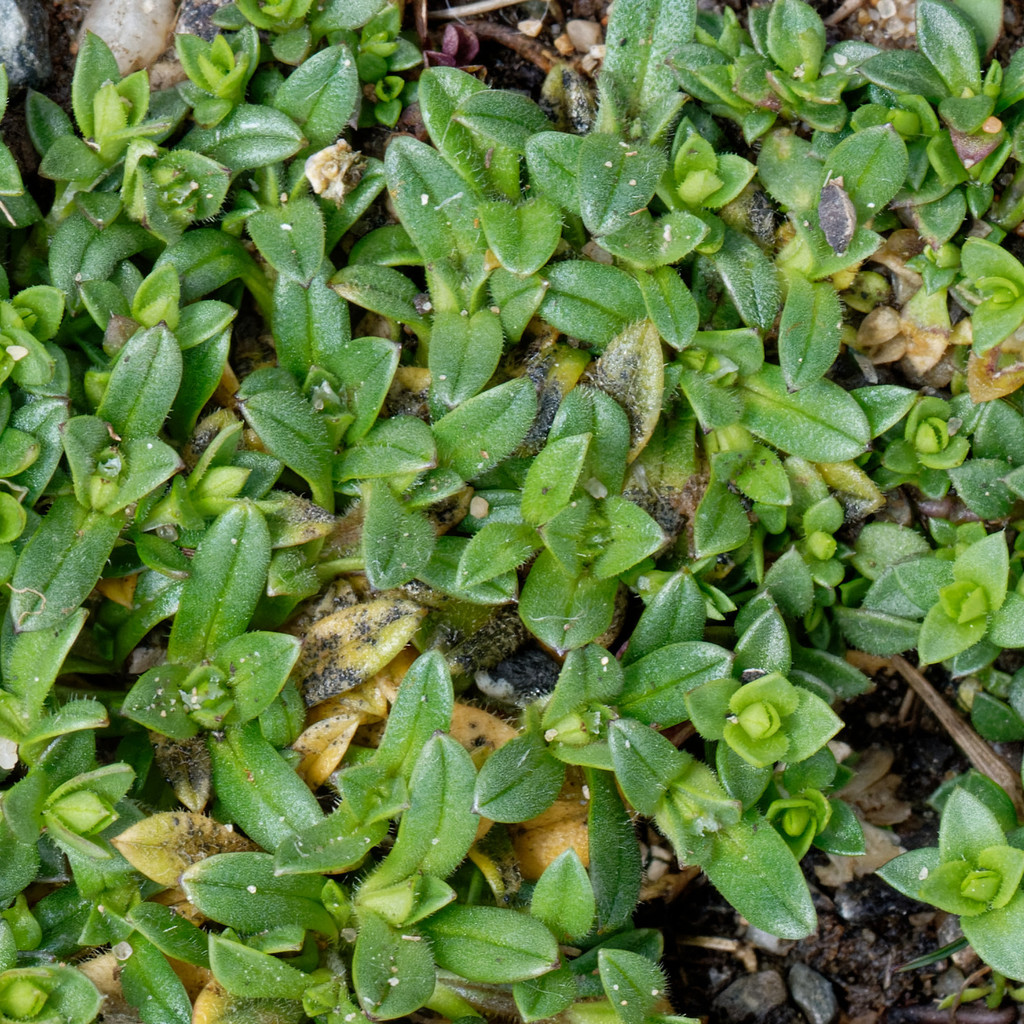
(c) Patrick Hanly, some rights reserved (CC BY), uploaded by Patrick Hanly · licence
Family: Caryophyllaceae · Type: Perennial · Variable; species dependent
Cerastium sp. (Mouse-Ear Chickweed) is a non-native California perennial in the Caryophyllaceae family.
How to tell it apart
vs Stellaria: Cerastium capsules are cylindrical and curved; Stellaria capsules are round and straight.; vs Limnanthes: Cerastium has tiny white flowers with cylindrical capsules; Limnanthes has showy bowl-shaped flowers with separate nutlets.; vs Pseudostellaria: Cerastium has fuzzy leaves and curved capsules; Pseudostellaria has smooth leaves and straight capsules.
Frequently asked questions
Is Cerastium sp. native to California?
No. Cerastium sp. is not native to California (recorded as variable; species dependent).
What plant family does Cerastium sp. belong to?
Cerastium sp. is in the Caryophyllaceae family, genus Cerastium.
Related species
Other California species in the same genus, family, or bioregion.
- Cerastium viride — Western field mouse-ear chickweed
- Cerastium arvense subsp. strictum — Field mouse-ear chickweed
- Cerastium beeringianum — Bering mouse-ear chickweed
- Cerastium dichotomum — Forked mouse-ear chickweed
- Cerastium diffusum — Dark green mouse-ear chickweed
- Cerastium fontanum subsp. vulgare — Common mouse-ear chickweed
- Cherleria biflora — Mountain sandwort
- Cherleria sp.
- Dianthus armeria subsp. armeria — Grass pink
Sources: Jepson eFlora · CalPhotos
Last updated 2026-04-14
Data from The California Species Project — 14,000+ California species with verified data from CNPS, CDFW, USFWS, Cal-IPC, and more.