Erythranthe arvensis
Villous-bracted monkeyflower
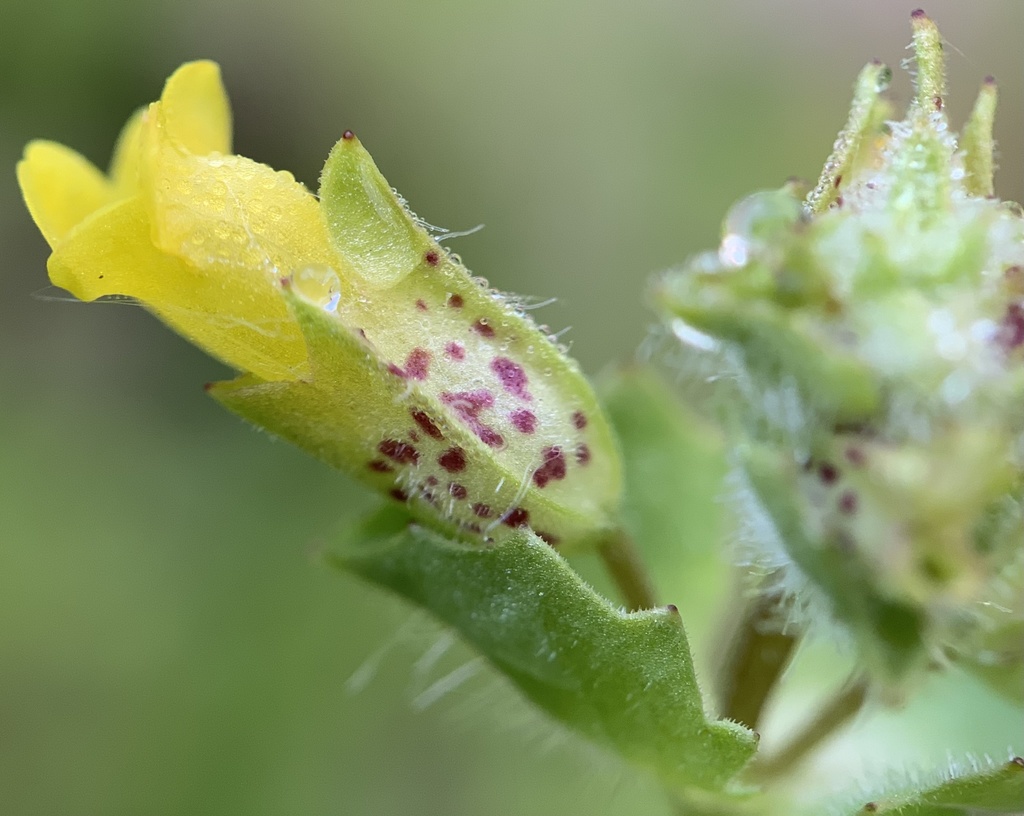
(c) mark-groeneveld, some rights reserved (CC BY), uploaded by mark-groeneveld · licence
Family: Phrymaceae · Type: Annual · Native
Erythranthe arvensis (Villous-bracted monkeyflower) is a native California annual in the Phrymaceae family, recognized by distinctive soft-hairy bracts and asymmetrically swollen fruiting calyx.
Villous-bracted monkeyflower is a California native annual found in wet places at elevations of 30 to 1,900 meters. Flowering from April to July, this plant produces yellow flowers with soft-hairy bracts in small racemes. Growing with erect to ascending stems 5 to 70 centimeters tall, it has a fibrous root system. Its leaves are ovate to round, typically 5 to 35 millimeters long, with crenate edges and occasionally irregularly small-lobed bases. The plant produces small fruits 5 to 7 millimeters long, with asymmetrically swollen calyces that have unequal lobes.
Identification and appearance
Key characters: Geographically isolated; distinctive soft-hairy bracts and asymmetrically swollen fruiting calyx
Habitat and range
Habitat: Common. Wet places
Elevation: 30-1900 m
Outside California: to Washington, Idaho, Utah, Baja California
Bloom period
Erythranthe arvensis blooms Apr-Jul.
Frequently asked questions
Is Erythranthe arvensis native to California?
Yes. Erythranthe arvensis is native to California (recorded as native).
When does Erythranthe arvensis bloom?
Erythranthe arvensis blooms Apr-Jul.
What plant family does Erythranthe arvensis belong to?
Erythranthe arvensis is in the Phrymaceae family, genus Erythranthe.
What habitat does Erythranthe arvensis grow in?
Erythranthe arvensis grows in Common. Wet places.
Related species
Other California species in the same genus, family, or bioregion.
Sources: Jepson eFlora
Last updated 2026-10-06
Data from The California Species Project — 14,000+ California species with verified data from CNPS, CDFW, USFWS, Cal-IPC, and more.